



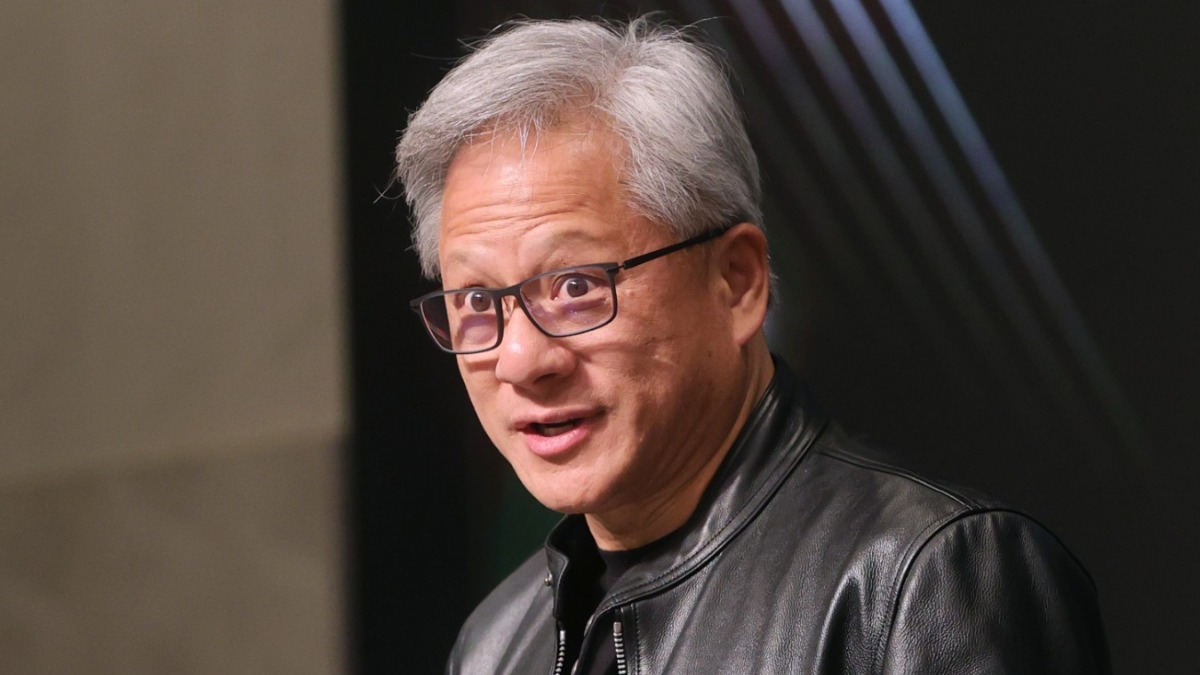

Nvidia CEO Jensen Huang is trying to smooth things over after gamers erupted in anger over the initial reveal of DLSS 5, which many felt looked like an AI “slop filter.” Just a week ago, Huang was pretty dismissive, calling the angry gamers “completely wrong” for their reaction. Now, he’s definitely changed his tune, adopting a much more understanding and diplomatic approach in a recent podcast interview.
“I think their perspective makes sense and I can see where they’re coming from, because I don’t love AI slop myself,” Huang told Lex Fridman in an episode published on March 23. He admitted that “all of the AI-generated content increasingly looks similar and they’re all beautiful and so I’m empathetic towards what they’re thinking.” It’s a pretty big shift from his earlier stance, which is interesting to see, especially from the head of a company that’s leaning so heavily into AI.
Despite this newfound empathy, Huang is still pushing back against the idea that DLSS 5 is just some generic filter that ignores the original artistic intent, as reported by Kotaku. He wants to make it clear that this isn’t about just slapping AI over existing visuals without any thought for the underlying artwork. From what he says, it’s a much more integrated process.
Huang clarified how DLSS 5 actually works
“That’s just not what DLSS 5 is trying to do,” he explained. “I showed several examples of it but DLSS 5 is 3D conditioned, 3D guided. It’s ground truth structure data guided.” He emphasized that the geometry determined by the artist remains completely truthful in every single frame. It’s conditioned by the textures and the artistry, so while it enhances, it doesn’t fundamentally change anything.
He also hinted at a future where artists have even more control. Because the system is “open,” developers could train their own models, or even prompt it in the future. “You know, ‘I want it to be a toon shader, I want it to look like this kinda,’ so you can give it even an example. And it would generate in the style of that, all consistent with the artistry, you know, the style, the intent of the artist,” Huang said.
Huang believes that the initial detractors probably got the impression that games would just be post-processed after shipping, which isn’t the goal. “DLSS is integrated with the artist, and so it’s, it’s about giving the artist the tool of AI, the tool of generative AI,” he stated. He added that artists could simply choose not to use it if they wished. While Nvidia is really trying to sell DLSS 5 as an integral part of the game’s artistic presentation, those early demo showcases made it really tough to tell the difference from a simple post-processing filter.
This is where the core debate lies: what exactly constitutes “perfect graphics,” and who gets to make that call? Huang, with partnerships galore with AI companies, insists that the power to decide will stay with game developers, which is something that, honestly, wasn’t really in question until this whole DLSS 5 discussion started.









Published: Mar 24, 2026 07:00 pm