




President Donald Trump’s announcement of a $100,000 fee for employers seeking to hire workers under H-1B visas has reignited bipartisan interest in reforming the program, a move that could have far-reaching effects for the U.S. tech industry, hospitals, and universities. Unlike Trump’s shipping fee, which backfired, this is designed to encourage domestic hiring, has sparked concern and confusion among employers reliant on high-skilled foreign labor, prompting renewed action on Capitol Hill.
Lawmakers from both parties see the new fee as an opportunity to advance legislation updating the decades-old H-1B system. Senators Tommy Tuberville (R-Ala.) and Richard Blumenthal (D-Conn.) have reintroduced a bill that would prioritize applicants with advanced degrees in science, technology, engineering, and mathematics. “We need an immigration bill, badly,” Tuberville said, emphasizing the urgency of the issue, as reported by Politico.
Despite this unusual alignment, progress remains uncertain. Many Republican leaders remain skeptical about expanding legal immigration, while anti-immigration advisors in the White House maintain influence over Trump’s decisions. Sen. Dick Durbin (D-Ill.), the Senate Judiciary Committee’s ranking member, highlighted the longstanding difficulty of passing comprehensive immigration legislation.
The H-1B Landscape In Focus
The H-1B program has long been a cornerstone for companies seeking high-skilled talent, but it has also drawn criticism for limiting opportunities for U.S. workers and suppressing wages in certain sectors. Trump’s new fee, which could cost employers $100,000 per worker, has alarmed universities and hospitals that rely on the program, prompting fears of staff shortages and operational disruption.
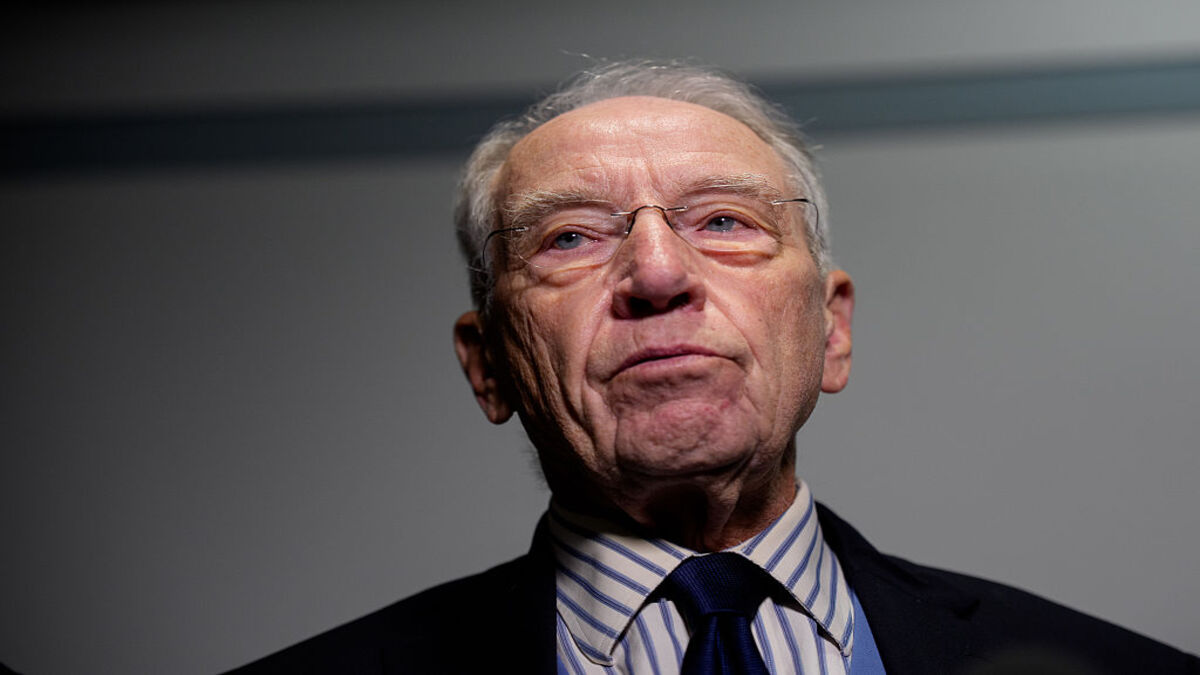
Proponents of reform argue that the fee’s announcement could help push through legislation that had stalled for years. Senate Judiciary Chair Chuck Grassley (R-Iowa) noted that the attention brought to H-1B issues by Trump’s proclamation may encourage previously reluctant lawmakers and business groups to support the overhaul. “The president has brought attention to the problems with H-1Bs,” Iowa Republican said.
Meanwhile, the legislative proposal from Tuberville and Blumenthal aims to strengthen the program while prioritizing applicants with advanced STEM degrees. The bipartisan effort reflects a rare alignment in Congress where members who typically oppose expanding immigration are now pushing for a targeted approach to meet labor demands.
Even with bipartisan support, significant hurdles remain. Trump’s administration has wavered on immigration priorities, and enforcement-focused officials continue to hold sway. The White House has yet to indicate whether it will collaborate with Congress to implement a legislative fix. Critics also note that past efforts to reform H-1B visas, which include bills passed separately by the House and Senate in 2019 and 2020, failed to reconcile differences and were never enacted.
Adding to the uncertainty, lawsuits challenging the $100,000 fee are ongoing. A coalition of unions, universities, and other organizations argue the cost is excessive and unjustified, leaving the future of the policy in the courts. Until a legal or legislative resolution is reached, employers and lawmakers alike are navigating a climate of heightened uncertainty.
Sen. Rick Scott (R-Fla.) said the legislation’s success ultimately depends on presidential approval. “Anything that’s going to get done, the president’s got to sign off on it,” he said. Grassley suggested that the current disruption might help demonstrate the need for a more predictable and streamlined system, potentially strengthening support for the bipartisan bill.







Published: Oct 14, 2025 12:12 pm