



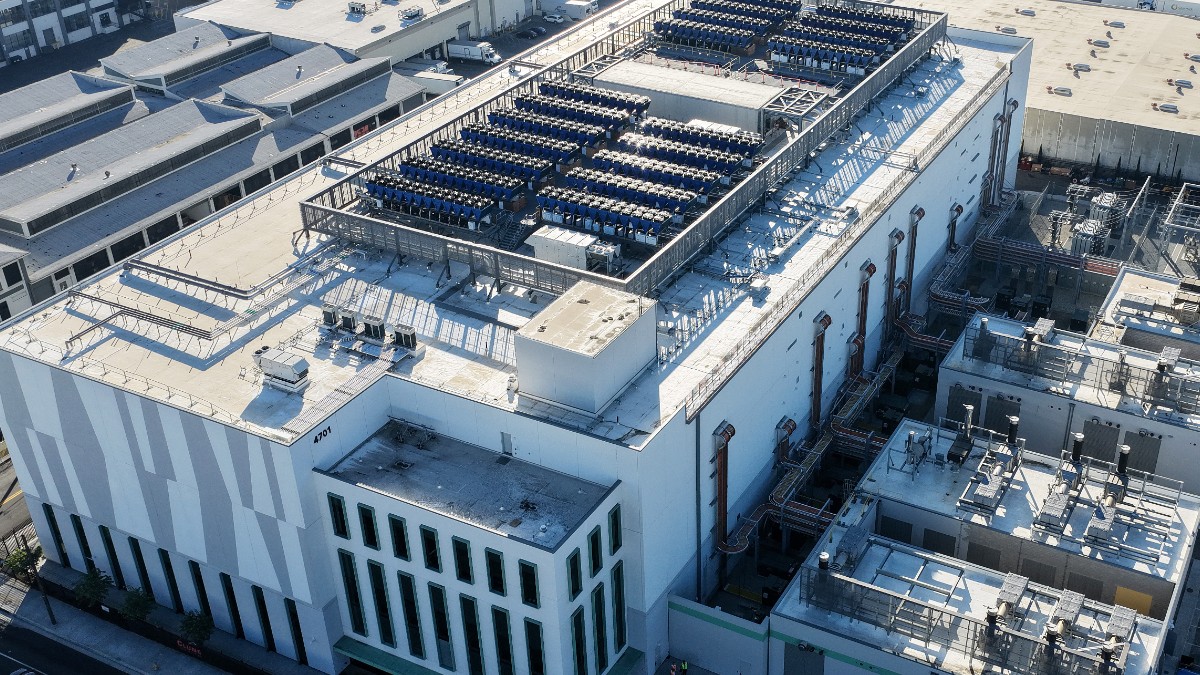

Massive new data centers are popping up all over the Great Lakes region, drawing intense community opposition as the lakes themselves face historically low water levels, as reported by The Guardian. This is a huge conflict: the world’s thirstiest tech infrastructure is setting up shop right next to one of the largest single deposits of freshwater on the planet, and local residents are seriously worried about the long-term cost.
Just south of Lake Erie in Perkins Township, Ohio, farmer Tom Hermes knows how critical water is. His family has been farming this land since 1900, raising 130 head of cattle and growing crops on 1,200 acres. He has major concerns about the Texas-based Aligned Data Centers with its massive four-building NEO-01 facility right next to the land he rents. “We have city water here,” Hermes said. “That’s going to reduce the pressure if they are sucking all the water.” He added that data centers “are not good, I know that.”
Water levels across all five Great Lakes have been dropping significantly in recent months as part of a long-term decline. Since 2019, the lakes have seen water-level decreases of between two and four feet. While experts say some of this is a natural correction after record highs around 2020, it’s happening at the absolute worst time, when a gigantic new consumer of water has arrived. Lake Erie, in particular, is already struggling with drought and warmer water temperatures because it’s not getting its usual winter ice cover.
The environmental cost is too high for these massive data centers
Data centers are notorious water guzzlers, especially those running high-power processes like artificial intelligence. Research from Purdue University found that these facilities consume about 300,000 gallons of water a day on average. Kirsten James, senior program director for water at Ceres, pointed out that the impact goes beyond just on-site usage. “Even more water may be consumed to generate electricity to power data centers’ energy needs,” James noted.
It’s no wonder these companies are flocking here. Major cities like Chicago, Toronto, Detroit, and Pittsburgh are all nearby, making the small, often under-resourced communities around the lakes hugely attractive to developers. The Great Lakes Compact of 2005 dictates that the water must stay within the regional basin, but companies are still setting up shop everywhere.
We’re talking about huge projects, too. In Mount Pleasant, Wisconsin, Microsoft is building what it calls the “world’s most-powerful AI data center,” which is expected to use up to 8.4 million gallons of municipal water from the city of Racine every year. Racine gets its supply directly from Lake Michigan. AWS is planning a similar facility just two miles from Lake Michigan’s shoreline in Hobart, Indiana.
Locals are fighting back, and sometimes they win. Residents of Fife Lake, Michigan, were thrilled last month when a plan for a data center in their town of 471 people was scrapped entirely due to local opposition. But the corporations are fighting harder. In Michigan’s Saline Township, outside Ann Arbor, OpenAI and Oracle successfully sued the local authority to overcome opposition and build a massive facility that will use 1.4 gigawatts of electricity. That’s roughly the power needed for 1.4 million homes.
But many residents argue the investment isn’t worth the long-term environmental price, and we totally concur. But with Trump proposing one AI law for all states, and enshittification reaching new heights, the future looks grim.








Published: Dec 18, 2025 05:00 pm