



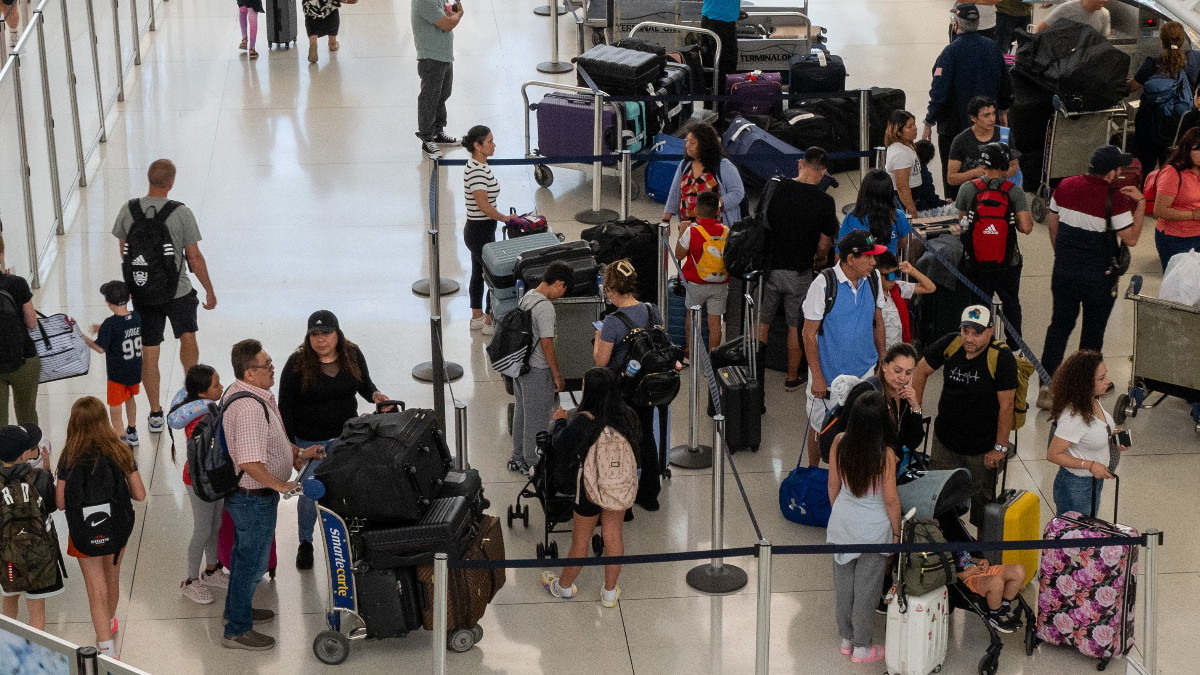

Travelers flying out of major New York and New Jersey airports are expressing anger and confusion after noticing a new 3% surcharge appearing on receipts for food and retail purchases. The charge, labeled as an “employee benefits and retention surcharge,” has sparked backlash largely because many customers say they had no idea it existed until after they paid.
According to the Daily Dot, the issue gained attention after a Reddit user shared a photo of their airport receipt from vendor Zaros showing the additional fee. The label offered little explanation, prompting the user to write, “Whatever that means,” a sentiment that quickly resonated with others who said they felt blindsided.
The reaction mirrors other recent stories where customers discovered surprise charges only after checking their receipts, including a Texas Roadhouse customer in Ohio who was puzzled by a strange extra fee that even staff struggled to explain. In each case, frustration centered on the lack of upfront disclosure.
This fee caught travelers completely off guard
While the surcharge may look like a surprise fee added at random, it is tied to state-level policy changes announced months earlier. In November 2024, officials in both New York and New Jersey approved minimum wage increases specifically for airport workers, a move that is now being passed along to travelers at the register.
Workers are set to receive an immediate 75-cent hourly wage increase, followed by annual raises tied to the Consumer Price Index through 2032. New York Governor Kathy Hochul described the move as a way to ensure airport staff can keep up with the cost of living as inflation fluctuates.
To help airport vendors absorb the higher labor costs, the states allowed shops and restaurants to add a surcharge of up to 3% per transaction. The fee is currently limited to purchases made at John F. Kennedy International Airport, LaGuardia Airport, and Newark Liberty International Airport. Receipts note that the surcharge is not a tip and is not paid directly to frontline staff.
That distinction has become a major source of frustration. Many travelers assumed the extra charge was similar to a service fee or gratuity, only to later realize it goes toward general labor costs and benefits. Because the policy does not require vendors to disclose the surcharge before ordering, customers often only see it after payment, leading some to label it a hidden tax.
Online reactions have been heated, with some users calling the practice deceptive and urging others to dispute the charge if it was not posted. Others have taken their frustration out on workers by reducing or eliminating tips, reasoning that the surcharge offsets what they would normally leave. Similar anger recently erupted online after a Utah bartender revealed the mandatory device she must use to pour alcohol and how strict limits are enforced, sparking debate over who ultimately pays for compliance costs.





Published: Jan 3, 2026 09:00 am