



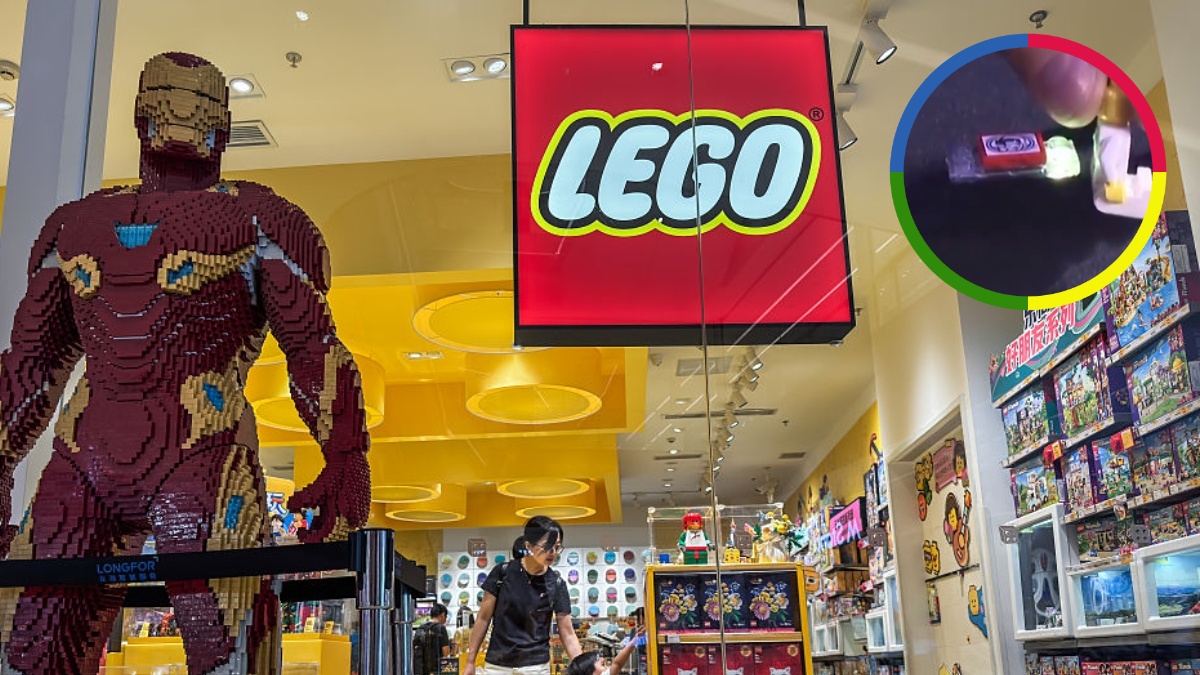

The biggest reveal at the 2026 Consumer Electronics Show wasn’t a phone or a car, but a single Lego block. The situation was reported by the Daily Dot that Lego unveiled its new “SMART Brick,” pitching it as a way to blend classic building with interactive technology.
Lego says the Smart Brick responds to how children build around it, triggering sounds, lights, and reactions from nearby pieces without requiring a screen. The company emphasized that the experience remains focused on hands-on play rather than apps or tablets, positioning it as an alternative to screen-based toys.
Online reaction has been sharply divided. While kids and some longtime fans are intrigued, many parents expressed discomfort, with social media comments ranging from dystopian jokes to concerns about privacy, tracking, and whether Lego has gone too far by making its bricks “smart.” That kind of whiplash mirrors reactions seen in other viral moments, such as when a woman spent thousands on a first-class flight only to regret it after seeing what United actually provided.
This felt like Lego was testing how much change parents would tolerate
The Smart Brick is the foundation of Lego’s new SMART Play line, scheduled to launch on March 1. Lego describes the brick as being “packed with world-first technologies” that allow sets to react dynamically based on proximity and position. Vehicles can make engine sounds, environments can light up, and playsets can respond in real time as kids move pieces around.
Company executives have said the goal is not to push children toward screens, but to deepen immersion through physical interaction. Lego leadership has framed the Smart Brick as a way to combine storytelling, creativity, and technology while keeping play tactile.
A major selling point, and a major anxiety trigger, is how central the Smart Brick is to the experience. If it’s lost, broken, or the battery dies, the interactive elements stop working. Early sets using the technology are tied to Star Wars themes, including an X-Wing, a TIE Fighter, and a larger duel-focused set, all priced higher than comparable non-smart Lego kits. That mix of cost and dependency has amplified skepticism, especially as consumers remain sensitive to how a single mistake can carry long-term consequences, as seen in stories like a woman whose insurance costs skyrocketed after one error following an accident.
On social media, distrust of tech companies spilled into discussions about children’s toys. Some users worried Lego could eventually collect data or track kids’ behavior through connected bricks, even though no such features have been announced. Others joked about subscriptions or paywalls creeping into physical toys.
Beyond privacy concerns, many commenters expressed fatigue with “smart” products entering traditionally low-tech spaces. Lego’s appeal, they said, has always been its simplicity: no updates, no charging, and no systems to fail.
One practical question lingers. Parents and I wonder whether stepping on a Smart Brick would hurt just as much or not.









Published: Jan 7, 2026 08:15 pm