



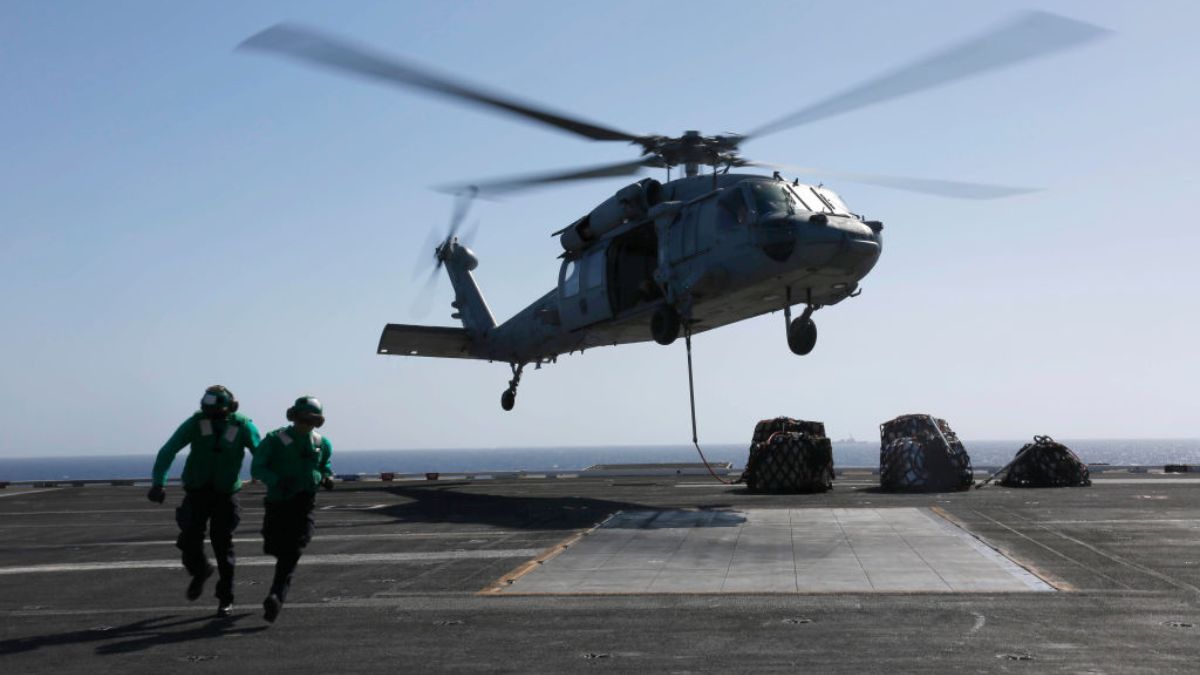

President Trump revealed he has sent a massive military presence, which he called a “big armada,” to the region near Iran. At the same time, he claims the regime is actively trying to reach out to him for a deal. The president said this situation is “in flux” during an interview on Monday.
This deployment is truly massive, and according to Axios, President Trump said the concentration of power is “Bigger than Venezuela.” The U.S. military has been quickly moving assets into the CENTCOM area, led by the arrival of the USS Abraham Lincoln aircraft carrier strike group on Monday.
The U.S. sent more F-15 and F-35 fighter jets, extra refueling tankers, and new air defense systems to the region. CENTCOM commander Admiral Brad Cooper visited Israel on Saturday to coordinate military plans and possible joint defensive efforts if Iran decides to attack Israel.
Trump balances military strength with diplomatic openness
A huge military buildup is happening while the president insists diplomacy is still possible. He did not discuss the specific military options presented to him by his national security team, but he’s confident that Tehran genuinely wants to talk. The comparison to Venezuela is notable, especially considering Venezuela’s recent warnings to the U.S. about American military actions in the region.
“They want to make a deal. I know so. They called on numerous occasions. They want to talk,” President Trump said. A senior U.S. official confirmed later in the day that the White House is “open for business” regarding negotiations with Iran. The official stated that if Iran wants to contact the U.S., they already know what the terms are, as these conditions have been sent to them many times over the last year.
If Iran wants a deal, they must accept tough conditions. These demands include getting rid of all their enriched uranium, putting a cap on their stockpile of long-range missiles, and changing their policy of backing proxies across the Middle East.
They would also have to agree to a ban on independent uranium enrichment within the country. Such strict terms mirror the kind of regulatory changes seen when Venezuela attempted to rewrite oil regulations under international pressure.
This military deployment follows a period of intense tension. The president came close to ordering a strike on regime targets earlier this month after the Iranian regime brutally put down protests, killing thousands of its own citizens. While the protests have largely been stopped, White House officials say an attack is still on the table.
There’s a split within the president’s circle about the next step. Some hawkish advisors are pushing hard for him to enforce his “red line” and punish the regime. Others are questioning what bombing would actually achieve, preferring instead to use Iran’s current weakness as leverage to push for a complete deal. President Trump hasn’t made a final decision yet and will likely hold more consultations this week and review additional military options.



Published: Jan 27, 2026 01:45 pm