



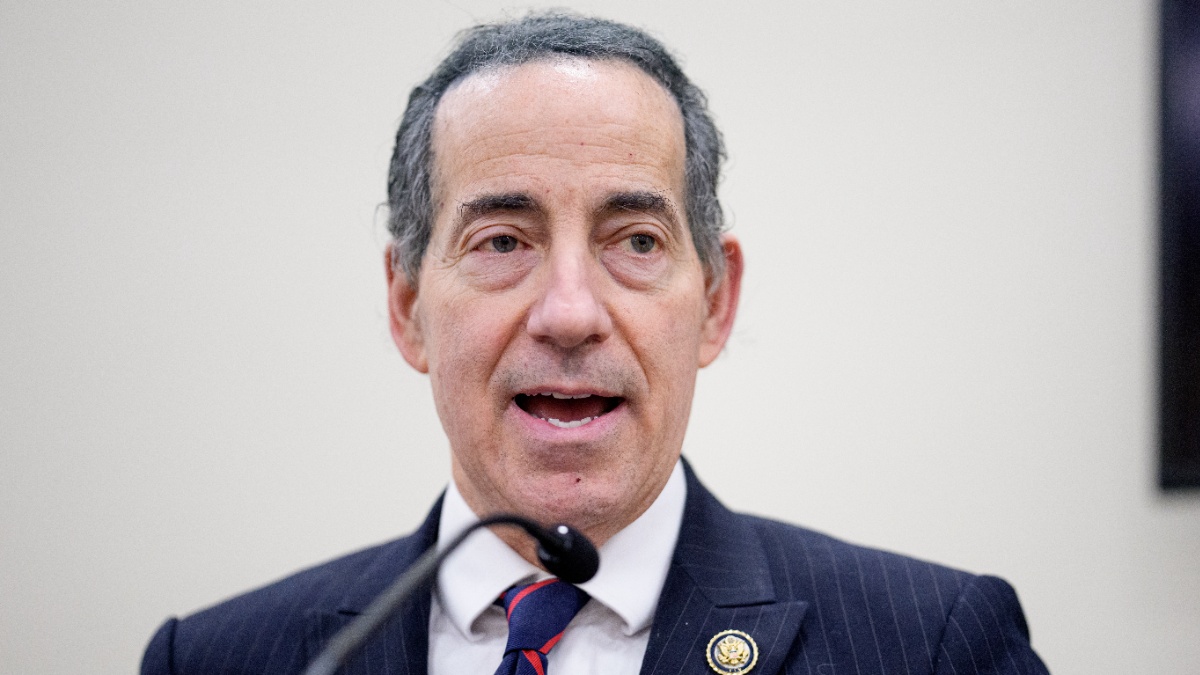

Representative Jamie Raskin, who serves as the ranking member on the House Judiciary Committee, reviewed the newly released, unredacted Jeffrey Epstein files at a government facility in Washington DC. He walked away extremely critical of the Justice Department’s handling of the release, specifically pointing out that the redaction process was fundamentally flawed, as reported by The Guardian.
The core issue Raskin identified is twofold: the department failed to protect the names of known victims, while simultaneously obscuring the identities of abusers and associates for reasons he called “mysterious.” Congress passed the Epstein Files Transparency Act back in November, requiring the release of millions of documents related to Jeffrey Epstein. That measure was specifically supposed to allow redactions only in limited circumstances, like protecting the names of victims.
Raskin told reporters he was able to see the names of lots of people “who were redacted for mysterious or baffling or inscrutable reasons.” This is where the story gets truly frustrating. He noted that Les Wexner, the founder of Victoria’s Secret whose long association with Epstein has been public knowledge for years, was among those whose names were blacked out.
Even more troubling than the questionable redactions is the department’s failure to protect the survivors
“They violated that precept by releasing the names of a lot of victims, which is either spectacular incompetence and sloppiness on their part, or, as a lot of the survivors believe, a deliberate threat to other survivors who are thinking about coming forward, that they need to be careful because they can be exposed and have their personal information dragged through the mud as well,” Raskin explained.
Raskin also highlighted a crucial detail involving President Trump. One document he reviewed was an email that Epstein sent to his associate, Ghislaine Maxwell. This email contained an account from Epstein’s lawyers regarding a conversation with attorneys representing President Trump around 2009.
In that account, President Trump was quoted as saying that while Epstein was never an official member of his Mar-a-Lago club, he had certainly been a guest and was never asked to leave. This directly contradicts previous statements made by the president suggesting he had at one point barred Epstein from his Florida property.
The volume of information is staggering. The Justice Department has released around 3.5 million files so far, but Raskin said there are still about 3 million more files awaiting release. Lawmakers wishing to view the unredacted documents must go to a Justice Department facility, where they must enter without any electronic devices or staff members. Raskin noted that, under these difficult conditions, he was only able to review about 30 to 40 files in total.
The Maryland congressman is taking action immediately. Attorney General Pam Bondi is scheduled to testify before the House Judiciary Committee, and Raskin plans to raise these major redaction issues with her directly. “We’re going to start by posing questions directly to Attorney General Bondi about the process that produced such flawed results, and that has created such mystery,” Raskin said. “But also, we want to get a commitment from the Department of Justice to clean it up as quickly as possible, and to get them to release the millions of other documents that are still out there.”
Raskin noted the depressing level of political reaction in the US compared to the UK, where similar revelations have caused a massive political firestorm. He pointed out that President Trump, unlike UK officials mentioned in the reports, is mentioned repeatedly in the files.
“I’m just afraid that the general coarsening and degradation of American life has somehow conditioned people not to take this as seriously as we should be taking it,” Raskin said, stressing the absolute gravity of the situation, especially since the files he has seen contain discussions regarding girls as young as nine years old.







Published: Feb 10, 2026 02:00 pm