



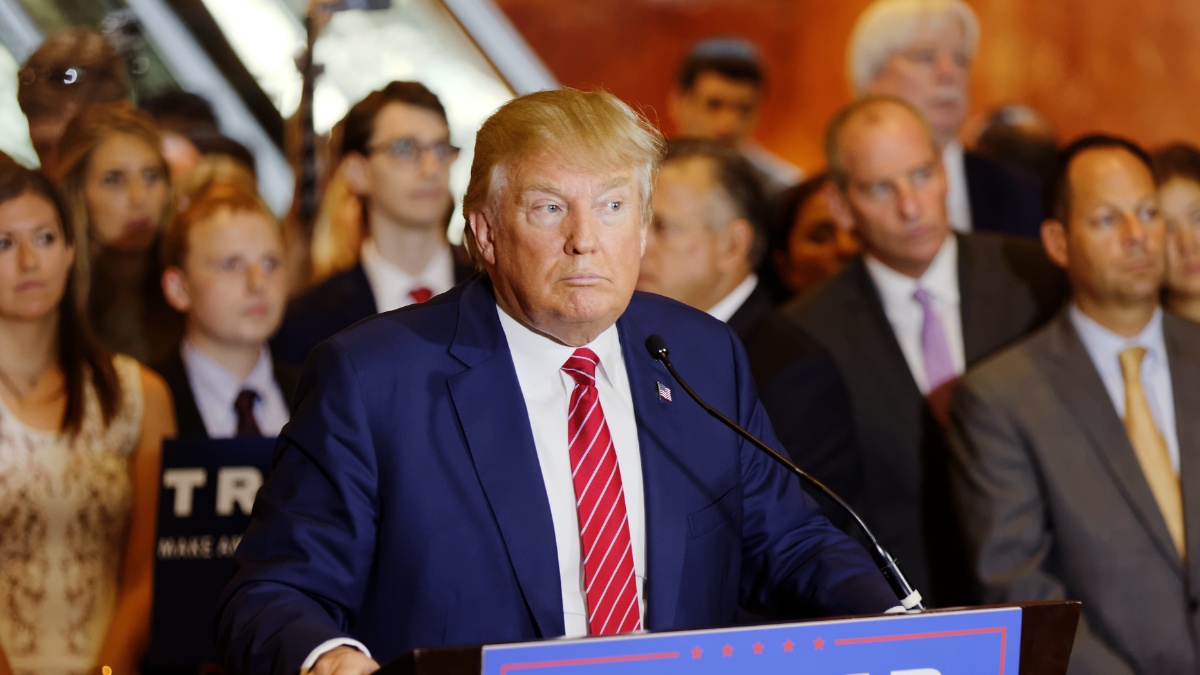

President Trump is reportedly growing more frustrated with the military’s assessment of potential options against Iran. Sources familiar with the situation, speaking anonymously about national security matters, say the president feels limited by what advisers describe as restricted military options available against Tehran.
According to CBS News, military planners are warning Trump that even limited strikes on Iran could open the door to a much wider conflict. This is a serious risk that could drag the United States into a prolonged war in the Middle East, with no guarantee of a quick or clean outcome.
Trump has pushed back on reports suggesting that Gen. Dan Caine, chairman of the Joint Chiefs of Staff, is “against us going to War with Iran.” Trump said that while Caine “would like not to see War,” he believes that if a military decision is made, “it will be something easily won.” Trump added that Caine “has not spoken of not doing Iran, or even the fake limited strikes that I have been reading about, he only knows one thing, how to WIN and, if he is told to do so, he will be leading the pack.”
Military leaders are warning Trump that a war with Iran could spiral far beyond what the White House is expecting
Despite Trump’s public statements, senior military officials say planners are giving strictly unbiased advice. In private meetings, Gen. Caine has reportedly told Trump that a sustained military campaign against Iran could bring serious consequences, including retaliation from Tehran and its proxy forces against U.S. personnel and allies across the region.
At the heart of Trump’s frustration is a desire for strong action that he believes would reset the diplomatic table. He has been pushing advisers for options that would deliver a punishing strike large enough to bring Iranian leaders back to negotiations on terms favorable to Washington.
However, military planners cannot guarantee such an outcome, as even carefully planned actions can produce unpredictable results. Trump has also been flexing his authority on other fronts, and what Trump claims a Supreme Court ruling handed him has raised serious concerns among legal experts.
Special envoy Steve Witkoff recently noted that Trump is “curious” about why Iranians “haven’t capitulated.” Witkoff remarked on the scale of U.S. naval power already in the region, questioning why Iran hasn’t come forward to express a desire to avoid developing weapons.
In recent weeks, the U.S. has significantly expanded its military presence in the region. The USS Gerald R. Ford carrier strike group is expected to position itself within range of Iranian territory, joining the USS Abraham Lincoln carrier strike group and other aircraft squadrons already based throughout the Persian Gulf.
Patriot and Terminal High Altitude Area Defense systems have also been reinforced to protect American troops and regional allies. Trump’s broader foreign policy ambitions have drawn criticism elsewhere too, with Greenland’s leader speaking out against Trump’s Arctic ambitions as his geopolitical agenda continues to expand.
Pentagon officials say these deployments are defensive and meant to deter escalation. However, the scale and speed of the buildup makes one thing clear: any strike on Iran would almost certainly trigger a response, whether through missile attacks, disruption in the Strait of Hormuz, or actions by proxy forces in Iraq and Syria.






Published: Feb 24, 2026 01:45 pm