



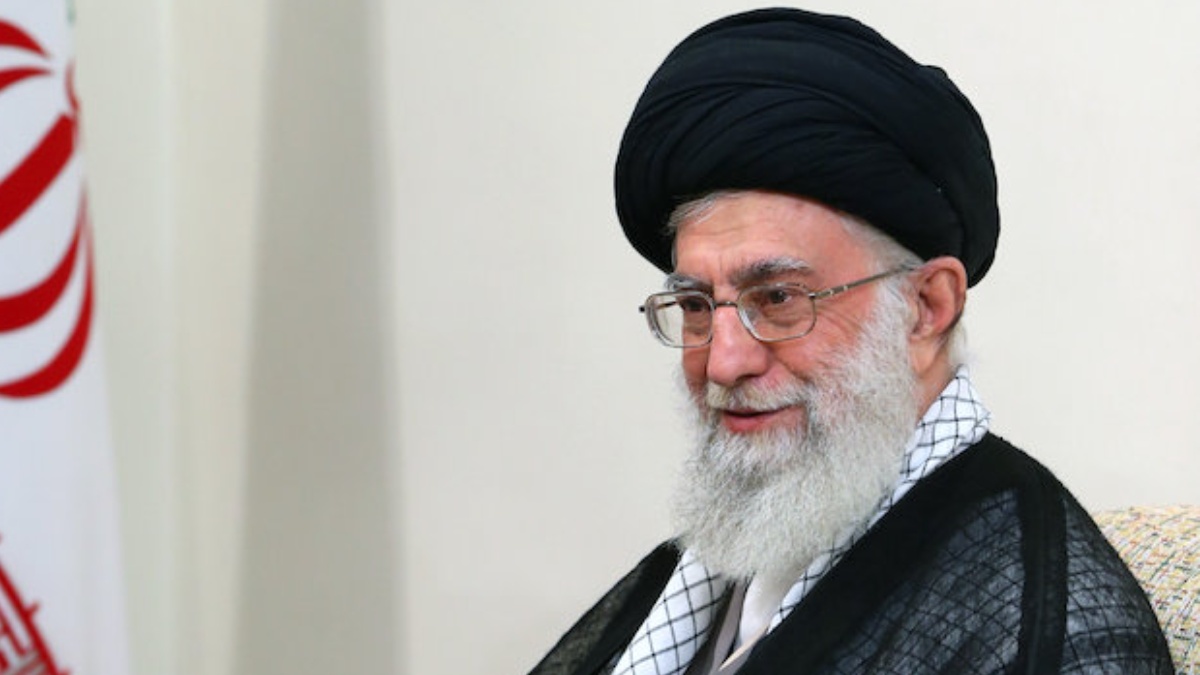

Following the recent strike in Iran that resulted in the death of its supreme leader on Saturday, President Trump has adopted a different communication strategy than past presidents. As reported by The Washington Post, he relied on social media posts and recorded videos instead of delivering a formal prime-time address.
The approach allows him to claim success if events unfold favorably while maintaining some distance if the situation deteriorates. His initial acknowledgment of the strike that killed Ayatollah Ali Khamenei came through a written Truth Social post, followed by a six-minute video released Sunday, nearly 24 hours later.
Previous presidents handled comparable moments differently. President George W. Bush addressed the nation from the Cabinet Room after Saddam Hussein’s capture, and President Barack Obama spoke publicly when announcing Osama bin Laden’s death, while Trump has not held a formal televised address since a rally in Corpus Christi, Texas, on Friday and briefly referenced the strike during his State of the Union speech.
A strategy built on flexibility and distance
Some analysts suggest the communication strategy reflects an effort to avoid what former Secretary of State Colin Powell described as the “Pottery Barn rule,” the idea that if you break something, you own it. Iran strike timeline shift has also been discussed as decisions and public messaging unfold in close sequence.
By limiting highly symbolic presidential imagery tied to the operation, Trump may be preserving flexibility if the conflict expands. Richard Haass, president emeritus of the Council on Foreign Relations, said the approach could provide an “off-ramp,” allowing the president to call for regime change without fully assuming responsibility for executing it.
In his Sunday video, Trump used sweeping language, saying Iran had “waged war against civilization itself” and urging “Iranian patriots who yearn for freedom” to seize the moment, while stating that US support would not extend to doing the work for them. Iran succession plan details have also circulated as attention turns to what leadership changes could look like inside the country.
Aaron David Miller, a longtime Middle East adviser to multiple administrations, described the posture as a strategy built on escalation dominance, arguing the US may believe it can control the pace and scope of the conflict. White House Press Secretary Karoline Leavitt defended the decision not to follow a traditional address format, saying operational secrecy and security were priorities and that extended public signaling could have jeopardized the mission.
Administration officials have provided limited detail about the legal justification for the strike, even in classified briefings. According to aides present at a Sunday session, no intelligence showing an imminent Iranian attack was presented, though officials cited Iran’s ballistic missile capabilities and potential retaliation.
The political risks remain significant if casualties mount. Three US troops have been killed and five injured so far, and Trump acknowledged in his video that more losses are possible.
The White House has also reduced foreign policy visibility compared to last year, emphasizing domestic priorities while coordinating media appearances with congressional Republicans instead of deploying senior officials to Sunday shows. Senator Tom Cotton praised Trump’s video message and cited Iran’s decades-long campaign of hostility toward the United States.
Elliott Abrams, who worked on Iran policy in Trump’s first administration, argued that judging the success of the operation may take months or longer, suggesting that even delayed political change inside Iran could ultimately reshape how the strike is viewed.







Published: Mar 2, 2026 06:15 am