



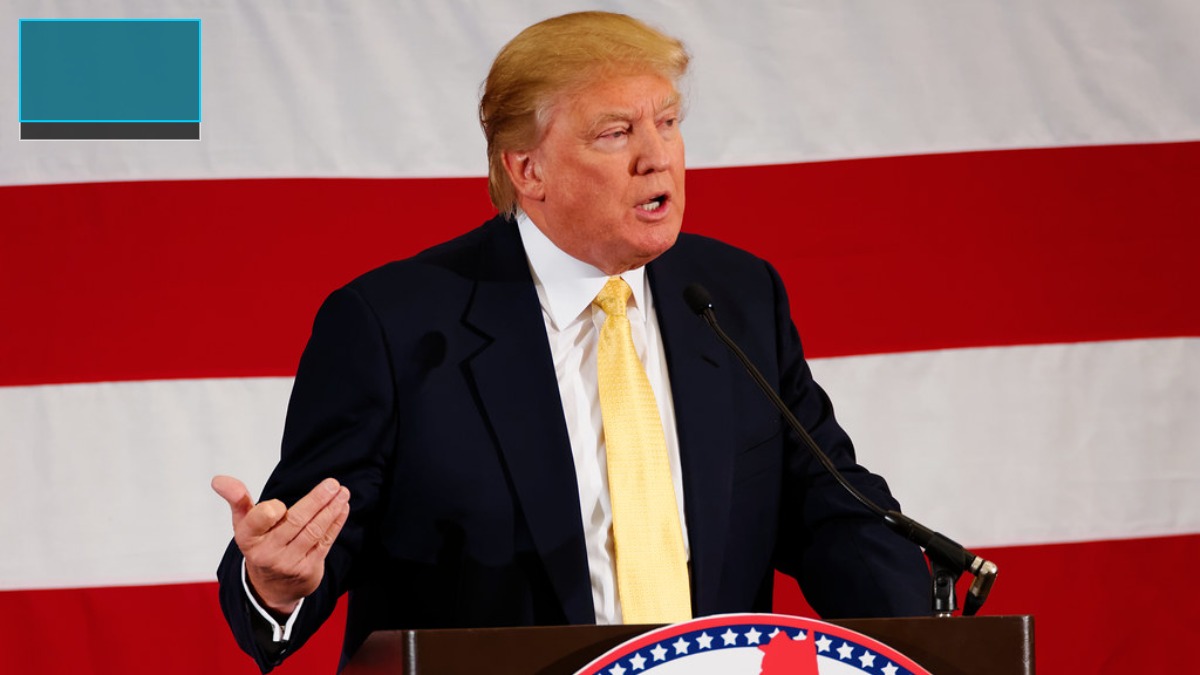

President Trump announced on Sunday that he would refuse to sign any bills until Congress passed the SAVE Act, his proposed voting legislation. He posted on Truth Social that the SAVE Act “supersedes everything else” and “MUST GO TO THE FRONT OF THE LINE,” adding that he would not sign “other Bills until this is passed, AND NOT THE WATERED DOWN VERSION.”
According to The Daily Beast, he had also told an outlet the previous week that he would “close government over it,” calling it a “core belief.” The announcement quickly caused problems for Republican lawmakers who were trying to finalize a funding bill for the Department of Homeland Security.
The White House stepped in to clarify what Trump meant. A spokesperson said that “The President was referring to other bills, not DHS funding. If the Democrats do the right thing and pass funding for DHS, the President will, of course, fund the agency.” This walked back the broad scope of Trump’s original statement.
The SAVE Act remains a deeply controversial bill that could block millions of eligible Americans from voting
Democrats had been demanding policy changes, such as better training for immigration agents and a ban on masks, before agreeing to fund the agency. Trump’s post made it unclear whether he would sign a bill to prevent or end a partial government shutdown if it was not connected to his voting reform push.
The Safeguard American Voter Eligibility, or SAVE Act, is the legislation at the center of this dispute. It would require voters to show photo ID, prove U.S. citizenship when registering to vote, and give the Department of Homeland Security access to state voter rolls. Trump has also been taking a hard stance on foreign policy, with his demands for Iran’s complete surrender raising concerns that such an approach could lead to a much longer conflict.
Critics of the bill argue that it could make it significantly harder for millions of U.S. citizens to register and vote, effectively blocking eligible voters through unnecessary requirements. The SAVE Act has already passed in the House and is now waiting for a Senate vote. However, it is unlikely to get the 60 votes needed to pass without strong Democratic support.
Even with pressure from Trump, Republican Senate Majority Leader John Thune has remained against removing the filibuster to push the bill through, making its path forward very difficult. Meanwhile, global security concerns continue to grow, as seen when NATO’s vulnerabilities during a Russia invasion simulation revealed serious weaknesses in the alliance’s ability to respond to threats.
Trump, who is 79, has a history with government shutdowns, having presided over the two longest in U.S. history during his first term. His willingness to threaten another shutdown shows how committed he is to seeing the SAVE Act become law, even at the cost of disruption to government operations.







Published: Mar 10, 2026 05:15 pm