



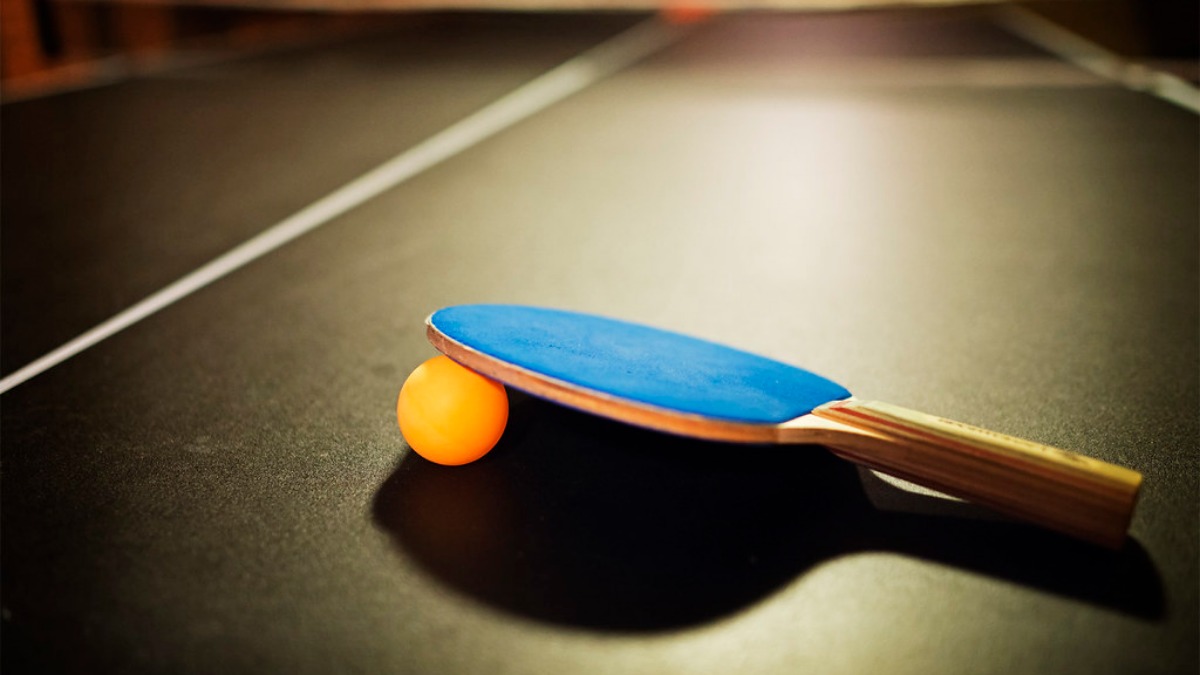

An autonomous AI-powered robot named Ace has officially defeated top-level human competitors in table tennis, marking the first time a machine has achieved expert-level play in a competitive physical sport. While it struggled against the very best professionals, Ace prevailed in most matches against experienced non-professional players and scored 16 aces while serving against several elite athletes. As detailed by BroBible, the milestone is being treated as a significant leap forward for physical AI agents.
The breakthrough comes from Sony AI, which stated the achievement represents a major step toward creating robots capable of handling the fast, precise, and real-time interactions that define competitive sport. As researchers noted in the journal Nature, AI has long dominated in digital environments, but physical sports have remained a challenge due to the speed, adversarial dynamics, and reaction-time demands they require. The full technical details are available on Sony AI’s official project page.
Ace operates on three core technical pillars. The first is a hybrid vision system combining event-based sensors with nine high-speed active pixel sensors running at 200 Hz. Rather than processing every pixel, the system focuses on areas where changes in motion or brightness are detected, enabling 3D triangulation with a perception latency of just 10.2 milliseconds.
The robot’s speed advantage over humans is almost unfair
The second pillar is model-free reinforcement learning trained through a Sim2Real approach, where Ace developed complex control behaviors in a physics-accurate simulation before being deployed in the real world. This allows it to continuously update its strike trajectory based on the ball’s spin and flight path during a live rally. A hierarchical architecture separates strategic decisions from low-level motor control, helping the robot vary its gameplay. The compute demands behind training systems like this have contributed to broader hardware shortages, with AI data centers driving up RAM prices and squeezing supply for consumer electronics throughout 2026.
The hardware itself is built for extreme agility, featuring two prismatic and six revolute joints for rapid lateral movement and precise striking. Peter Durr, Director of Sony AI in Zurich, noted that human athletes typically need around 230 milliseconds to react, while Ace operates with a total latency of roughly 20 milliseconds. It is capable of returning balls at linear velocities up to 19.6 meters per second, well within the range needed for professional-level rallies.
Table tennis is one of the more demanding testbeds for this kind of technology. The ball can exceed 20 meters per second and spin at more than 160 revolutions per second, and Ace must account for spin rates above 9,000 revolutions per minute. Sony AI worked with equipment manufacturer Victas to ensure the testing environment was authentic and rigorous.
Elite and professional players faced off against Ace in tournaments held in April and December 2025. Some coaches, including Yamato Kawamata, had already challenged the robot as far back as late 2023. The project builds on Sony AI’s earlier work with GT Sophy, which mastered racing in a virtual environment, applying those same principles to the unpredictable dynamics of a physical match. Researchers working on physical AI systems have noted that real-world deployment, much like recent court rulings reshaping institutional boundaries, often forces a reckoning between theoretical capability and practical constraint.
Durr stated that the research demonstrates an autonomous robot can win at a competitive sport by matching or exceeding human decision-making and reaction times in a physical space. The project is positioned as a long-term evolution in robotics rather than a one-time demonstration.









Published: Apr 22, 2026 08:30 pm