



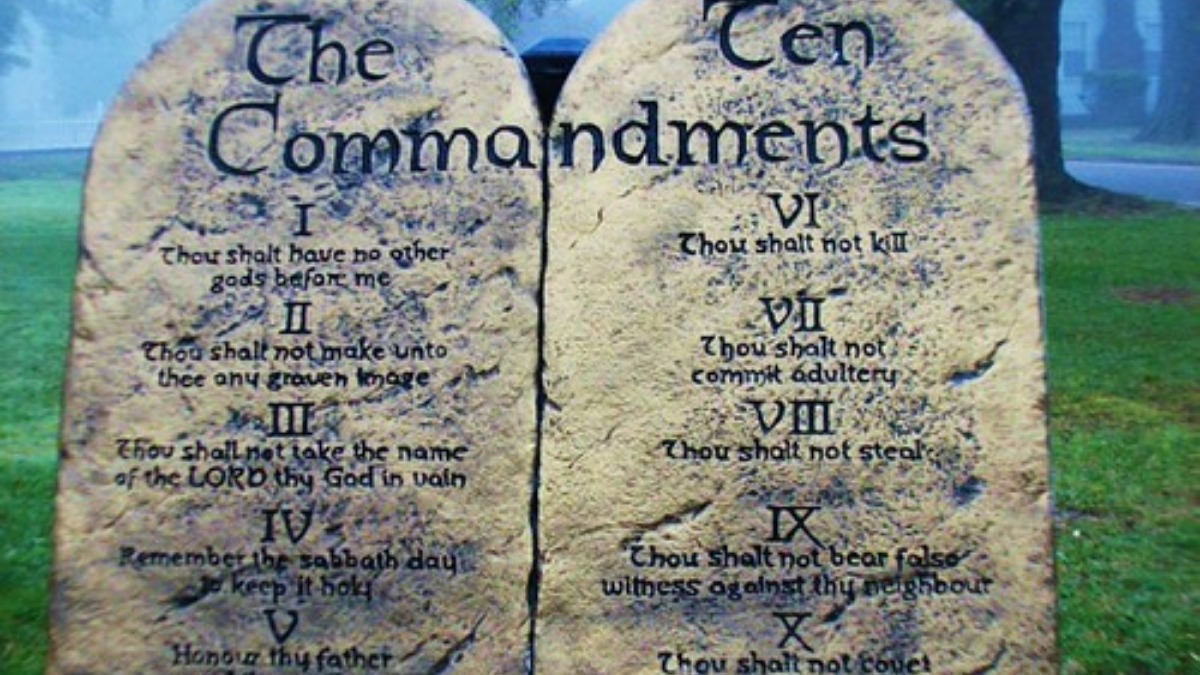

The 5th U.S. Circuit Court of Appeals ruled to allow Texas to require posters of the Ten Commandments in public school classrooms, The Hill reported. This decision, reached by a 9-8 vote, effectively overrules a previous lower court ruling that had blocked a state law requiring schools to display the Ten Commandments if the posters were donated to the district. It marks a significant shift in the legal landscape regarding religious displays in educational settings and is also part of the Bible push by the current Trump administration.
This development follows a pattern of legal activity across the region. Just two months prior, the same appeals court allowed Arkansas to enforce a similar requirement for the Ten Commandments to be hung in all public school classrooms. The 5th Circuit has been central to these debates, having also upheld a Louisiana law requiring these displays in a ruling that involved all 17 active judges on the bench.
In the Louisiana case, the court initially ruled that the challenge was premature because the posters had not yet been placed in classrooms, though the legal arguments have since evolved to address the merits of the laws directly.
In the majority opinion regarding the Texas law, the bench wrote that the legislation does not violate the First Amendment rights of students or parents
The court stated, “Because the Texas law has none of the elements of a founding-era establishment of religion, the district court erred in ruling that the law violates the Establishment Clause.” This perspective aligns with the arguments of state officials who view these requirements as a way to integrate historical and moral lessons into the daily lives of students.
Texas Attorney General Ken Paxton expressed strong support for the ruling. “This is a major victory for Texas and our moral values,” said Paxton. “My office was proud to defend SB 10 and successfully ensure that the Ten Commandments will be displayed in classrooms across Texas. The Ten Commandments have had a profound impact on our nation, and it’s important that students learn from them every single day.”
This move is just one part of a broader push in Texas to incorporate the Bible into the public school system. The state has already introduced an optional curriculum featuring Bible lessons, and there is an upcoming vote that could make Bible stories required reading for students in certain grade levels. These efforts are part of a wider trend where conservative groups are testing the boundaries of religious expression in public institutions, often looking to the Supreme Court for validation.
Proponents of these laws frequently cite the 2022 Supreme Court decision in Kennedy v. Bremerton School District, which allowed a football coach to pray on the field after games, as a sign that the current high court is more open to religious expression in public schools.
Kelly Shackelford, president, CEO and chief counsel at First Liberty Institute, noted that the Supreme Court’s decision to move away from the long-standing Lemon test, which had been used for 50 years to limit religious expression in public, has changed the environment. According to Shackelford, “I just think these laws are going to be upheld now, after the Kennedy decision.”
However, the legal battle is far from settled. Organizations representing the plaintiffs have signaled their intent to take the matter to the Supreme Court. In a statement, the groups expressed their clear opposition to the recent ruling.
“We are extremely disappointed in today’s decision. The Court’s ruling goes against fundamental First Amendment principles and binding U.S. Supreme Court authority. The First Amendment safeguards the separation of church and state, and the freedom of families to choose how, when and if to provide their children with religious instruction. This decision tramples those rights. We anticipate asking the Supreme Court to reverse this decision and uphold the religious-freedom rights of children and parents,” the statement read.
The legal environment remains a complex patchwork. While the 5th Circuit’s rulings carry significant weight, the U.S. 8th Circuit Court of Appeals is currently handling the Arkansas legal battle. While the 8th Circuit is not strictly bound by the 5th Circuit’s rulings, legal experts suggest that the recent decisions will have significant persuasive value.
As it stands, the potential for these cases to reach the Supreme Court remains high, as the justices will eventually have to decide if they are willing to intervene in this ongoing conflict over the role of religion in public education. For now, the implementation of these displays in Texas classrooms is authorized, but the final word on the constitutionality of such requirements likely rests with the highest court in the country.







Published: Apr 22, 2026 04:30 pm