



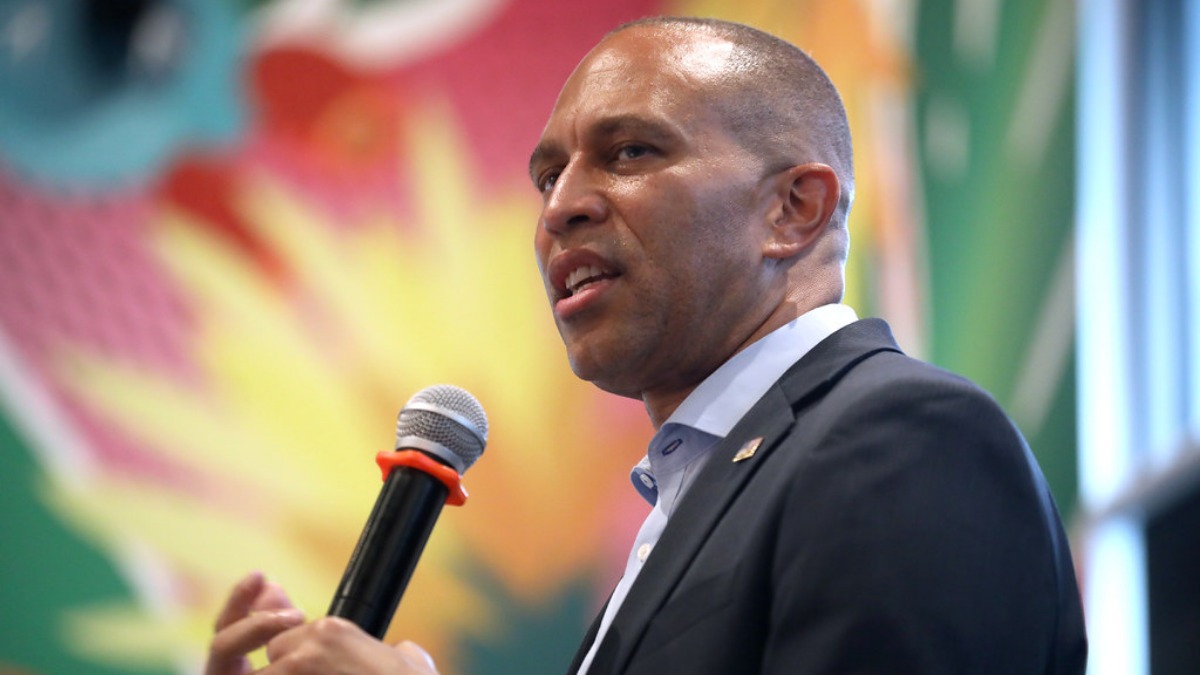

Following the shooting at the White House Correspondents’ Association dinner, top Trump administration officials pointed to Democrats and the media as the main causes of political violence in the U.S. House Minority Leader Hakeem Jeffries pushed back hard, calling White House press secretary Karoline Leavitt a “stone-cold liar” for blaming Democrats for the shooting.
At a House press conference, Jeffries called Leavitt a “disgrace” and accused her of ignoring the violent rhetoric of MAGA extremists, including what he described as providing “aid and comfort to violent insurrectionists who brutally beat police officers on January 6th.” He also defended his earlier comments about Republicans launching “maximum warfare” in the redistricting battle, saying he stands by them, reports The Hill.
Leavitt continued to blame Democrats, saying their rhetoric helped bring the country to this “dark moment.” She pointed to Jeffries’ own comments about Republicans and “maximum warfare” as an example of the kind of divisive language she says contributed to the shooting. Leavitt did not address the history of inflammatory language used by members of her own party during the press briefing.
The blame game after the WHCA shooting shows how broken political discourse has become
In a CBS 60 Minutes interview that aired Sunday night, President Trump blamed Democrats for what he called their “hate speech,” saying it is “very dangerous.” The interview also became heated when Trump clashed with the correspondent over the shooter’s manifesto, leading to a tense on-air exchange. He also called out ABC late-night host Jimmy Kimmel for a joke he made last week, calling it “despicable” and saying Kimmel should be fired by Disney and ABC.
According to NBC News, First Lady Melania Trump also weighed in, blasting Kimmel for what she called his “hateful and violent rhetoric,” which she said is “intended to divide our country.” Several accounts linked to Republican groups also posted threads on X listing what they described as “examples of Democrats’ violent rhetoric.” The social media activity suggested a coordinated effort to shift public focus toward Democratic figures in the days following the shooting.
Jeffries responded directly, saying he did not care about the criticism over his earlier remarks. “Political violence in any form, directed at anyone, whether that’s the right, the left, or the center, is unacceptable,” he said. “Period, full stop.”
He made it clear that his comments about “maximum warfare” were made in the context of a political redistricting fight, and had nothing to do with physical violence. Many have noted that Trump himself has a long history of using inflammatory language and has faced criticism for how he has handled the aftermath of the shooting.
Critics pointed out that the administration’s attempt to blame Democrats for inciting violence stands in contrast to Trump’s own record of heated political speech. Trump has also revealed what his WHCA dinner speech was going to say and promised that the rescheduled event will be “a speech of love.” While both sides have accused each other of using dangerous language, neither has shown much willingness to take responsibility or tone things down.
The shooting has reignited a long-running debate about how political rhetoric influences real-world violence, and whether leaders from either party are doing enough to lower the temperature. Some political analysts have noted that moments like these tend to deepen divisions rather than bring about any real reflection, as each side rushes to score points before the facts are fully known.
For now, the finger-pointing shows no sign of stopping, and the public is left watching leaders trade accusations instead of working toward any meaningful response to the violence. Jeffries summed up his position clearly: “Clean up your own house before you have anything to say to us about the language that we use.”




Published: Apr 28, 2026 12:45 pm