



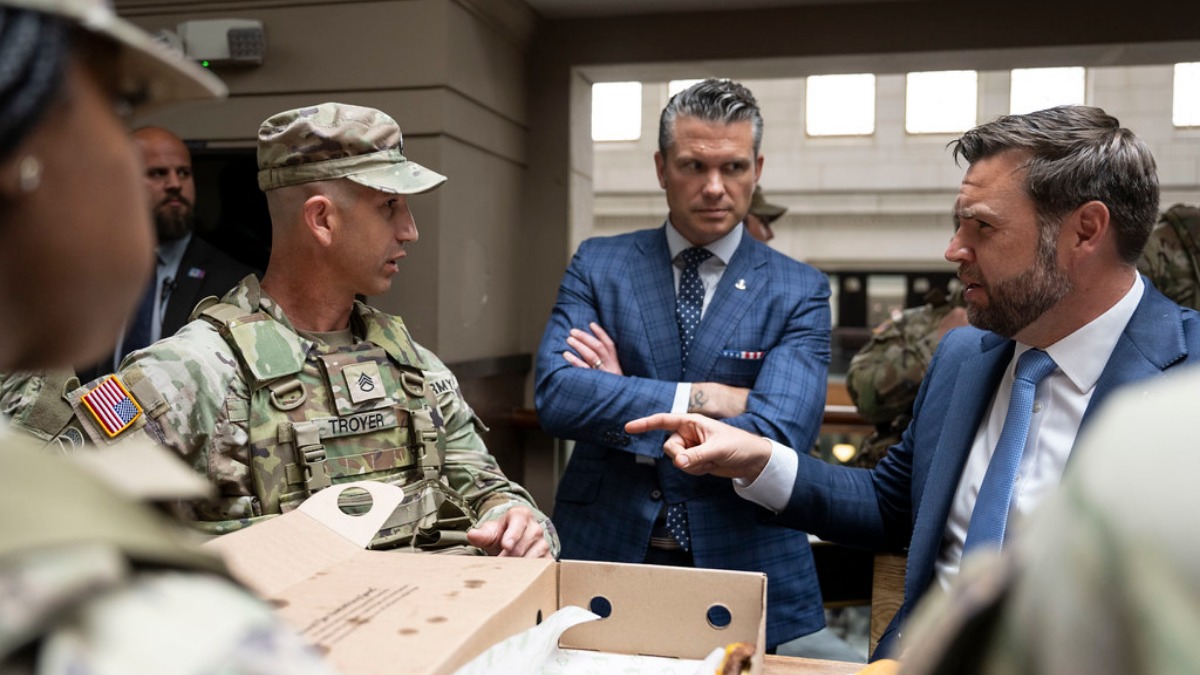

A new report from The Atlantic says Vice President JD Vance has been privately questioning whether the Pentagon is giving President Donald Trump an accurate picture of the war in Iran. According to two senior administration officials, Vance has raised concerns about the accuracy of the information being provided, including worries about the availability of certain missile systems.
The report points to a gap between what the Pentagon has been saying publicly and what US intelligence assessments show internally. Sources familiar with those assessments say Iran still has two-thirds of its air force, most of its missile-launching capability, and the bulk of its small, fast boats, which can lay mines and disrupt traffic in the Strait of Hormuz.
This stands in sharp contrast to what Secretary of Defense Pete Hegseth and General Dan Caine have said publicly, that US weapons stockpiles are strong and that Iranian forces have taken drastic damage after eight weeks of fighting. Vance has framed his concerns as his own rather than directly accusing Hegseth or Caine of misleading the president, reportedly to avoid causing divisions within Trump’s war Cabinet.
Vance’s private doubts about the Iran war reflect a deeper split within Trump’s national security team
The New York Times had earlier reported that Vance was one of the loudest voices inside the Trump administration warning against the war, having called a prolonged conflict a “disaster.” The report says he has brought his concerns directly to Trump in meetings that also included other top national security figures, suggesting this goes beyond a personal opinion and reflects a serious, ongoing concern at the highest levels of the administration.
The Atlantic’s reporting creates real questions about how much Trump actually knows about the true state of the war. If Vance is right that the Pentagon is not giving the full picture, then the president may be making decisions based on incomplete or inaccurate information about what the US military has used up and what Iran still has left on the battlefield.
The intelligence picture described in the report suggests Iran is far from being a broken force. Retaining two-thirds of its air force and most of its missile capability after eight weeks of fighting means the country still has significant military power. Trump has already ordered the Navy to target boats laying mines in the Strait of Hormuz, and if Iran’s naval capabilities are as intact as intelligence suggests, that order carries far greater risk than publicly acknowledged.
Vance’s concerns are particularly notable because he has previously warned about the risks of trying to push for regime change in Iran. His skepticism of the Pentagon’s account is backed by his broader view that getting deeply involved in a long conflict with Iran would carry serious consequences for the United States, both in terms of military resources and long-term strategic stability in the region.
What makes this situation even more significant is that Vance is not a backbench critic, he is the Vice President of the United States. When someone at that level privately questions whether the Secretary of Defense is being straight with the president, it signals a level of internal tension that goes well beyond a typical policy disagreement between administration officials.
The report does not say that Hegseth or Caine have intentionally misled anyone, and Vance himself has not made that accusation directly. But the gap between public statements and internal intelligence estimates, as described by The Atlantic, raises serious questions about whether the American public and even the president are getting an honest and complete account of how the war is actually going on the ground.
Democrats in Congress are already watching the situation closely, and whether Trump faces any political consequences may depend heavily on how the midterms play out. For now, Vance’s private concerns and the intelligence picture behind them suggest the public narrative around the Iran war may be far from complete.








Published: Apr 28, 2026 10:15 am