



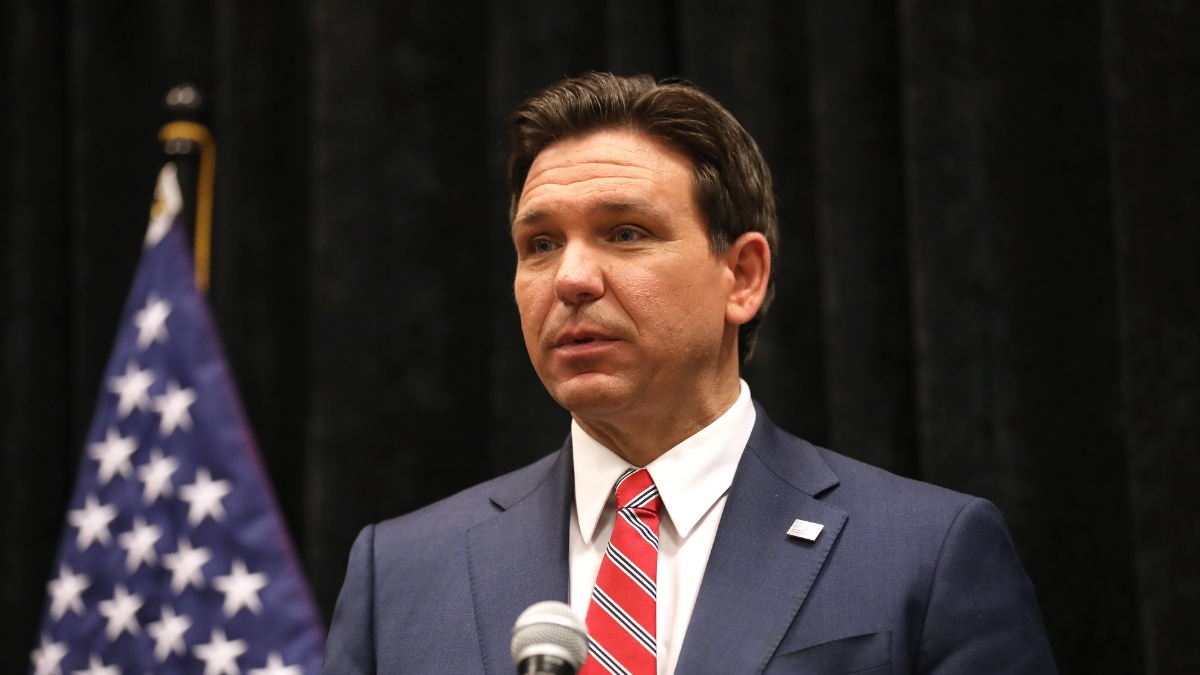

The Florida Legislature officially approved a new congressional map on Wednesday that could add four Republican seats to the state’s delegation. As detailed by CNN and the New York Times, the proposal was pushed through in a two-week special session in Tallahassee at the direction of Governor Ron DeSantis, a pace that departs sharply from the months-long redistricting processes that typically involve multiple hearings and map drafts.
The vote came only hours after the Supreme Court released a ruling that weakened the 1965 Voting Rights Act. DeSantis had anticipated the decision and used it as his primary justification for calling the special session, even though state lawmakers had shown minimal interest in initiating a redistricting process on their own. The new map targets four Democratic-held seats across the Tampa, Orlando, and Fort Lauderdale areas. Florida currently has 28 congressional districts, seven of which are held by Democrats following a recent resignation.
The map was drawn by Jason Poreda, the governor’s top aide, who admitted during committee hearings that he had only begun working on it two weeks before the session. When pressed, Poreda confirmed that partisan data was a central factor in his design process. “Not using race, and not having to adhere to the Fair Districts Amendment, the entire suite of redistricting criteria that are available to other states I used here, including partisan data,” he stated.
The bill’s own sponsor said he didn’t think the map was constitutional
That claim sits at the core of the controversy. The Fair Districts amendments were passed by Florida voters in 2010 specifically to ban partisan gerrymandering. Lawyers for the governor argue that a prior Florida Supreme Court ruling rendered those provisions moot, a legal theory that critics have rejected outright. Nikki Fried, chairwoman of the Florida Democratic Party, called the argument “asinine.”
Even within Republican ranks, the map drew dissent. State Senator Jennifer Bradley of Fleming Island voted against it, stating plainly, “I can’t do it. It’s just unconstitutional.” The bill’s Republican sponsor, State Senator Don Gaetz of Crestview, admitted he disagreed with the governor’s aides on the applicability of the partisan gerrymandering ban. Despite those reservations, he still moved the map forward. He also claimed he was not convinced the map would necessarily benefit his party, noting that elections are inherently unpredictable.
On the House floor, State Representative Angie Nixon, a Jacksonville Democrat, used a bullhorn to protest the proceedings. She shouted, “It is out of order! You are violating the Constitution!” The map passed regardless, clearing the House 83-28 and the Senate 21-17. Separately, with the federal government issuing new documents in ways that Americans may not be able to opt out of, including Trump-branded passports now in circulation, the question of what citizens can meaningfully contest has become a recurring one in American political life.
Voting rights groups announced plans to challenge the map in court as soon as Governor DeSantis signs it. Legal arguments are expected to focus on the Florida Constitution’s explicit prohibition against partisan gerrymandering. Republican State Representative Jenna Persons-Mulicka defended the process, pointing to what she called an “evolving legal landscape” and stating, “I believe that there is a likelihood that that map will be upheld against legal challenge.” Amid a broader week of federal security and oversight questions in Washington, including a reported checkpoint breach near the Ellipse during King Charles’s visit, the redistricting fight adds to a crowded field of institutional disputes heading into the midterms.
With Florida’s primary elections scheduled for August, the legal challenge will need to move quickly. The final shape of the state’s congressional map may ultimately be determined by the courts rather than the legislature.







Published: Apr 30, 2026 05:00 am