



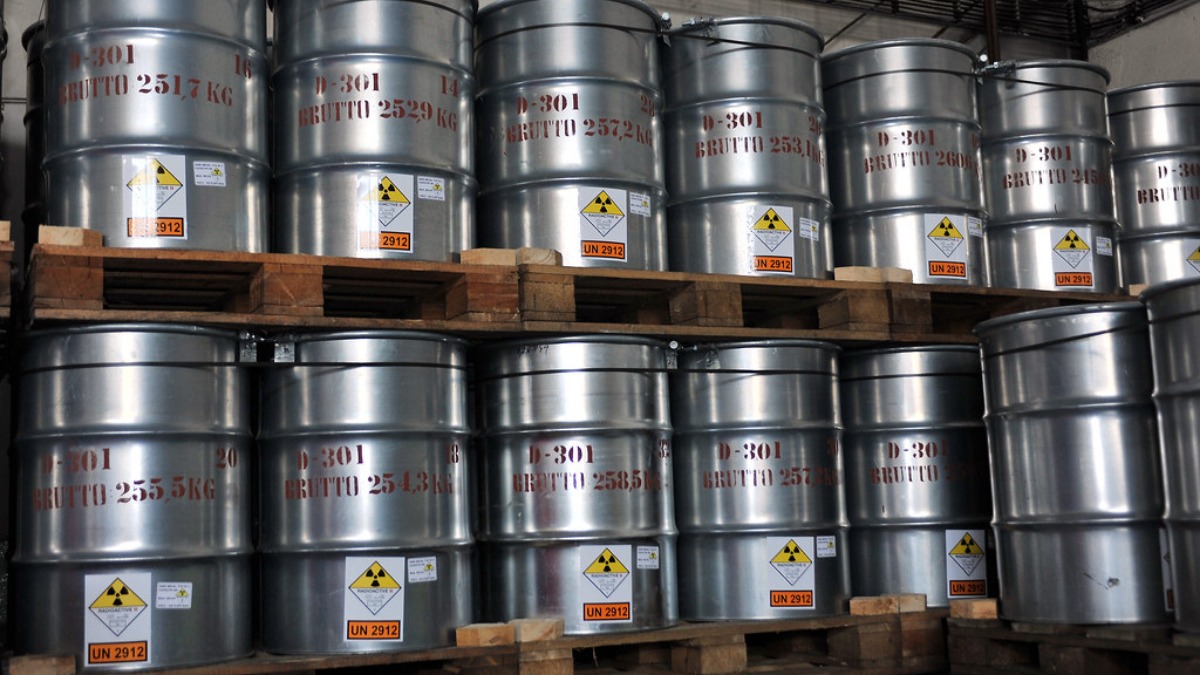

A recent investigation by The New York Times found that Iran has built up roughly 11 tons of enriched uranium over the past eight years. Much of this stockpile is now unaccounted for following military strikes on the country’s nuclear sites. The situation has raised serious concerns among international observers about where the material is and what condition it is in.
Iran’s nuclear enrichment program began expanding after President Donald Trump pulled the United States out of the Joint Comprehensive Plan of Action (JCPOA) in 2018. Iran first broke the caps on low-level enrichment, then pushed to 20% purity in 2021, which is widely seen as a key step toward weapons-grade material. Enrichment then climbed to 60% in the years that followed, putting Iran close to the 90% level that is typically needed to build a nuclear weapon.
In June 2025, Trump launched Operation Midnight Hammer, which involved strikes on key nuclear sites including Natanz, Fordow, and storage tunnels near Isfahan. Weeks after the strikes, Iran stopped cooperating with the International Atomic Energy Agency (IAEA), cutting off on-the-ground inspections and leaving the status of the stockpile largely unverified.
Iran’s unaccounted uranium stockpile is a serious problem for global nuclear monitoring
Some of the uranium is believed to be buried under rubble from the bombed facilities or stored in hardened underground sites, but this cannot be independently confirmed. Satellite surveillance is still ongoing, but experts say it is hard to know the exact condition or location of the material. The lack of IAEA access on the ground makes the situation even more difficult to assess.
Iran has long maintained that its nuclear program is for civilian purposes only, such as power generation, which requires uranium enriched to between 3% and 5%. However, building a nuclear weapon requires uranium enriched to 90%, which is far beyond what is needed for civilian energy use.
Iran is a signatory to the Treaty on the Non-Proliferation of Nuclear Weapons (NPT), which allows it to enrich uranium for peaceful use but includes strict safeguards to prevent the material from being used for weapons. The uranium enrichment process works by first converting uranium into a gas called uranium hexafluoride (UF₆).
This gas is then fed into fast-spinning cylinders called centrifuges, which separate the lighter U-235 from the heavier U-238. The process can take years to reach the desired level of enrichment. Experts estimate that Iran has at least 10 cascades of 174 IR-6 centrifuges in operation, which could produce around 900 to 1,000 separative work units (SWUs) per year.
At this level of capacity, Iran could potentially produce 10 or 11 low-technology atomic bombs. Meanwhile, Trump’s broader approach to Iran has drawn attention on multiple fronts, he notably mocked dead Iranian leaders on Truth Social even while JD Vance was in the middle of peace talks.
Trump’s withdrawal from the JCPOA in 2018 was a turning point that led to the steady expansion of Iran’s nuclear program. The Biden administration tried to revive the deal but was not successful, and tensions between the two countries remained high.
The recent military strikes have now added another layer of uncertainty to an already complicated situation, with no clear path forward on how the international community will verify what has happened to Iran’s nuclear stockpile. Trump has also been active on other international policy matters, including new regulations affecting U.S. Olympic team eligibility, signaling a wide-ranging approach to reshaping American institutions at home and abroad.





Published: May 2, 2026 10:30 am