



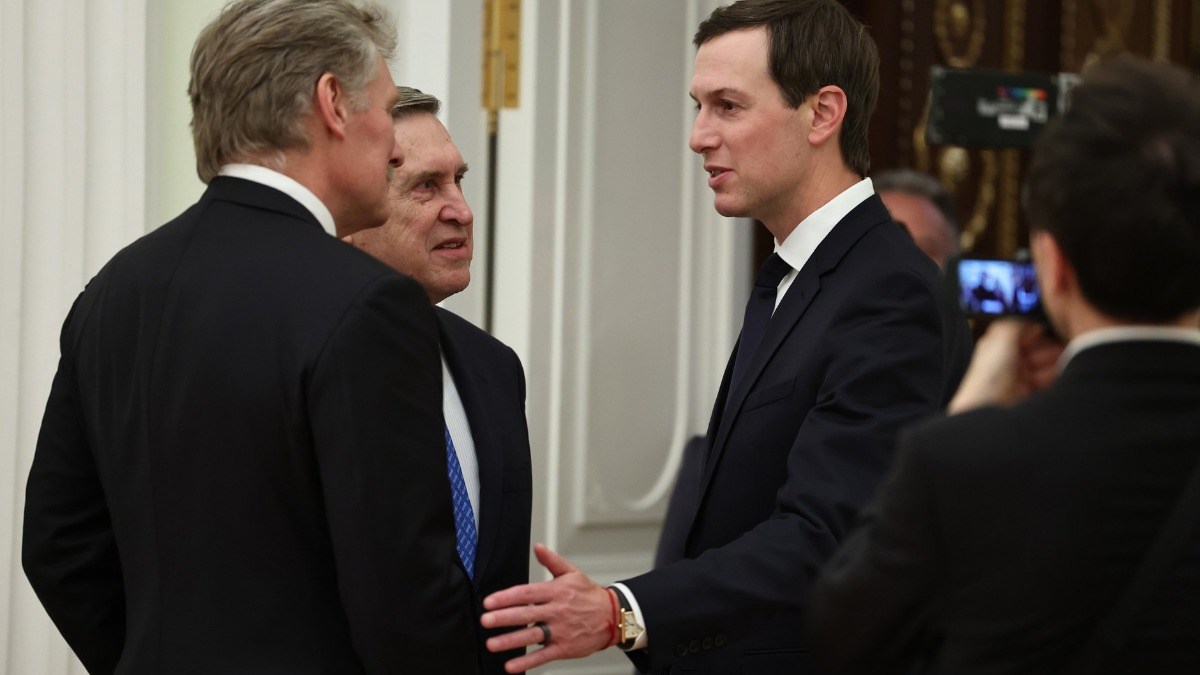

Dexter Filkins, a Pulitzer Prize-winning staff writer at The New Yorker, published a profile of Jared Kushner. In that piece, Filkins wrote that Kushner took part in talks with Iran this year while he was also seeking more money for Affinity Partners from the Middle East.
Kushner holds the role of special envoy for peace and has worked on Middle East negotiations with Steve Witkoff.
He served in the first Trump administration and launched Affinity Partners after that term ended, raising money from countries that included Qatar and Saudi Arabia. Critics have claimed those investments were a form of pay-for-play access to his influence.
Filkins described a five billion dollar raise during the same period as Iran talks
Filkins wrote, “Earlier this year, as Kushner engaged in talks with Iran, he was also discreetly raising another five billion dollars for Affinity in the Middle East. After the attacks on Tehran began, suspicions arose that the two endeavors were linked.”
An American with deep ties to Middle Eastern leaders told Filkins, “My sense is that he thinks he was killing two birds with one stone – he was helping the Arabs defeat the Iranians, and he wanted to be paid for it.”
Filkins reported that once the war turned into a quagmire, Kushner and Witkoff were shifted to a secondary role. He wrote that Vance led the latest round of talks this summer.
A former senior U.S. official told Filkins that Gulf monarchies were disappointed that Kushner failed to prevent a war. The official said, “They were investing money in him. They thought that would bring them some influence that would protect them, and it did the opposite.” The official added, “Their whole business model was stability. And now it’s gone.”
Filkins wrote that the fund has put only a fraction of its capital to work, even as it collects management fees on the full amount. He wrote that new Middle East money in 2025 helped Affinity grow by 30 percent, to more than $6 billion, and that the firm collects at least tens of millions of dollars a year in fees.
Affinity estimates its annual internal rate of return at 25 percent, Filkins reported. He wrote that the firm has two large investments in Israel: $110 million in the Shlomo Group, a car-leasing firm, and about $300 million in Phoenix Financial, an insurance company.
This broader strategy of leveraging political ties for investment is detailed in a new book, such as when it traced how Kushner turned proximity to power into a $6 billion fund backed by Saudi, Emirati, and Qatari money. Filkins wrote that Kushner used Saudi money as part of a broader goal of opening an “investment corridor” between Saudi Arabia and Israel.
Filkins wrote that the risk of mixing politics and business is that overseas patrons may stop treating Kushner as a valuable ally, or that opponents in the United States may look for ways to prosecute what Filkins called apparent violations of ethics laws. He wrote that Democrats winning either chamber of Congress is likely to bring immediate investigations.
Virginia Canter, who served as White House counsel in the Clinton and Obama administrations, told Filkins, “If Kushner wasn’t the son-in-law of the President, he would be under investigation by the F.B.I. No one else could get away with this.”
The New Yorker published the profile under a subtitle that read, “Donald Trump’s son-in-law represents the kind of Washington figure for whom public office serves as a means to extraordinary wealth.”









Published: Sep 15, 2026 01:00 pm