



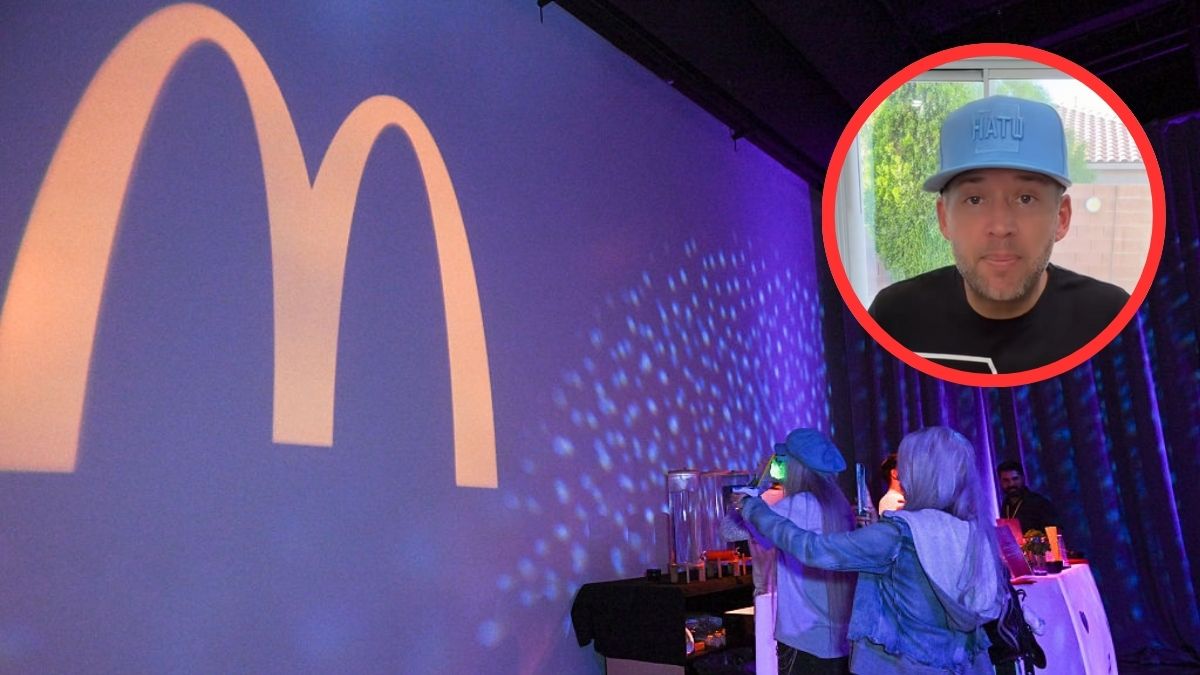

Two TikTokers from different parts of the world ran a 30-day experiment with McDonald’s Big Macs, and the results have people talking. Joe Orton from the United States teamed up with a creator in Japan to see if the famous burgers would decay or stay fresh after a month. The experiment aimed to test whether McDonald’s products behave the same way around the world.
According to Daily Dot, after 30 days, the two content creators revealed their findings. Orton’s American Big Mac looked almost brand new, showing no signs of decay. The Japanese Big Mac, however, told a different story. The creator in Japan reported that their burger had grown moldy and smelled bad, saying “Mine’s all moldy and hairy. Ew, stinks.”
The stark difference led Orton to conclude something was wrong with American Big Macs specifically. The TikTok star stated, “Mine isn’t food. This is industrialized. This is engineered to last forever, not to feed you.” The pair also questioned why the Japanese burger looked so different from the American one. However, both creators went on to promote a health product they were selling, which raises questions about whether the experiment was purely educational or part of a marketing strategy.
Turns Out It Might Just Be About Moisture, Not Chemicals
This is not the first time McDonald’s food has been tested this way. The issue became popular after the 2004 documentary Super Size Me, where director Morgan Spurlock noticed that McDonald’s items did not seem to rot even after many months. This led many people to believe the company used special chemicals in their food to make it last longer.
Viewers had strong reactions to the experiment. One commenter noted, “Anyone else noticed how bread doesn’t mold as fast as it used to?” Another wrote, “With the volume of Big Macs going out you shouldn’t need all those preservatives.”
Some users expressed deeper concerns, with one stating, “They are poisoning us,” while another shared, “My daughter can’t eat any gluten or dairy in the US without getting sick. She has no restrictions in London, Paris and Amsterdam. It’s an American issue. People hate RFK but he is telling the truth.”
McDonald’s addressed these concerns in 2020 with a simple explanation. The company said that their burgers can decompose under the right conditions, but they need moisture to do so. Without enough moisture in the food or the environment, bacteria and mold cannot grow, which means decomposition is unlikely. If food becomes dry enough, it will not rot or mold.
Independent sources have backed up this claim. In 2010, a scientific experiment was conducted comparing burgers from different sources in different environments. Their homemade burgers left in dry places also did not rot. The researchers suggested that McDonald’s burgers rarely decay because the patties are thin and cooked well done, leaving few bacteria to grow. Meanwhile, Big Macs stored in moist but sealed environments did actually decay.
The difference between the American and Japanese burgers in the TikTok experiment might come down to storage conditions rather than chemicals. If the Japanese burger was kept in a more humid environment, it would be more likely to grow mold. The American burger, possibly stored in a drier climate, would naturally resist decay. While the viral video sparked concerns about food safety, the science suggests the answer might be much simpler than people think.


Published: Oct 28, 2025 01:00 pm