



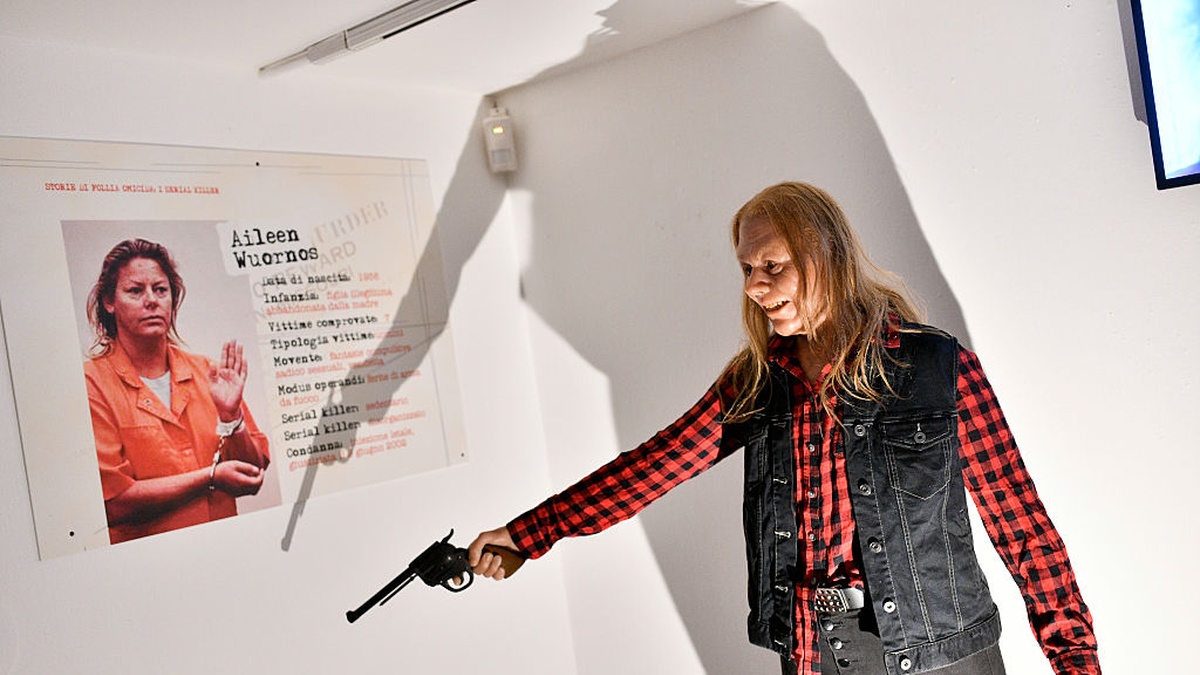

Aileen Wuornos was a prostitute who worked in Daytona Beach, Florida. Between 1989 and 1990, she killed seven men on Florida’s highways. She was called the “queen of the serial killers” because female serial killers are very rare.
A court found her guilty and gave her the death penalty. She was executed in 2002. Netflix now has a new documentary about her called Aileen: Queen of the Serial Killers. The film shows an old interview with Wuornos that was recorded when she was on death row.
Director Emily Turner told Fox News Digital, “I don’t think she was ever really listened to by the adults in her life.” Turner explained, “The first time in her life that she’s getting interviews with people and being listened to and taken seriously is when she’s committed these very serious murders. I think it’s a really sad reflection of the world we live in.”
The tragic truth behind her crimes
However, the real story starts with love and lies. Wuornos had a girlfriend named Tyria Moore. When police caught Wuornos in 1991, Moore made a deal with them. She agreed to help the police if they promised not to arrest her.
Moore called Wuornos and said she was scared the police were coming after her. Wuornos started crying and told Moore, “I’m not gonna let you go to jail. Ty, I love you. If I have to confess everything just to keep you from getting in trouble, I will.” But Wuornos did not know that police officers were right there with Moore, telling her what to say to get a confession.
Wuornos and Moore met in 1986 and were together for four years. Wuornos really loved Moore. She said in the documentary, “I loved her so bad. And the only reason I carried that darn gun was I wanted to make sure that I got home alive in one piece, so I’d be another day breathing with her. But it didn’t turn out that way. It got all screwed up.”
After Wuornos confessed, she was found guilty of killing six men. Their names were Richard Mallory, David Spears, Charles Carskaddon, Troy Burress, Charles Humphreys and Walter Antonio. All of them were middle-aged men who were found shot on lonely highways. Police found her fingerprints in cars that belonged to the victims, on items she sold at pawn shops, and at places where the crimes happened.
Wuornos would get the men to stop their cars by pretending to need a ride or by offering to have sex for money. She would shoot them with a small gun and said she did it to protect herself. But she also took their money, jewelry and cars. Moore said she had nothing to do with the murders and told police she wanted to help them prove she was innocent.
Director Emily Turner said Wuornos was hard to understand. “What surprised me is that she’s so many contradictory things at once,” Turner explained.
“She’s charismatic, but she’s a killer. She’s a victim of sexual violence, but she’s also a perpetrator of horrific violence.” Turner added that Wuornos had a terrible childhood and was sexually assaulted many times throughout her life. Turner said, “I think she was the product of a horrific childhood and repeated sexual assaults throughout her life.”
Even after everything that happened, Wuornos kept thinking about Moore. While she was in prison, she said, “I miss her a lot. I always miss her. And I’ll always love her. And I’ll be thinking about her the day I’m executed.”
By the time her execution came, Wuornos wanted to die. She was killed in 2002, but people stayed interested in her story. Charlize Theron played Wuornos in a 2003 movie called Monster and won an Oscar for it.







Published: Nov 4, 2025 06:45 pm