



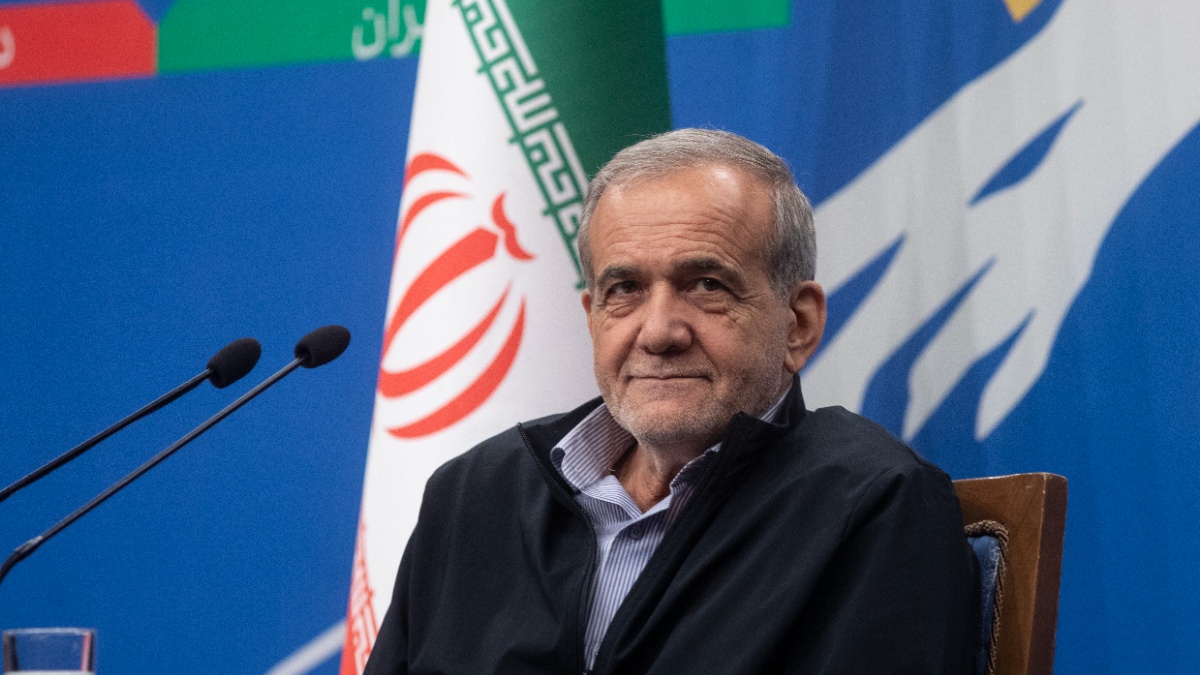

Amidst a significant military build-up, Iranian President Masoud Pezeshkian announced that nuclear talks with the United States have shown “encouraging signals,” even as Tehran remains prepared for any scenario and dismisses the idea of a major agreement right now, as reported by Al Jazeera. This news comes just ahead of another round of negotiations in Geneva, though the US hasn’t officially confirmed its participation for that particular session yet.
It’s been a tense backdrop for these discussions, especially with the largest US military build-up in the region since the 2003 Iraq war currently underway. The two countries have been engaged in indirect talks, with Oman acting as a mediator. They just wrapped up a second round in Switzerland and resumed discussions in Oman earlier this month. The upcoming Geneva talks, which Oman says have a “positive push,” aim to go the extra mile toward finalizing a deal, but Iran seems to be managing expectations.
Iranian Foreign Minister Abbas Araghchi has been leading the charge for Iran in these negotiations. On the US side, envoy Steve Witkoff and President Trump’s son-in-law Jared Kushner are representing Washington. President Trump himself has added to the tension, stating on Friday that he’s considering a limited strike on Iran if a deal isn’t reached. “I guess I can say I am considering that,” he told a reporter. This kind of talk really amps up the pressure, doesn’t it?
Iran isn’t backing down from its defensive posture
Iran’s Ministry of Foreign Affairs spokesman, Esmaeil Baghaei, reiterated that any US attack, even a limited one, would be seen as an “act of aggression.” He emphasized that such an act would definitely trigger a “ferocious” response as part of Iran’s inherent right to self-defense. Baghaei stated, “An act of aggression would be regarded as an act of aggression. Period.”
Despite the “encouraging signals” mentioned by President Pezeshkian, who also wrote on X that “Iran is committed to peace and stability in the region,” Baghaei was quick to shut down any rumors of a temporary agreement. He explained that speculation about the nuclear talks is common, but any real details are discussed behind closed doors. “The speculation raised about an interim agreement has no basis,” he said, making it clear we shouldn’t get ahead of ourselves.
Interestingly, the Trump administration has been increasing its military assets in the Middle East during these talks. Witkoff even mentioned in an interview that President Trump was wondering why Iran hasn’t “capitulated” in the face of this military show of force. Baghaei, however, firmly countered this on Monday, stressing that Iranians have never capitulated at any point in their history.
Inside Iran, there’s a definite mix of optimism and pessimism, with a prevailing sense of “pragmatically calibrated cautiousness.” This means Iran is getting ready for both diplomatic engagement and potential regional confrontation.
Baghaei pointed out that this isn’t the first time they’ve dealt with “contradictory claims,” and he believes the Iranian people and political elites will judge the negotiating approaches of both countries. He also stressed that Iran’s positions on its nuclear program and sanctions relief are “clear-cut,” and any negotiation needs “goodwill and seriousness on both sides” to succeed.



Published: Feb 23, 2026 01:00 pm