



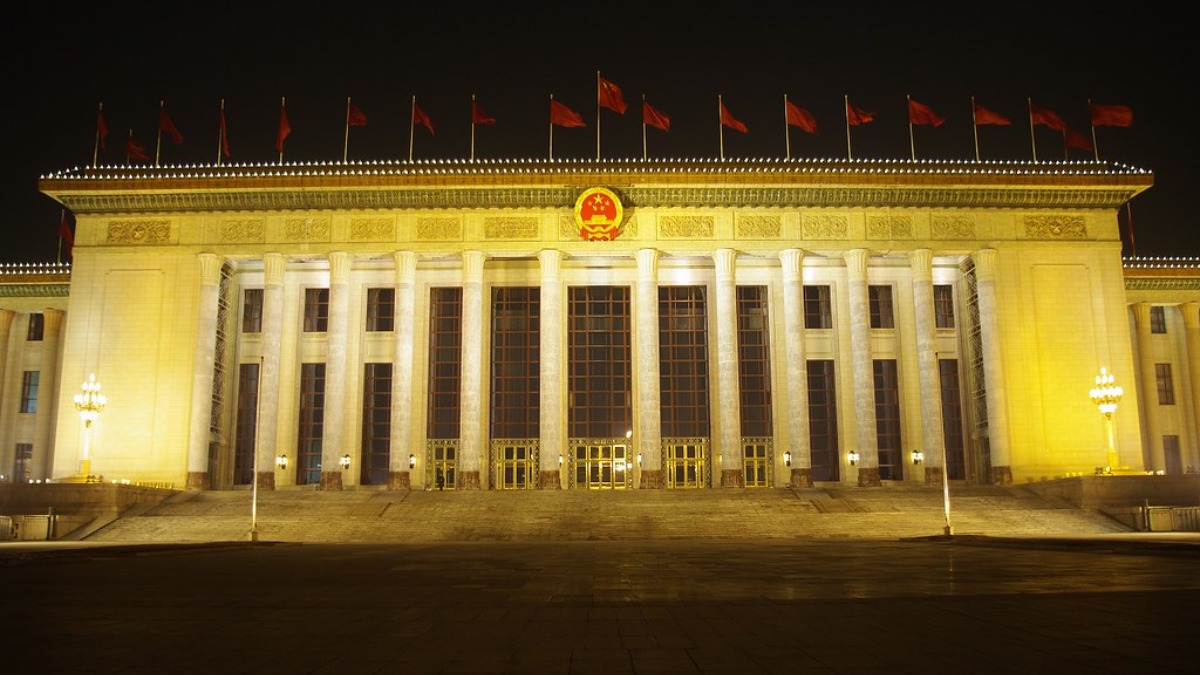

China has lowered its economic growth target for the year while simultaneously increasing its military spending, signaling where Beijing’s priorities lie as tensions with President Donald Trump continue to rise. The announcements were made during China’s annual National People’s Congress, one of the country’s most significant political gatherings.
The developments were outlined by The Washington Post, which reported that Chinese leaders are preparing for a challenging global environment. Officials acknowledged that economic pressures both at home and abroad are weighing on the country’s outlook.
Chinese Premier Li Qiang warned that Beijing faces what he described as a “grave and complex” international environment. He also described the previous year’s economic progress as “hard won,” citing external shocks and domestic challenges.
China trims growth expectations while boosting defense spending
China set its 2026 economic growth target between 4.5 percent and 5 percent. That figure is lower than last year’s 5 percent target and represents the country’s lowest official growth goal in nearly 35 years.
Several domestic issues have contributed to the slower outlook, including weak consumer demand, heavy local government debt, and a prolonged property crisis. At the same time, the country has faced mounting pressure from Trump administration tariffs and shifts in the global trade environment.
While Beijing lowered its economic ambitions, it simultaneously increased its defense budget by about 7 percent for 2026. The increase pushes China’s military spending above $275 billion and underscores the government’s emphasis on military modernization.
Chinese officials have repeatedly emphasized that technological advancement and military capability remain central national security priorities. The country aims to make major progress in modernizing the People’s Liberation Army before its centenary in 2027, a timeline analysts frequently link to preparations for a potential Taiwan conflict.
Analysts say the continued growth of the defense budget signals Beijing’s long term strategic priorities even as economic pressures mount. Those priorities have drawn increased scrutiny internationally amid ongoing geopolitical tensions and debates over global military strategy, including the recent House war powers vote on Iran.
Beijing also unveiled a new five year national strategy designed to shield its economy from foreign pressure and accelerate domestic innovation. The plan focuses heavily on technological development and expanding China’s capabilities in areas such as artificial intelligence.
Officials described the strategy as a roadmap for strengthening economic resilience while reducing dependence on foreign technologies. The effort is also meant to prepare the country for future economic disruptions tied to geopolitical tensions.
The announcement comes shortly before Chinese leader Xi Jinping is scheduled to meet Trump for a three day summit in Beijing later this month. The upcoming talks are expected to shape relations between the two countries amid rising economic and security disputes.
China has also reiterated its stance toward Taiwan, with Li promising to oppose outside interference and crack down on forces supporting Taiwanese independence. The issue has grown more sensitive after the United States approved a major arms package for Taiwan, which has fueled broader regional tensions and drawn scrutiny during the recent Trump DHS leadership shakeup.
At the same time, China’s leadership has been carrying out a sweeping purge within the country’s top military ranks. Several high ranking officers have been removed, culminating in the dismissal of senior military leader Zhang Youxia earlier this year.






Published: Mar 6, 2026 11:30 am