



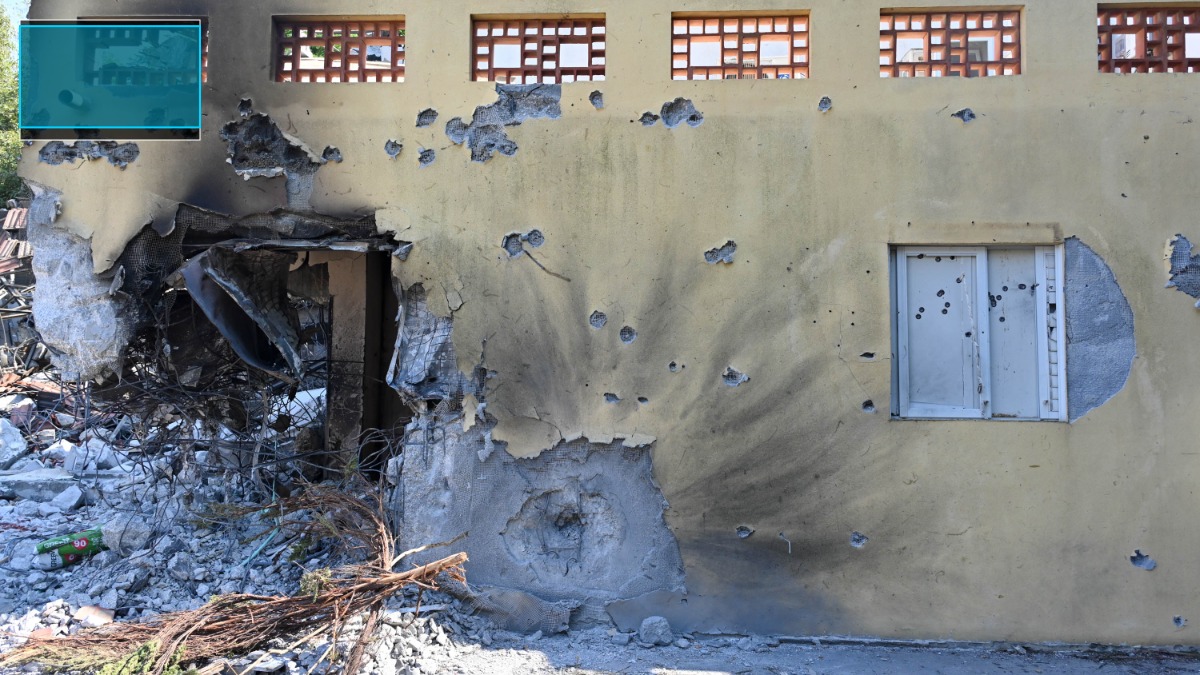

The Israeli military is currently conducting a campaign of mass demolition across southern Lebanon, using remote explosives to raze entire villages to the ground, The Guardian reported. This strategy involves the systematic destruction of civilian homes along the border, a tactic that mirrors the approach previously used in Gaza.
Recent footage reviewed from social media and military sources confirms large-scale detonations in the villages of Taybeh, Naqoura, and Deir Seryan. While Lebanese media outlets have reported similar incidents in other border communities, these events remain difficult to verify through satellite imagery.
The scale of this operation is significant, as Israel’s minister of defence, Israel Katz, has explicitly called for the destruction of all houses in these border areas. He stated this should be done in accordance with the model used in Rafah and Beit Hanoun in Gaza, where approximately 90% of homes were destroyed.
For those affected, the destruction of these Lebanese border towns represents a profound loss of stability and a connection to their roots
Academics have identified this pattern as domicide, a strategy aimed at the systematic destruction of civilian housing to render entire areas uninhabitable. The Israeli military maintains that it is targeting Hezbollah infrastructure, claiming the armed group has embedded military facilities and tunnels within these civilian homes.
In response to these actions, the military has indicated plans to occupy large sections of south Lebanon to establish a security zone extending to the Litani River. They have stated that displaced residents will not be permitted to return until the safety of cities in northern Israel is guaranteed, raising serious concerns regarding long-term displacement.
Human rights organizations have criticized these mass detonations, warning that they could constitute wanton destruction and potentially qualify as war crimes. Ramzi Kaiss, the Lebanon researcher for Human Rights Watch, noted that the possibility of Hezbollah using certain civilian structures for military purposes does not provide justification for the wide-scale destruction of entire villages. The laws of war strictly prohibit the deliberate destruction of civilian homes unless it is absolutely necessary for lawful military objectives.
For the residents who once called these villages home, the destruction has erased generations of memories and personal history. Ahmad Abu Taam, a 56-year-old shop owner from Taybeh, watched the footage of his town square being blown up with deep frustration. He described the moment he realized his shop, his work, and his life had been wiped out. Having already been displaced during the 2024 war, he had previously returned to rebuild his shop from scratch, only to see it destroyed again.
Other residents expressed similar grief over the loss of their homes and livelihoods. Mohammed Hashem, a 65-year-old doctor, spent 15 years building the Luna motel in Naqoura, a successful family business that catered to travelers and UN peacekeepers. The destruction of his property has left him feeling erased, a sentiment shared by many in the region.
These villages have historically served as an anchor for families, including those in the diaspora who frequently returned to their ancestral homes. As the weather warms and the region enters spring, many families are mourning the loss of the places where they expected to spend their summers.









Published: Apr 13, 2026 02:30 pm