



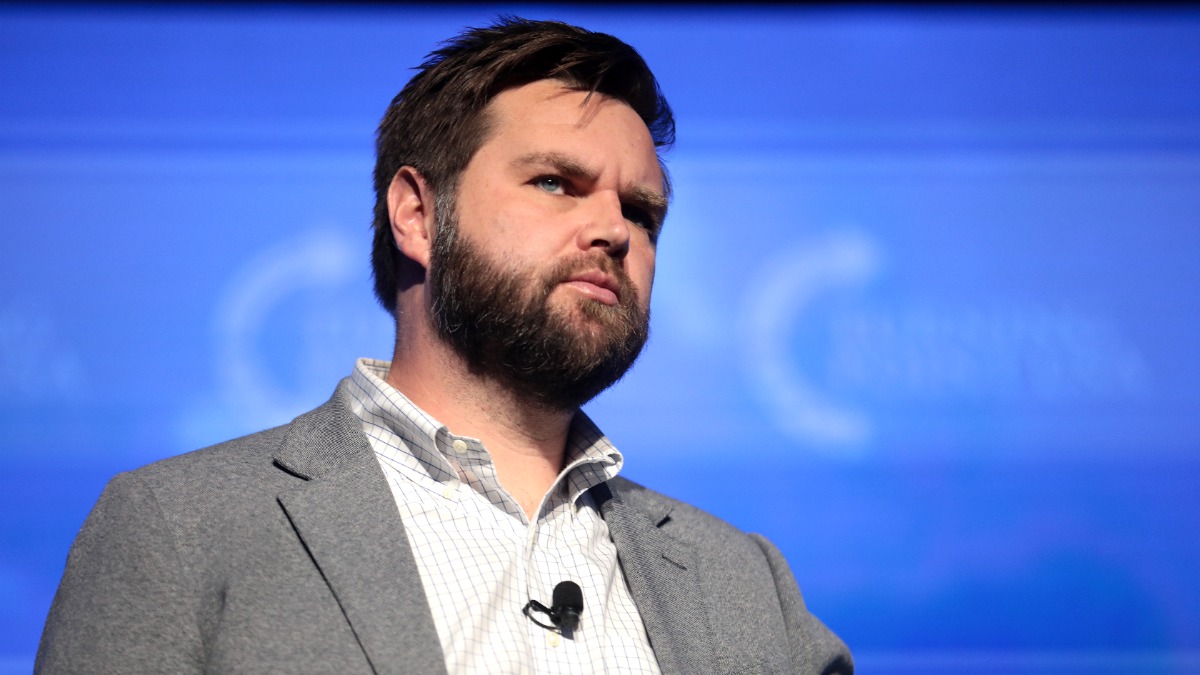

JD Vance built his political career on staying out of foreign wars. When he endorsed Donald Trump for the 2024 election in January 2023, his main reason was simple: Trump “started no wars.” He wrote in an op-ed that Trump’s refusal to drag the U.S. into new conflicts was “the first real disruption to a failed consensus” and called it Trump’s “enduring legacy.”
Vance had been a loud critic of U.S. involvement in Middle East “forever wars” and the conflict in Ukraine. As recently as October 2024, he said America’s interest was “not going to war with Iran.” Now, with the Trump administration launching strikes on Iran, that position has been turned on its head.
One leader from a right-leaning nonprofit put it plainly: “It’s pretty bad for Vance.” According to Politico, they said Vance had to perform the “dutiful task of being the subordinate” and convince people the situation was “in good hands”, which they called “a tough pill to swallow.”
Vance’s silence during the Iran strikes has become a problem within his own party
Vance has said little about his role in the decision to strike Iran. When the strikes began early Saturday morning, he was in Washington monitoring the operation from the White House Situation Room, not at Mar-a-Lago with Trump. The conflict has since grown beyond Iran’s borders, with the war rapidly spreading to Lebanon, Cyprus, and the Gulf within just 48 hours, and Trump warning Americans it is not ending soon.
After the strikes, Vance stayed quiet. His only public activity over the weekend was retweeting two White House posts. He broke his silence Monday evening, defending the attacks and saying they had a “clearly defined” objective of stopping Iran from getting nuclear weapons, adding that the U.S. is “not going to get into the problems we had with Iraq and Afghanistan.”
His low profile quickly became a talking point among Republicans at a retreat in Key Biscayne, Florida. A House GOP official said, “People are really fixated that Vance has not tweeted. It’s kind of a huge problem.
A failed pressure campaign last June, led by Tucker Carlson, Steve Bannon, and Charlie Kirk, to stop the administration from bombing Iranian nuclear sites also hurt the anti-interventionist movement’s credibility. The nonprofit leader said those figures learned that “the full-court press didn’t work and in fact may have annoyed the president.”
Curt Mills, editor of The American Conservative, said, “I think there was an idea of Vance as the national conservative or national populist Dick Cheney, and that’s obviously not happening.” Conservative journalist Sohrab Ahmari criticised Vance for giving in to “neoconservative hawks,” calling it “mind-boggling” that “the Vance who once sharply critiqued a ‘foreign policy of moralizing’ is overseeing strikes explicitly aimed at freeing the people of Iran.”
Meanwhile, despite Iran previously stating it would never negotiate with the U.S. after losing its Supreme Leader, Trump has revealed he is already waiting for Iran to call. For Vance, who is widely expected to run for the Republican presidential nomination in 2028, this is both a political and ideological challenge.
Mills believes Vance “is going to have to win back some of that support.” Still, some restrainers haven’t given up on him, with the nonprofit leader saying, “the investment in Vance was always long-term, buy and hold as opposed to short sell.”



Published: Mar 5, 2026 09:15 am