



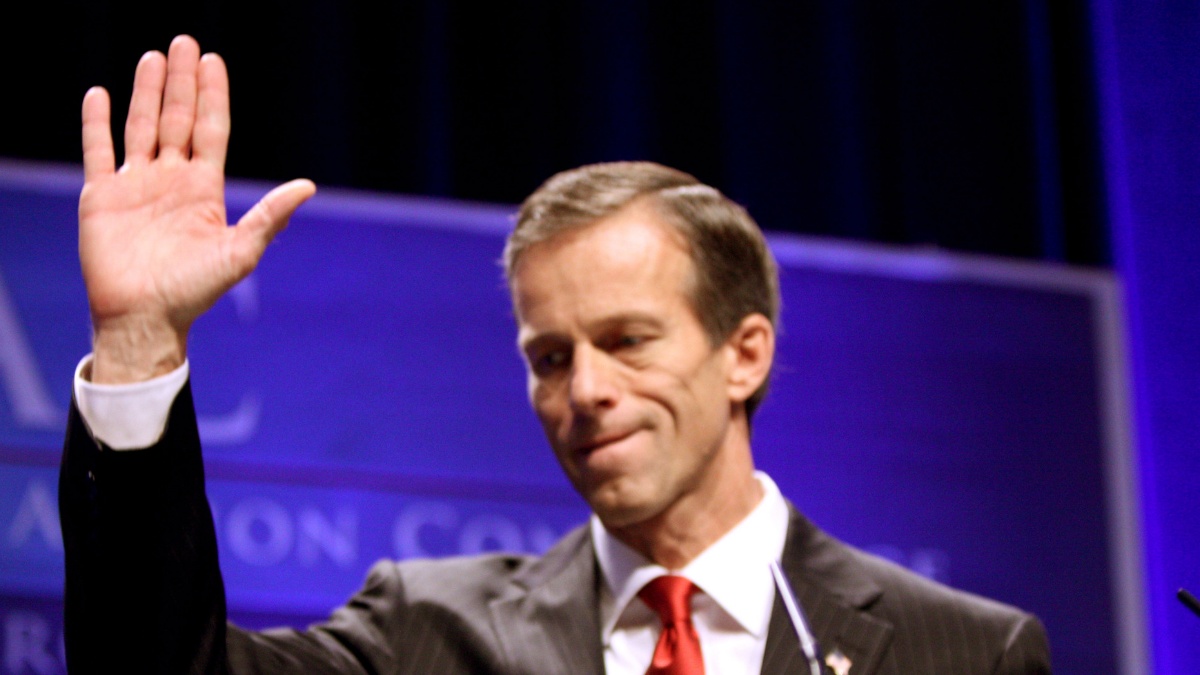

Senate Majority Leader John Thune said Republicans currently do not have the votes needed to pursue a talking filibuster strategy to advance the SAVE Act. As reported by The Hill, Thune acknowledged that securing unanimous support within the GOP conference for such a move remains a challenge. Without that unity, the voting reform bill faces significant procedural obstacles.
Thune, a Republican from South Dakota, told reporters Wednesday that getting all 50 Republican senators aligned behind a talking filibuster would be difficult. The strategy would require Democrats to continuously hold the floor to block the House passed legislation, effectively raising the political and logistical cost of a filibuster. It is designed to make obstruction more visible and demanding.
He warned that deploying the tactic could complicate other pressing Senate business. Thune noted that it would be hard to pivot back to essential legislative priorities, including funding for the Department of Homeland Security, which lapsed on February 14. Extended floor battles could delay government funding measures and other bipartisan efforts.
Republican divisions complicate path forward on voting bill
Thune emphasized that the Republican conference is not unified enough to move forward with a talking filibuster. He said such a maneuver would require 50 Republicans to remain aligned on nearly every procedural vote, particularly when tabling amendments. He stated there is not currently sufficient support within the conference to pursue that approach, amid a State of the Union disruption.
The SAVE Act would require voters to provide documented proof of citizenship in federal elections. While it remains a priority for many Republicans, advancing the bill without forcing a prolonged floor debate leaves it vulnerable to a standard filibuster. The measure has already drawn sharp disagreement over what documentation would be required and how the rule would be enforced nationwide.
Thune has indicated he still intends to bring the SAVE Act to the Senate floor. However, without a procedural shift, Republicans would need 60 votes to invoke cloture and move the bill to a final vote. That would require support from at least seven Democrats, a threshold that appears unlikely given current partisan divisions, following Trump’s statement about “ended eight wars” claim.








Published: Feb 25, 2026 05:00 pm