




The Department of Justice’s (DOJ) latest disclosure under the Epstein Files Transparency Act has ignited a firestorm on Capitol Hill, with lawmakers accusing the department of utterly failing to meet its final obligation under the law, as reported by The Hill. This recent release, which includes a sprawling list of names ranging from the late Janis Joplin to President Trump and former Vice President Dick Cheney, has sparked widespread outrage.
This disclosure was meant to be the DOJ’s definitive statement on the Epstein files, providing clear explanations for any withheld documents and the legal justifications for shielding names. Instead, Capitol Hill is buzzing with accusations that the department sidestepped its legal duties for transparency, instead releasing an extensive list of over 250 names, spanning celebrities and political figures, with very little accompanying context.
This list features some seriously well-known figures, from Mick Jagger to Queen Elizabeth, alongside political heavyweights from both sides of the aisle. The big problem, though, is that it’s completely unclear what ties, if any, many of these individuals actually have to Jeffrey Epstein. Many names seem to pop up simply because they were referenced in media clips that either Epstein himself or the FBI shared as part of news roundups.
It’s a move that many are calling a deliberate attempt to muddy the waters
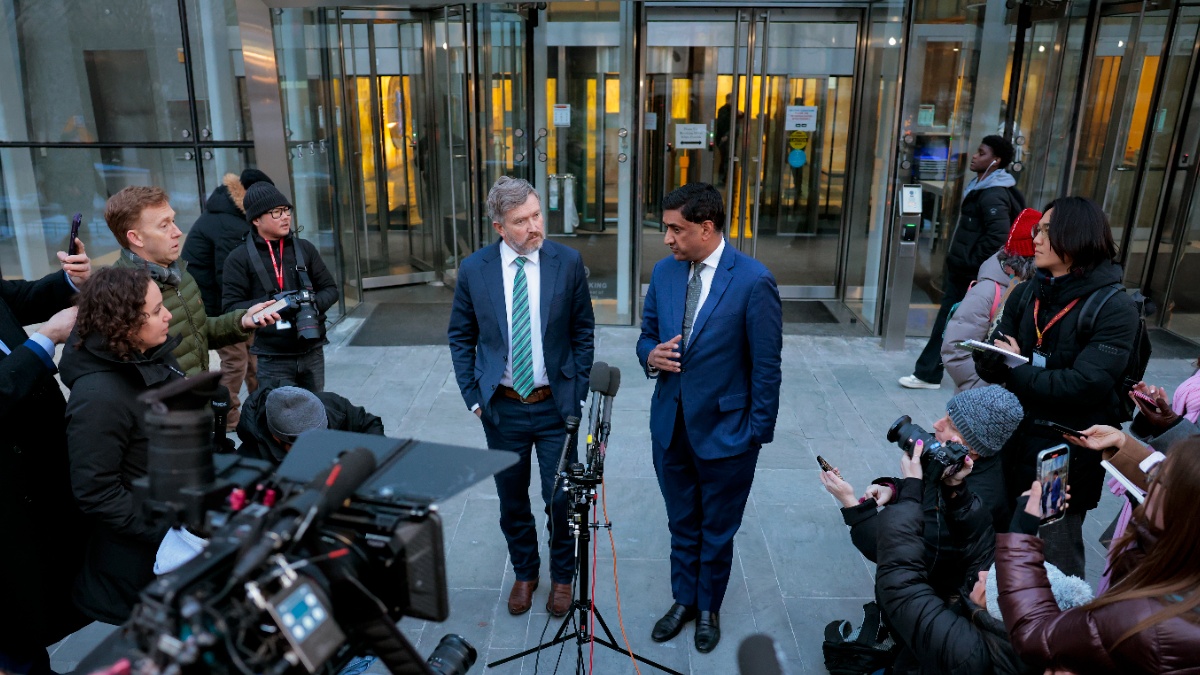
Rep. Pramila Jayapal (D-Wash.) wrote on X that “This is once again the DOJ covering up the truth.” Rep. Ro Khanna (D-Calif.), one of the bill’s sponsors, echoed this sentiment, pointing out the absurdity of the list. “To have Janis Joplin, who died when Epstein was 17, in the same list as Larry Nassar, who went to prison for the sexual abuse of hundreds of young women and child pornography, with no clarification of how either was mentioned in the files is absurd,” Khanna stated on X.
Khanna went on to directly accuse the DOJ of violating the law by not explaining redactions. He believes the department has protected powerful individuals like Les Wexner, the former CEO of Victoria’s Secret, who was recently deposed by the House Oversight and Government Reform Committee, and Emirati Sultan Ahmed bin Sulayem.
Sulayem, it turns out, resigned from his company after an email surfaced showing he’d penned a note to Epstein referencing a torture video. Khanna stressed that the DOJ “chose to unredact the names without context,” adding, “The DOJ is once again purposefully muddying the waters on who was a predator and who was mentioned in an email.”
The Epstein law itself was pretty clear, giving the DOJ very limited options for redacting names, mostly just for Epstein’s victims. Even in cases of ongoing investigations, any redactions had to be “narrowly tailored and temporary.” However, the DOJ’s Saturday letter claimed it also withheld documents or made redactions under attorney-client privilege, which covers materials prepared by lawyers. Plus, it cited “deliberative-process privilege,” an exemption used in public records cases to shield materials showing how the government reached a decision.
Rep. Thomas Massie (R-Ky.) quickly called this out as a “square violation of the law,” stating that the bill he and Khanna wrote absolutely did not allow for anything to be shielded under that claim. “They’re citing deliberative process privilege in order not to release some of the documents,” Massie said, explaining, “The bill that Ro Khanna and I wrote says that they must release internal memos and notes and emails about their decisions on whether to prosecute or not prosecute, whether to investigate or not investigate.”
Massie is particularly keen to understand why no one beyond Ghislaine Maxwell was charged in connection with Epstein, despite prosecutors having a list of possible co-conspirators. He also wants to know why Epstein got such a light sentence that included work release back in 2008.





Published: Feb 19, 2026 11:30 am