




President Donald Trump is currently reviewing a 14-point peace proposal from Iran, but has made it clear that further military strikes remain a possibility. Trump expressed serious doubt about whether the Iranian plan is acceptable in its current form, even as diplomatic efforts continue between the two sides.
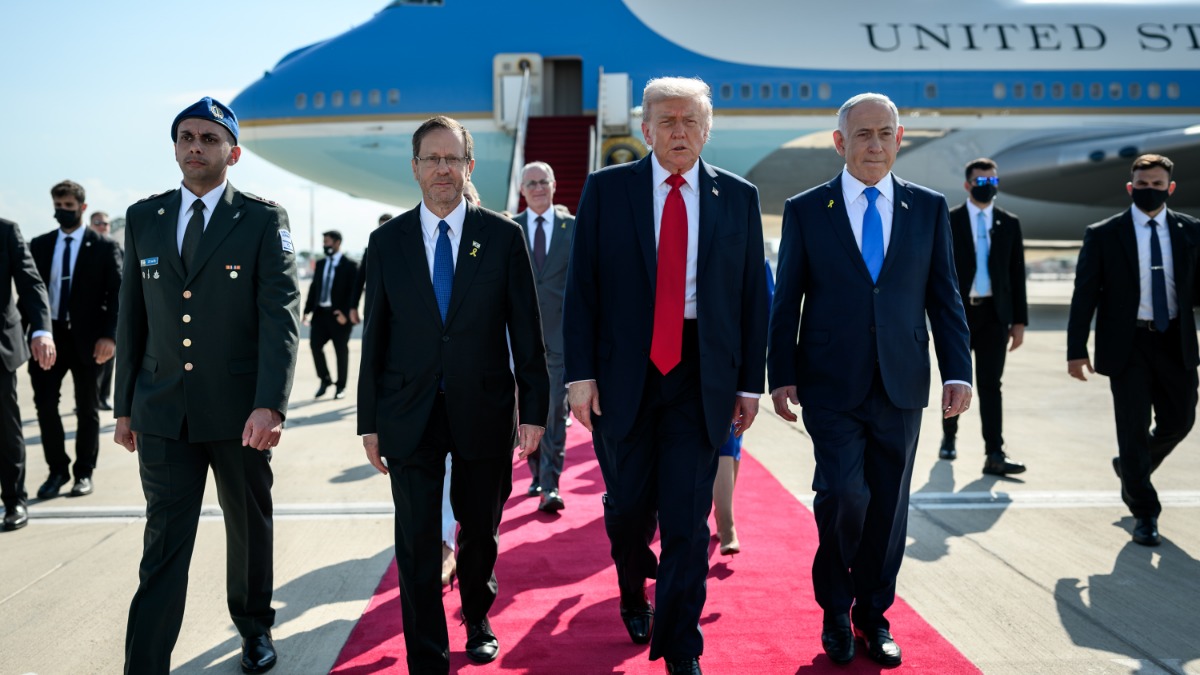
Speaking to reporters in Florida, before boarding Air Force One, Trump confirmed he had been briefed on the proposal. The plan from Tehran reportedly includes lifting the US naval blockade, releasing all frozen assets, paying war reparations, and a 30-day window to finalize peace terms. This timeline appears to conflict with Washington’s preference for a longer transition period.
Trump’s tone remained blunt when asked whether air strikes could resume, reports Al Jazeera. “If they do something bad, there is a possibility it could happen,” he said. Later, on Truth Social, he argued that Tehran has “not yet paid a big enough price for what they have done to Humanity, and the World, over the last 47 years.”
The path to a deal remains complicated by military, political, and diplomatic obstacles
The diplomatic push is happening during a fragile three-week truce that paused the US-Israel war on Iran, which began in late February. Despite the ceasefire, the Islamic Revolutionary Guard Corps declared it remains on full standby for a return to hostilities, citing the US’s perceived lack of commitment to previous treaties. Reports suggest Trump is running out of options to claim a victory as the blockade drags on with no clear resolution in sight.
Several hurdles continue to block a stable resolution. These include Iranian sea mines in the Strait of Hormuz, a critical waterway for global energy markets, and a growing rift with NATO allies after Trump withdrew 5,000 US troops from Germany. Tehran’s Ministry of Foreign Affairs also labeled Trump’s description of the naval blockade as a “very profitable business” a “damning admission of piracy.”
At the same time, the US is moving forward with major arms sales to regional partners. According to The New York Times, the State Department announced over $8.6 billion in emergency arms sales to Israel, Qatar, the United Arab Emirates, and Kuwait. Secretary of State Marco Rubio expedited the deals by invoking an emergency provision that bypassed standard congressional review.
The sales include rockets for Israel, Qatar, and the UAE, along with air-defense equipment for Qatar and Kuwait. Qatar is set to pay more than $4 billion for American-made Patriot missile interceptors, while Kuwait purchased an advanced aerial defense system for approximately $2.5 billion.
Israel, the UAE, and Qatar will also receive the Advanced Precision Kill Weapon System, which fires laser-guided rockets. Questions have also been raised about where US weapons end up after being sent abroad, with Trump himself acknowledging uncertainty on camera. The need for these weapons stems from the heavy use of munitions since the conflict began on February 28.
Iran retaliated against US military bases across the region by firing volleys of ballistic missiles and drones. At least 20 civilians and several soldiers were killed in Gulf Arab countries, and the strikes caused significant damage to ports, hotels, energy sites, and residential buildings. The UAE alone reported being targeted by more than 500 ballistic missiles and 2,500 drones.
Democratic lawmakers have strongly criticized the administration’s use of emergency authorizations to bypass Congress. The administration maintains that the sales are in the national security interest of the United States, even as negotiations remain deadlocked over Iran’s nuclear program and the region stays on high alert.






Published: May 3, 2026 08:00 am