



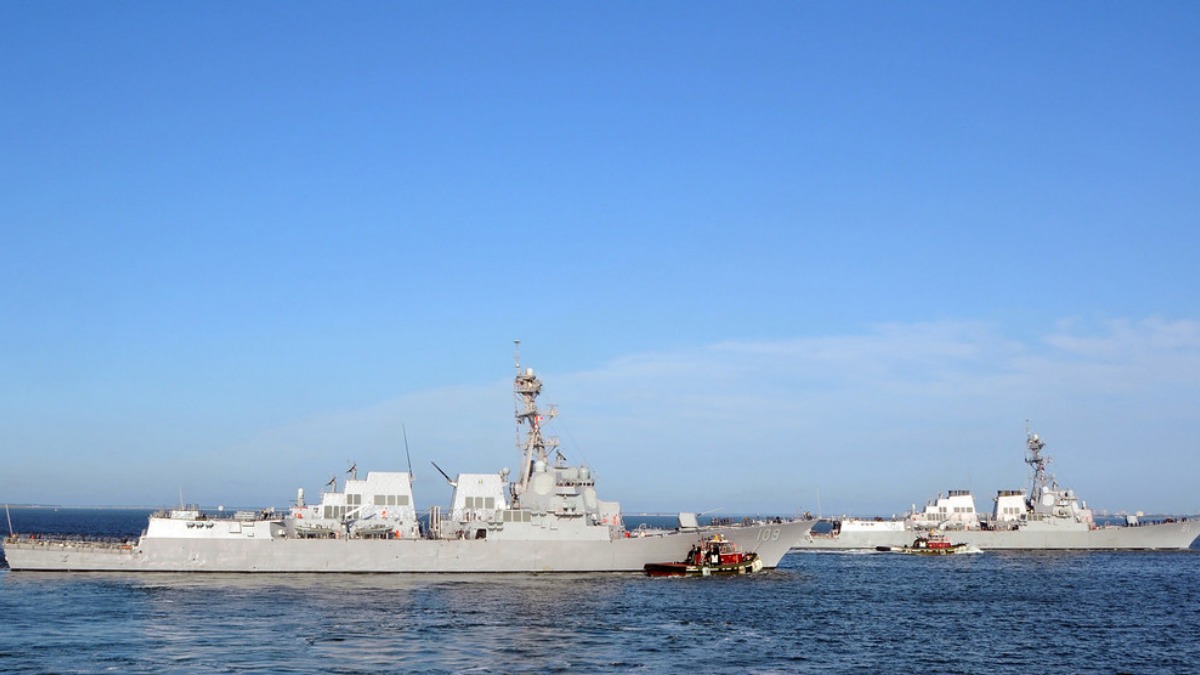

President Donald Trump has told his inner circle to prepare for a long-running blockade of Iran, as the two-month conflict between the two countries shows no sign of ending. His preferred strategy, according to officials, is to keep the conflict in its current state, held together by financial sanctions, gunboat interdictions, and talks about having talks.
The blockade began after the first round of peace talks failed. Since then, the Strait of Hormuz has been closed, and Iranian-flagged vessels have been charging tolls to oil tankers passing through the Persian Gulf. The U.S. military is enforcing the blockade by turning back Iranian oil ships, though some have managed to get through.
Trump’s decision to keep the blockade going with no set end date marks a new stage in the conflict. As The Wall Street Journal reported, “The president’s decision represents a new phase of sorts of the war and highlights the fact that the president, who always seeks a quick and salable victory, is devoid of a silver bullet.”
Trump is running out of easy options, and the Iran standoff is becoming a political and economic problem
The blockade has hit Iran’s economy hard. The country is struggling to store oil that it can no longer sell, but Iran has still refused to agree to end its nuclear enrichment program. Trump and his team have decided that accepting any deal short of that would weaken their push for a nuclear-free Iran, while going back to open fighting would hurt the region and push oil prices even higher.
Trump has brushed off the rising oil prices caused by the ongoing conflict, arguing that a nuclear Iran would be far more dangerous. He has also said he could not end the blockade “unless we blow up the rest of their Country, their leaders included!” That kind of language has worried U.S. officials, who fear the conflict could either flare up again or only end through a nuclear deal. Notably, VP Vance has been privately questioning whether Hegseth is telling Trump the truth about the state of the war.
The U.S. military has also seized tankers carrying Iranian crude oil and alleged “contraband” that Iran could use for war. Trump has been clear that he will not lift the blockade until Iran agrees to a deal on its nuclear program. Treasury Secretary Scott Bessent has stepped up the pressure by expanding sanctions to target banks, shipping companies, and even small “teapot” refiners in China that process Iranian oil.
Those expanded sanctions have raised fears that Iran may soon run out of space to store its oil, which could force the country to shut down its oil wells entirely, dealing a massive blow to its economy. Still, some U.S. officials are not confident that the pressure campaign will work, and worry the conflict could drag on for months or even years.
With November midterm elections on the horizon, a “frozen conflict” is seen as the worst possible outcome for Trump, both politically and economically. The situation has taken on a Cold War-like quality, with no clear path to resolution and higher energy prices expected to continue for the foreseeable future.
In a recent meeting with his national security team, Trump discussed Iran’s new proposal to reopen the Strait of Hormuz in exchange for the U.S. dropping its blockade on ships going in and out of Iran. But a U.S. official and two other sources who were briefed on the meeting told Axios that no decisions were made. One source said Trump did not appear willing to accept Iran’s offer because it would delay talks on the nuclear program.
White House Press Secretary Karoline Leavitt said the president’s red lines on Iran “have been made very clear, not just to the American public but also to the Iranian regime.” Both sides are now waiting for the other to make the first move, with U.S. forces remaining in the region and the Strait of Hormuz still closed. The standoff has no clear end in sight, and the pressure on both sides continues to grow.






Published: Apr 29, 2026 06:30 am