



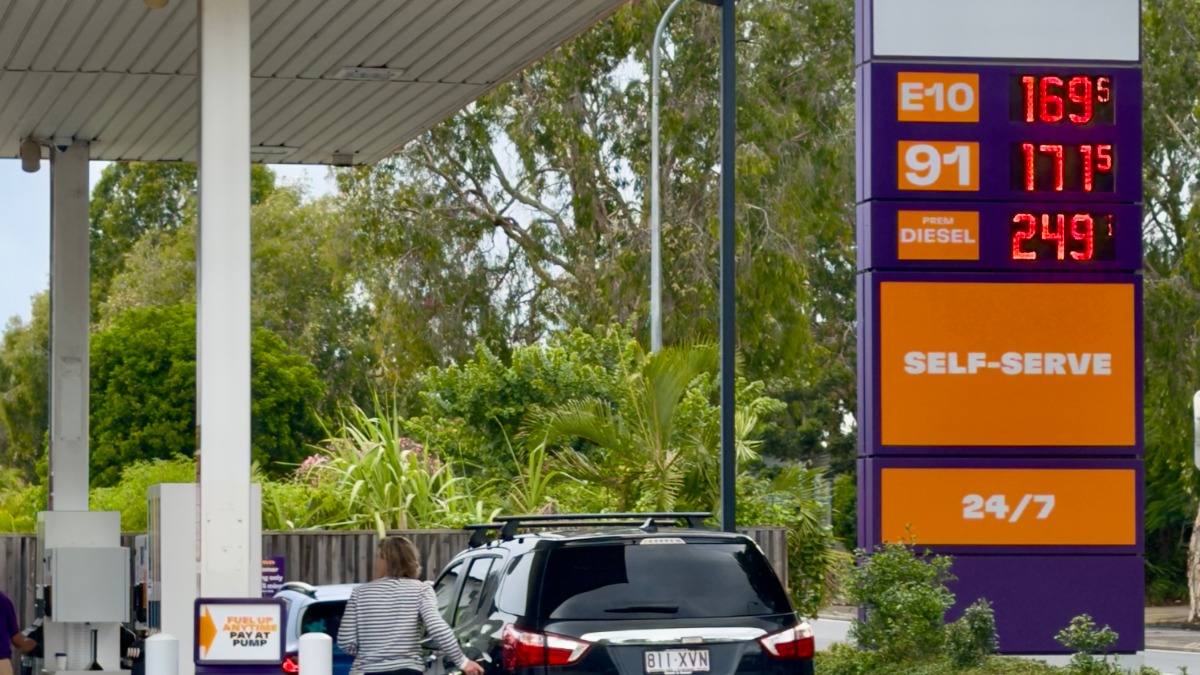

Global markets are under pressure as the threat of a long energy disruption hangs over the Strait of Hormuz. Oil prices have climbed to $106 per barrel, and Goldman Sachs is warning that prices will stay high for the foreseeable future. At the same time, Iran has handed the United States a new proposal to reopen the critical waterway and end the ongoing war, while suggesting that nuclear talks be pushed to a later stage.
U.S. President Donald Trump scrapped plans to send envoy Steve Witkoff and Jared Kushner to Islamabad for talks with Iran over the weekend, citing “tremendous infighting and confusion” within Tehran’s leadership as the reason. However, Iran’s Foreign Minister Abbas Araghchi made a brief return to Islamabad, signaling that efforts to reach a deal are still ongoing.
Axios reports that the new proposal focuses on resolving the crisis over the Strait of Hormuz and the U.S. blockade first. Under the plan, the ceasefire would be extended for a long period or the parties would agree on a permanent end to the war, with nuclear negotiations only beginning after the strait is reopened and the blockade is lifted. The proposal was passed to the U.S. through Pakistani mediators, and it is unclear whether Washington is willing to pursue it.
Iran’s proposal could cost Trump his biggest bargaining chip in future nuclear talks
Accepting this proposal would mean setting aside the nuclear issue entirely for now. The problem is that lifting the blockade and ending the war would remove Trump’s leverage in any future effort to reduce Iran’s stockpile of enriched uranium and convince Tehran to stop enrichment, two key objectives of the war for Trump.
Iran has also refused to negotiate under pressure from the U.S., and has warned it has new options ready on the battlefield, further complicating the path to any deal. International benchmark Brent oil futures rose around 1% to $106.55 per barrel, while U.S. crude oil added 0.88% to $95.23 per barrel.
According to CNBC, Goldman Sachs raised its Brent forecast to $90 a barrel by late 2026, up from $80 previously, pointing to delayed normalization in Gulf exports and a slower production recovery. Experts warn that if the strait stays disrupted for much longer, the economic damage will deepen, and rising prices will eventually force a drop in demand, especially in energy-importing regions.
“The primary trend is up and I’d respect that, but I wouldn’t be chasing here either. Sentiment is hot, positioning is crowded, and elevated readings have historically preceded softer forward returns,” said Billy Leung, investment strategist at Global X ETFs. Others see market swings as a chance to buy in, with Rajat Bhattacharya, senior investment strategist at Standard Chartered, expecting a deal within weeks that could restore flows through the strait.
Historical examples show that markets can bounce back quickly from supply shocks. Ed Yardeni, economist and president at Yardeni Research, pointed to the 1956 Suez crisis, when oil prices doubled and stocks fell before rebounding to new highs once the canal reopened.
Asia-Pacific stock markets gained on Monday, with Japan’s Nikkei 225 hitting a new record high, while U.S. stock futures were largely stable. Adding more uncertainty to the situation, Iran’s top negotiator described talks as a surrender and the ceasefire is set to expire soon, while Trump has said he does not want an extension.
According to Axios, the broader commodity market is also feeling the pressure, especially in natural gas and food supply chains. “LNG is the under-discussed leg here,” said Leung. “European benchmarks are running about a third above pre-war levels with roughly a fifth of global LNG supply choked off.” Higher gas prices feed into fertilizer production and farming costs, raising the risk of a slow but lasting rise in food prices.
Invesco estimates that $80 per barrel is likely a floor for Brent this year if flows do not fully return to normal. Invesco’s global head of research, Benjamin Jones, wrote in a note that disruptions extend beyond oil, affecting goods such as helium, aluminum, and sulphur, broadening the inflationary impact across industrial supply chains, which could make things harder for central banks even as they try to look past the shock for now.









Published: Apr 27, 2026 02:45 pm