



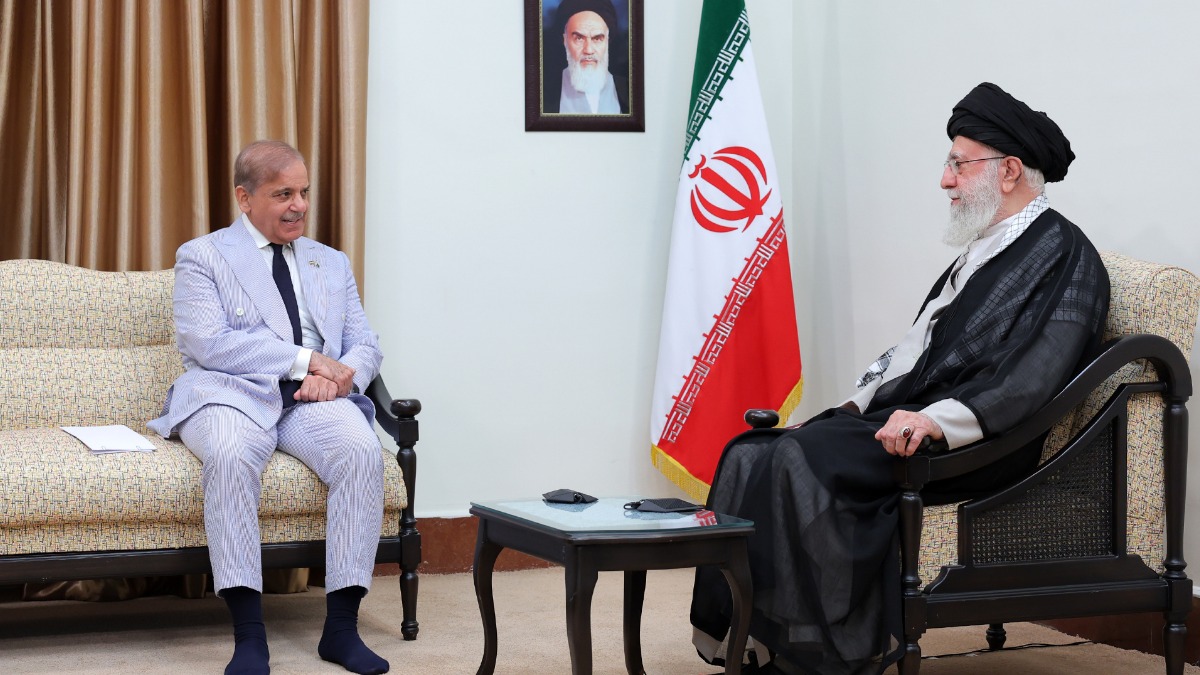

Pakistan has offered to mediate the escalating conflict between Iran and Israel, with Islamabad publicly stating its readiness to host talks between the two sides. As detailed by GB News, sources within Pakistan suggest Vice President JD Vance is being considered as a chief negotiator, potentially replacing Steve Witkoff and Jared Kushner, after Iranian insiders reportedly said Tehran would refuse to return to talks with either man.
Pakistani Prime Minister Shehbaz Sharif has signaled his country’s desire to host those discussions. Foreign ministry spokesman Tahir Andrabi told reporters that if both parties wish, “Islamabad is always willing to host talks,” adding that Pakistan has consistently backed dialogue and diplomacy to promote regional stability.
President Trump previously told reporters that Witkoff and Kushner held discussions with a top Iranian official into Sunday evening and would continue Monday, describing them as “very, very strong talks” and noting “we have major points of agreement, I would say, almost all points of agreement.” Trump also posted on Truth Social that the US and Iran had engaged in “very good and productive” conversations regarding a “complete and total resolution of hostilities in the Middle East.”
Iran’s parliament speaker flatly denies any negotiations took place
Iran’s parliament speaker Mohammad Baqer Qalibaf, identified by sources as the Iranian interlocutor, publicly denied that any negotiations occurred. Qalibaf stated that “no negotiations have been held with the US,” claiming that “fake news is used to manipulate the financial and oil markets and escape the quagmire in which the US and Israel are trapped.” Iran’s Revolutionary Guards (IRGC) separately described Trump’s statements as “psychological operations” with no impact on Tehran’s fight, and announced fresh attacks on US targets.
The Israeli military reported that Iran launched multiple waves of missiles at Israel overnight, including strikes that triggered air raid sirens across the country. The barrage came after Trump postponed the bombing of Iranian power plants and energy infrastructure, citing what he described as productive talks.
In Tel Aviv, a multi-storey apartment building sustained significant damage, and emergency workers were called to search for civilians trapped inside, with others found sheltering in a damaged structure nearby. Amid the ongoing bombardment, Trump had already reversed course on striking Iranian energy infrastructure for a five-day period.
Tehran has also requested an urgent debate at the UN Human Rights Council following a fatal air strike on a primary school. The attack on the Shajareh Tayyebeh School, which occurred on the first day of the US-Israeli strikes on Iran, involved two missile strikes in quick succession. Iranian officials report that 168 children, mostly girls, were killed.
Iran’s ambassador to the UN in Geneva, Ali Bahreini, called it “a grave assault on children, on education, and on the future of the entire community.” Washington military investigators believe US forces were likely responsible for the strike, though a final conclusion has not been reached, and the probe has since been elevated.
Russia issued a warning to Israel overnight, stating the Kremlin would view any spillover of the conflict into the Caspian Sea “extremely negatively.” This followed Israel’s claim that its military struck the Iranian navy in the Caspian last week, hitting dozens of targets and effectively neutralizing Iran’s naval capabilities there.
Russia and Iran, both bordering the Caspian and bound by a strategic partnership treaty signed last year, have a direct stake in the waterway. Iran, meanwhile, has separately accused Israel of staging false flag operations to manipulate international perception of the conflict. Kremlin spokesman Dmitry Peskov noted that Russia was observing contradictory statements from both Washington and Tehran on the state of negotiations.






Published: Mar 24, 2026 08:00 pm