




House Republicans blocked an effort to restrict President Donald Trump’s war powers in Iran, rejecting a measure that would have required congressional approval for continued offensive military operations. The vote revealed fractures in both parties, with two Republicans backing the proposal while several Democrats opposed it.
The outcome was detailed by The New York Times, which reported the House voted 219 to 212 to prevent consideration of the bipartisan resolution. The measure sought to halt offensive military action against Iran unless Congress formally authorized it.
The vote provided an early sign of where lawmakers stand on the escalating conflict and the broader debate over presidential war powers. It also highlighted the continuing tension between Congress and the White House over who has the authority to initiate military action.
A war powers vote exposed divisions in both parties
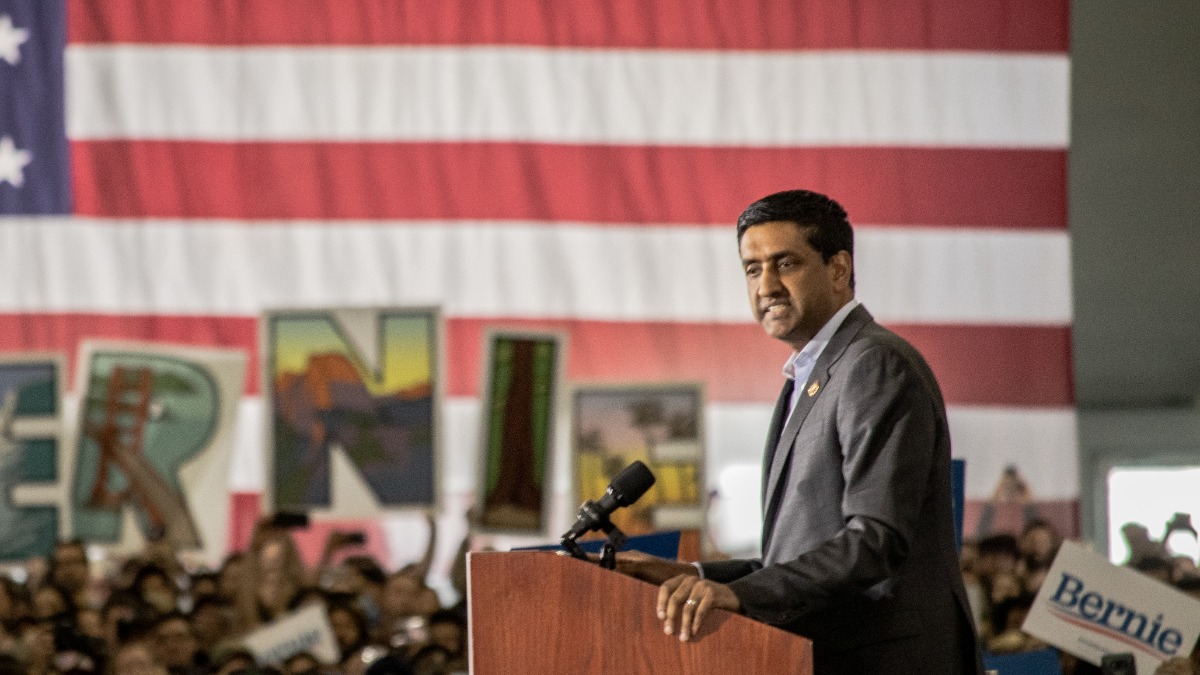
The resolution was led by Representative Thomas Massie, a Republican from Kentucky, and co sponsored by Representative Ro Khanna, a Democrat from California. Massie argued on the House floor that the Constitution clearly gives Congress the authority to initiate war.
Massie pointed to the War Powers Resolution of 1973, which allows the president to act without prior congressional approval only under specific circumstances. He said none of those conditions applied in the current situation, insisting lawmakers must assert their constitutional role as questions also mounted over Iranian drone defenses.
Some Democrats echoed those concerns after attending classified briefings from Trump administration officials. Representative Gregory W. Meeks of New York said the administration had not presented evidence of an imminent threat requiring unilateral military action.
Republicans who opposed the resolution argued that Trump already had the authority to act. Representative Brian Mast of Florida said Iran had posed a threat to Americans for decades and warned that the country’s actions could not be ignored.
Representative Michael McCaul of Texas also defended the president’s actions, calling the moment historically significant for the region. He argued the United States needed to stand firmly with the administration to pursue long term stability in the Middle East, amid Hegseth’s Iran protest warning.
The vote itself revealed unusual cross party movement. Only two Republicans, Massie and Representative Warren Davidson of Ohio, supported the resolution.
Meanwhile, four Democrats broke with most of their party and voted against it. Those lawmakers included Representatives Henry Cuellar of Texas, Jared Golden of Maine, Greg Landsman of Ohio, and Juan C. Vargas of California.
The debate also showed how positions on presidential war powers have shifted over time. Lawmakers who once argued strongly against unilateral military action have now found themselves defending or opposing similar authority depending on the administration.
The House vote came just one day after the Senate blocked a similar measure, underscoring the ongoing clash between Congress and the presidency over war making authority.







Published: Mar 6, 2026 11:15 am