



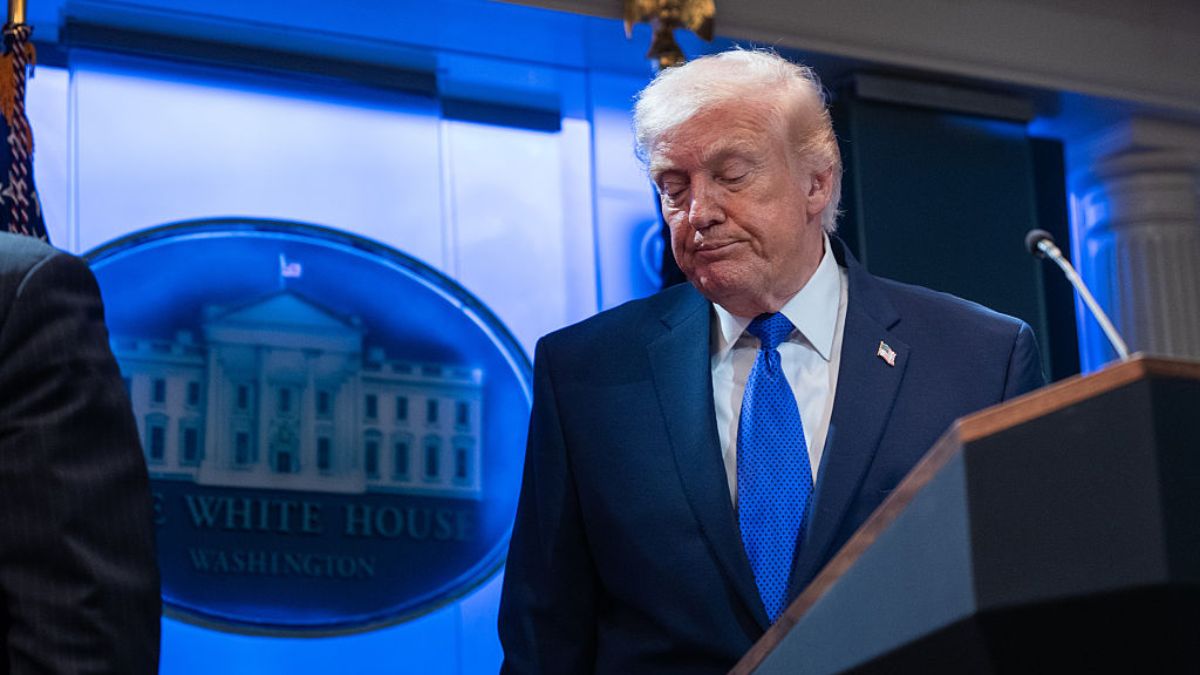

President Trump has announced a 15% baseline tariff on imports from every single country. The move comes directly after a major Supreme Court ruling that struck down his previous trade strategy. This is not a small adjustment; it is a significant shift that reveals deep problems in his trade agenda.
According to The Conversation, the Supreme Court ruled that Trump’s previous “reciprocal tariffs,” imposed under an emergency powers act, were unauthorized. This new 15% rate is an increase from a 10% global baseline tariff put in place shortly after that initial ruling. The president is now using a different law that appears to clearly allow tariffs up to 15% for a maximum of 150 days.
Speaking after the ruling, Trump called the Democratic justices who voted against his tariffs a “disgrace to the nation” and said he felt “ashamed” of the conservative members who also voted against his use of emergency powers. He admitted he had been trying to “make things simple” with the emergency powers act, and acknowledged that other options exist but would take more time.
A potential $175 billion refund bill now hangs over the administration
The Supreme Court’s ruling means that all tariffs collected under the International Emergency Economic Powers Act were unlawfully gathered. An estimated US$175 billion (A$247 billion) could potentially need to be refunded. Trump called the decision “terrible” and “defective,” and his emotional reaction to the Supreme Court ruling drew widespread attention beyond just the tariff debate.
The US Court of International Trade has previously stated it has the authority to order these refunds. Several large companies, including Costco, had already sued the administration proactively to recover payments if the tariffs were ruled unlawful. Trump himself suggested the dispute could keep the country “in court for the next five years.”
For longer-term solutions, Trump mentioned using Section 301 of the Trade Act of 1974, which allows the president to impose tariffs on countries that violate US rights under international trade agreements or unfairly restrict US commerce. However, it requires a detailed process including consultations with affected countries and could take years to implement at any significant scale. This section was notably used against China in 2018.
Another option is Section 232 of the Trade Expansion Act of 1962, which applies to specific economic sectors and was used to impose tariffs on steel and aluminum in 2018. However, it cannot be used for sweeping tariffs on all foreign imports and requires a national security investigation. Trump has also been making headlines for unrelated reasons, including his unusual comments about Nicki Minaj’s appearance during a recent public appearance.
For countries like Australia, the new 15% rate levels the playing field for the next 150 days, though Australian exporters may face pressure to absorb some costs. The White House did list exceptions, including beef, critical minerals, energy products, and pharmaceuticals.





Published: Feb 22, 2026 12:45 pm