



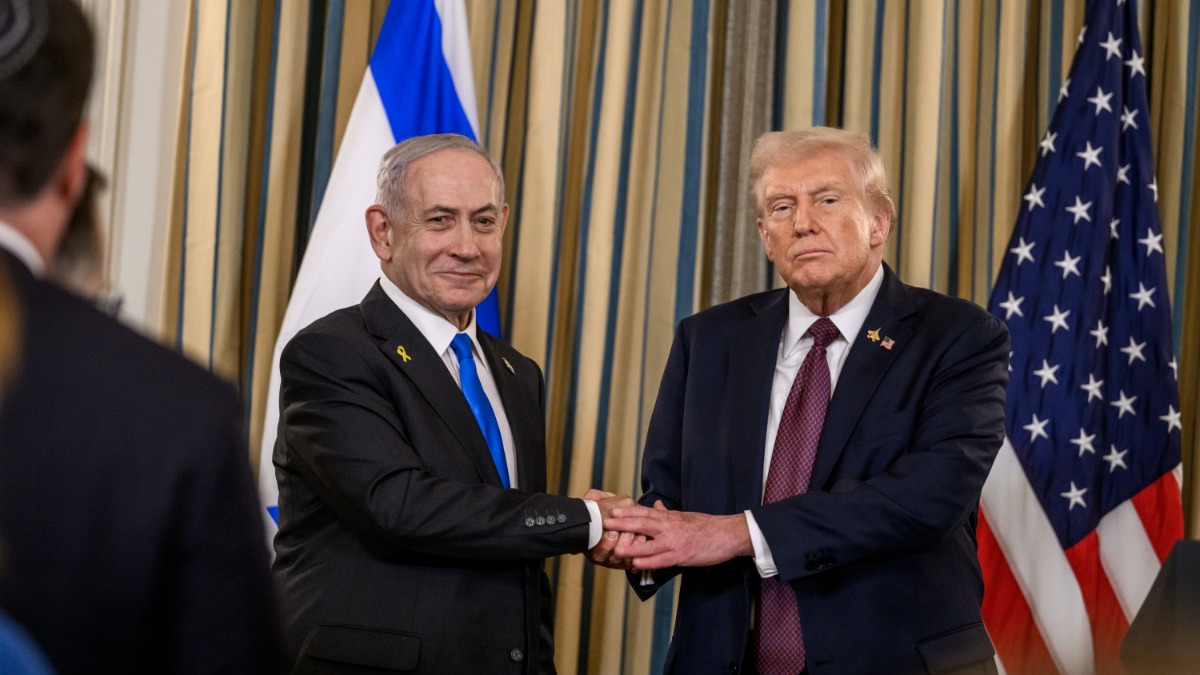

Israeli Prime Minister Benjamin Netanyahu’s office on Monday confirmed it has “serious security concerns” regarding the proposed disarmament deal with Hamas. This agreement, which serves as a cornerstone of President Trump’s Board of Peace plan for the reconstruction of the Gaza Strip, is now facing significant pushback.
Doron Spielman, a spokesperson for the Prime Minister, explained that these reservations were formally communicated to the White House shortly after the President initially announced the framework, The Hill reported.
The primary friction point involves the timing of military withdrawals. According to Spielman, Israel maintains that Hamas remains committed to rebuilding its military infrastructure. Consequently, the Israel Defense Forces, known as the IDF, have no immediate plans to withdraw from Gaza prior to the completion of a full disarmament process.
The perspective from the Israeli government is quite clear on the potential risks involved in a premature exit
“Our assessment is that if we redeploy before Hamas is truly disarmed, it will quickly expand its presence throughout Gaza, rebuild its terrorist infrastructure, once again threaten Israeli communities, and seek to carry out another Oct. 7-style attack,” Spielman said. He emphasized that for Israel, a disarmed Hamas means the physical surrender of all militant weaponry, and in his words, “nothing less.”
This situation is further complicated by the current state of the conflict. The concerns from Israeli officials arrived shortly after an Israeli strike resulted in the deaths of 17 people, including children. This incident occurred during a ceasefire that has been active since last October. Senior Hamas official Bassem Naim previously stated that Hamas agreed to the roadmap set forth in the deal. However, he suggested to the independent outlet Drop Site News that the recent strikes are a calculated attempt to derail the progress.
“This escalation, coinciding with progress on the political track, clearly demonstrates that the occupation government is seeking to undermine efforts aimed at ending the war and to impose facts on the ground by force,” Naim said. He added, “This situation calls for urgent international action to pressure the occupation to halt its crimes and comply with its obligations under the agreement.”
The 20-point plan announced by President Trump last Thursday envisions a phased surrender of weapons. Under this roadmap, the process would continue until Israel eventually withdraws its military presence, which currently covers 60 percent of Gaza. While the Prime Minister has not offered a public comment on the specific plan, sources have noted that Israel is unwilling to withdraw from the yellow line zone, an area largely comprised of depopulated regions in the territory.
There are also specific logistical demands coming from Israel regarding the oversight of this transition. A person familiar with the negotiations told the media that Israel wants to ensure that Qatar and Turkey are excluded from the verification stages of the agreement. Furthermore, there is a firm requirement that all weaponry surrendered by Hamas must be destroyed. Other sources have indicated that Israel intends to retain the freedom to continue its military operations within Gaza regardless of the broader deal.
The political environment surrounding this announcement is incredibly volatile. While President Trump claimed during a Cabinet meeting on Friday that Israel was very happy with the agreement, the reality on the ground in Israel appears much more fractured. National security minister Itamar Ben-Gvir publicly dismissed the deal, writing on X that the “targeted killings in Gaza must continue.”
The skepticism isn’t limited to far-right ministers. Experts like Ghaith al-Omari, a senior fellow at the Washington Institute, have noted that both sides seem to be positioning themselves for a very long and difficult negotiation process. Since trust between the parties is essentially at zero, each side is signaling that they are waiting for the other to make the first move.
As al-Omari pointed out, this creates a cycle of conditionality where progress remains elusive. There is a prevailing sense among some analysts that the roadmap might be more of a diplomatic maneuver than a genuine path to disarmament. Michael Rubin, a former Pentagon official, expressed doubt about the sincerity of the parties involved, suggesting that the fundamental ideological divide makes the success of such a deal unlikely.
Despite the intense scrutiny, some voices remain hopeful. Joel Rubin, a former deputy assistant secretary of State, argued that the agreement provides a rare window of opportunity that should be supported. Even within the legislative branch, there is some support, with Rep. Dan Goldman stating on X that the agreement is a huge and outstanding development.









Published: Aug 3, 2026 03:30 pm