




The United States and Israeli forces launched coordinated strikes across Iran early on Saturday, leading to immediate threats of retaliation from Tehran and triggering further attacks across the Middle East. This came after weeks of rising tensions, during which President Trump strongly criticized Iran’s nuclear program and its crackdown on internal protests.
According to the Independent, The US had been quietly but steadily building up a large military presence in the region well before the strikes began. Two aircraft carriers were deployed, the USS Abraham Lincoln and the nuclear-powered USS Gerald R. Ford, which is the world’s largest warship. These were supported by 11 destroyers and three Littoral combat ships forming carrier strike groups.
Beneath the surface, two or three attack submarines were also deployed, with at least one being nuclear-capable and armed with Tomahawk missiles. The USS Abraham Lincoln was positioned in the Arabian Sea, while the USS Gerald R. Ford was moving through the Gibraltar Strait, expected to be placed south of Cyprus, offering protection to allies like Israel and Jordan.
The scale of US military deployment in the region shows this operation was planned well in advance
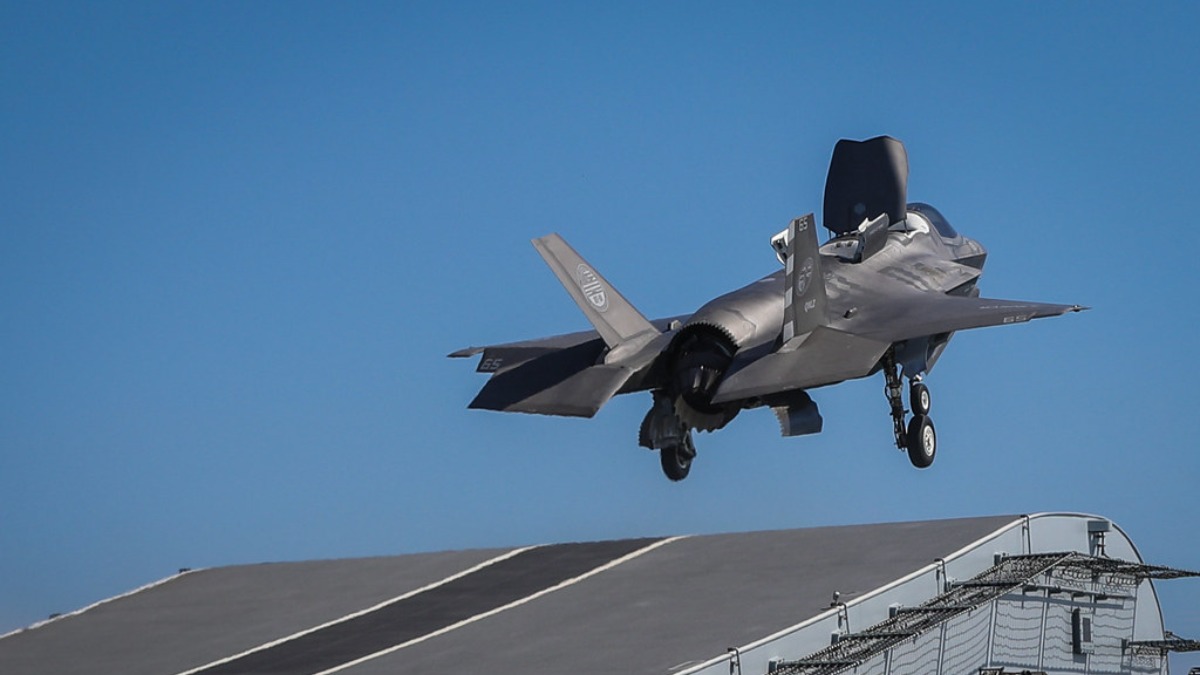
On the air side, over 50 advanced fighter jets, including F-35s, F-22s, and F-16s, were moved into the broader region, with F-15 and EA-18 jets also gathering at bases to the west. The two carriers alone have the capacity to carry up to 180 aircraft. Older aircraft including F-15s, A-10 Warthogs, and C-130 transport planes were also spotted at Jordan’s Muwaffaq Salti military base.
Boeing KC-135 tankers were moved to Europe and the Middle East to support long-range missions. Last summer, B-2 bombers completed a 36-hour round trip from Missouri to strike Iran, showing the kind of reach the US military is capable of. Around 10,000 US troops are also stationed across various bases in the region. Trump had been ramping up military pressure in the Middle East for weeks leading up to the strikes.
Iran responded quickly after the strikes. Iranian authorities described the attacks as a “massive” and ongoing assault. Black smoke was seen near the headquarters of the US Navy’s Fifth Fleet in Bahrain’s Manama, though the US has not confirmed any damage there.
Several countries hosting US bases, including the UAE, Qatar, Jordan, and Kuwait, reported intercepting incoming missiles. Qatar specifically said it intercepted missiles believed to be targeting Al Udeid Air Base, the largest US military installation in the region.
Iran’s Supreme Leader, Ayatollah Ali Khamenei, issued a direct warning, saying the US “may be struck so hard that it cannot get back up” if attacks continued. He also commented on the aircraft carriers, saying, “A dangerous device, but more dangerous than the carrier is the weapon that can send it to the bottom of the sea.” Iran also closed the Strait of Hormuz for naval drills for the first time since the 1980s and conducted joint drills with Russia in the Sea of Oman.
Senior national security officials had told President Trump the military would be ready to strike by Saturday. Experts had already been scrutinizing Trump’s nuclear claims about Iran in the weeks prior, with one calling his standard “impossible.” One unnamed senior official noted it could take several weeks for all forces to be fully in position, with full deployment expected by mid-March.







Published: Mar 1, 2026 01:45 pm