


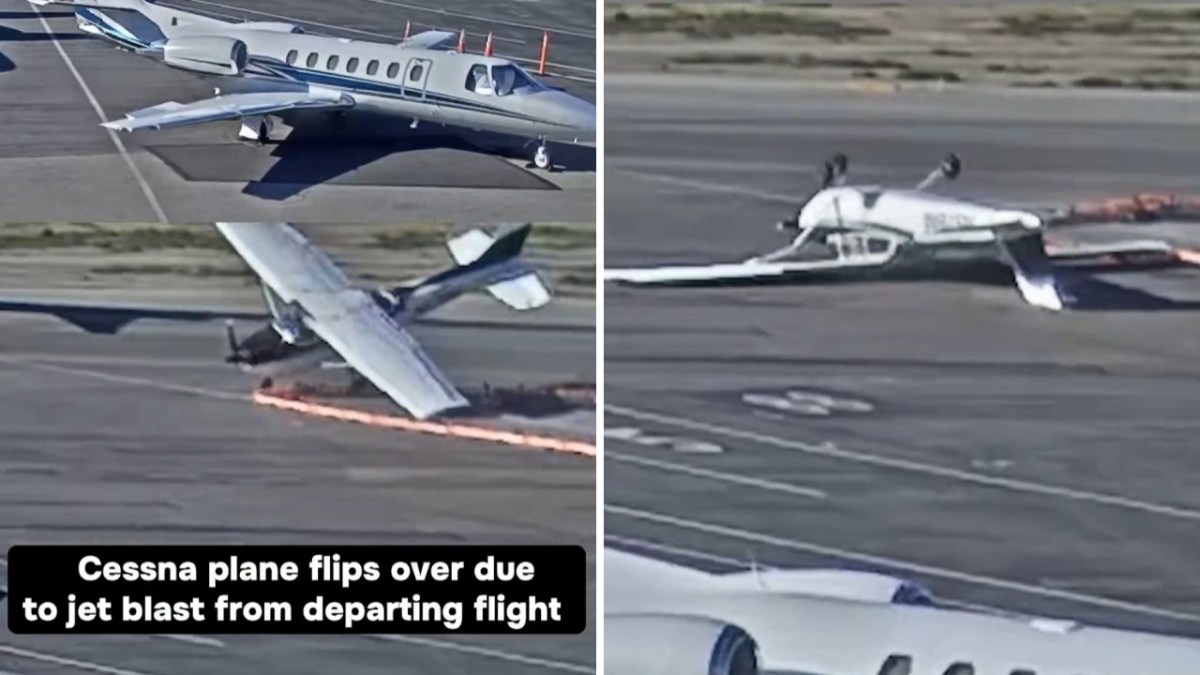

A Cessna 172 flipped onto its roof while taxiing behind a United Airlines Boeing 737 at John Wayne Airport in Santa Ana, California. The flight instructor and student pilot aboard were uninjured, according to FLYING. The incident happened on Saturday, November 7, at about 2:40 p.m.
The small plane, registered as N57BM, is operated by Orange County Flight Center. The flight center said the Cessna was following United Flight 2611, a 737 bound for Chicago, when a sudden jet blast pitched the small plane forward onto its roof. Emergency crews responded, and a crane later righted the aircraft.
The Federal Aviation Administration confirmed that the Cessna was blown over while taxiing behind the United flight. The FAA and the National Transportation Safety Board are investigating. United declined to comment, and the 737 landed in Chicago. Neither agency has named a cause in public so far.
Airport officials first pointed to high winds
The cause is not as settled as the flight center’s account suggests. An airport spokesperson initially cited high winds, and the Orange County Fire Authority declined to confirm either explanation. Air traffic control audio captured another pilot saying the Cessna had been “blasted by the United 737 jet blast,” which supports the jet blast account.
Video of the overturned aircraft circulated on X within hours, with aviation accounts sharing air traffic control audio from the scene. The flight center’s account places the instructor and student in the plane when it flipped, and both were uninjured, which makes the outcome more fortunate than the footage might suggest.
The flight center’s director also raised a separate concern, saying that airport construction may be a safety issue. Investigators have not said whether that factor played any role. The point matters because the two explanations lead to different questions, one about how close a small plane should follow a departing jet and the other about conditions on the airport grounds.
Jet blast is the high-speed exhaust from a plane’s engines, and it can push hard against anything behind the aircraft. It is a recognized ramp hazard, and one pilot told Chicago-bound passengers in a separate incident that a plane could not taxi out without damaging the building behind it.
A Cessna 172 weighs far less than a 737, and the exhaust from large jet engines can move small aircraft that sit in its path, which is the explanation the flight center has given. However, the airport’s first explanation was high winds and the fire authority declined to confirm either cause, so the question stays open.
The question of spacing is likely to sit at the center of the review. Investigators can compare the Cessna’s position with the departing jet, the instructions from air traffic control and the wind conditions at the time. Each of those can change the picture, and the airport’s first explanation of high winds will be tested against the pilot’s own report of a sudden blast.
Small aircraft routinely share taxiways with airliners at airports like John Wayne, which makes spacing between them a daily judgment call. However, the investigation will still have to establish how far back the Cessna was and whether the controllers or the pilots set that distance.
The FAA and the NTSB have yet to release findings, so the question of whether wind, construction or the 737’s engines tipped the Cessna will stay open until investigators publish their conclusions, which can take months.







Published: Nov 11, 2026 10:00 am