



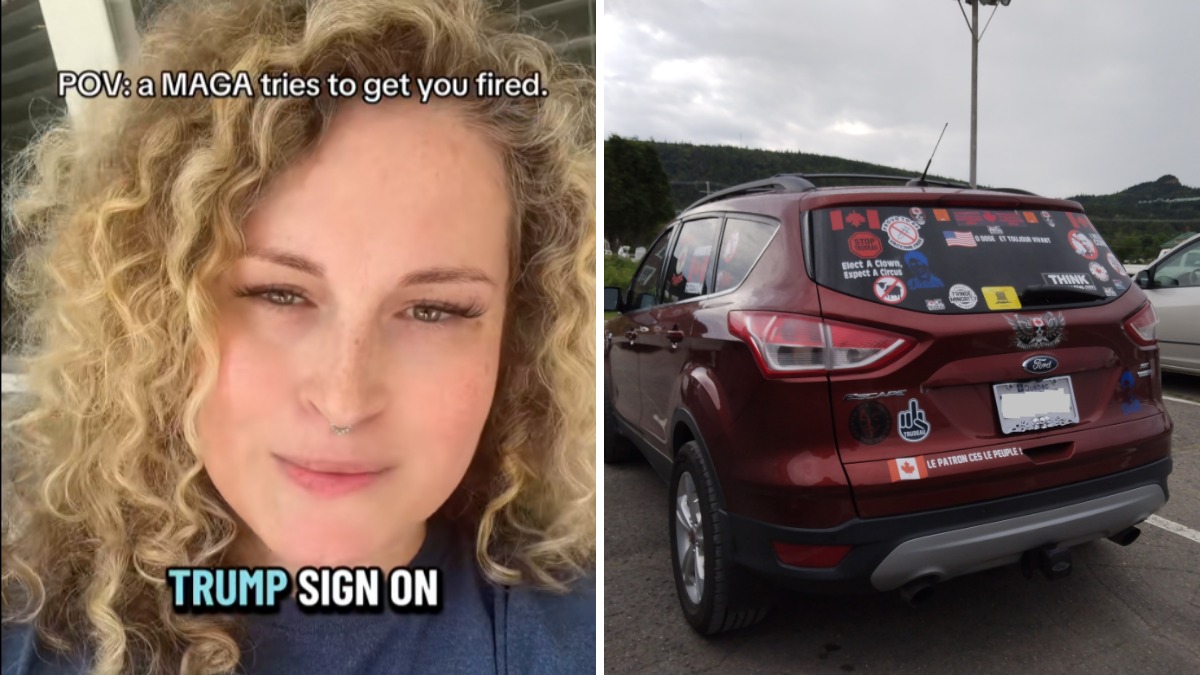

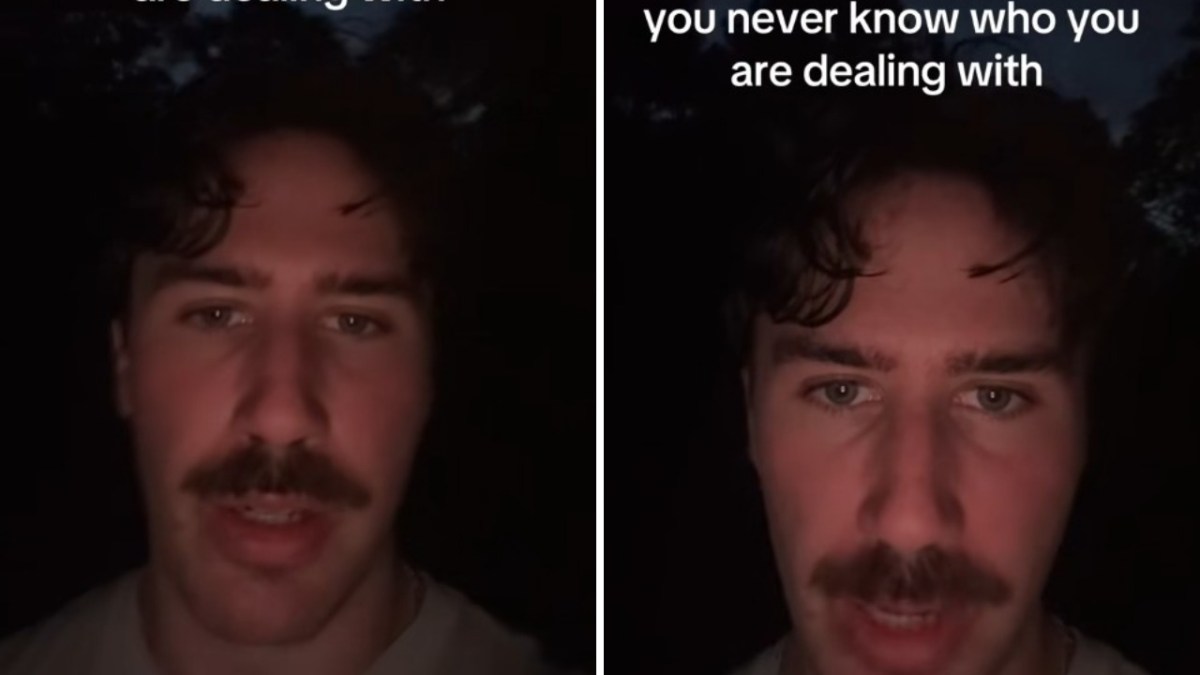
A Tennessee woman says a Trump supporter allegedly used her license plate to find her employer and attempted to get her fired over an anti-Trump sticker on her car. According to The Nerd Stash, the woman, who posts under the username Walkertocker, shared the situation in a TikTok video, calling it “the wildest thing to happen to me since I started doing car signs.”
Her account says the incident began after she left a Lowe’s, where someone snapped a photo of her car and the anti-Trump sticker on it, then shared it in a Facebook group known for its conservative-leaning membership, plate number included. From there, she says someone was able to identify her name, job title, and employer, allegedly using her plate number to pull that information.
She said this kind of lookup would typically require access to a database not meant to be publicly available under the federal Driver’s Privacy Protection Act. The person then reportedly emailed her employer about the sticker, though the woman said the attempt did not work. “I’m fortunate to work somewhere that supports their employees’ constitutional rights,” she wrote in response to a comment.
The email reportedly traced back to her
She said the email used to contact her employer appeared to come from the sender’s own work account, and that the same person had shared her information on social media in a way she described as encouraging others to harass her. “So she tried to take me down, but it seems as though she’s taking herself down because this isn’t look great for her,” the woman said. Privacy concerns involving license plate data have surfaced elsewhere too, including newer plate-reading technology that can identify people through connected devices.
Viewers encouraged her to consult a lawyer, and several offered theories about how her plate information might have been accessed. One commenter, who said they had worked in insurance, suggested the person may have used a system called Vindl, which they said dealerships and insurance companies commonly use, though it requires signing a consent-to-privacy form.
Another commenter advised her to mention that the alleged lookup happened during work hours, since that detail could potentially tie the employer to liability. “And this is why you’re my bestie. Brilliant. Didn’t even think of that,” she responded. The law she referenced, the Driver’s Privacy Protection Act, was passed by Congress in 1994 after several high-profile cases in which stalkers obtained victims’ home addresses through DMV records, including the 1989 murder of actress Rebecca Schaeffer.
The law generally prohibits accessing someone’s name, address, or other personal details tied to a license plate unless the request falls under one of about 14 permitted categories, such as law enforcement use, insurance investigations, or motor vehicle safety matters. Violating the DPPA can carry criminal fines and a civil lawsuit with a minimum penalty of $2,500 per violation, plus the possibility of punitive damages and attorney’s fees if the misuse is found to be willful.
In a follow-up video, she shared footage of herself filing a complaint with the dealership’s HR department, stating, “It is quite clear to me that she has accessed my information in violation of the Driver’s Privacy Protection Act.” Whether the dealership has responded publicly or taken any action has not been confirmed.



Published: Jul 17, 2026 01:45 pm