



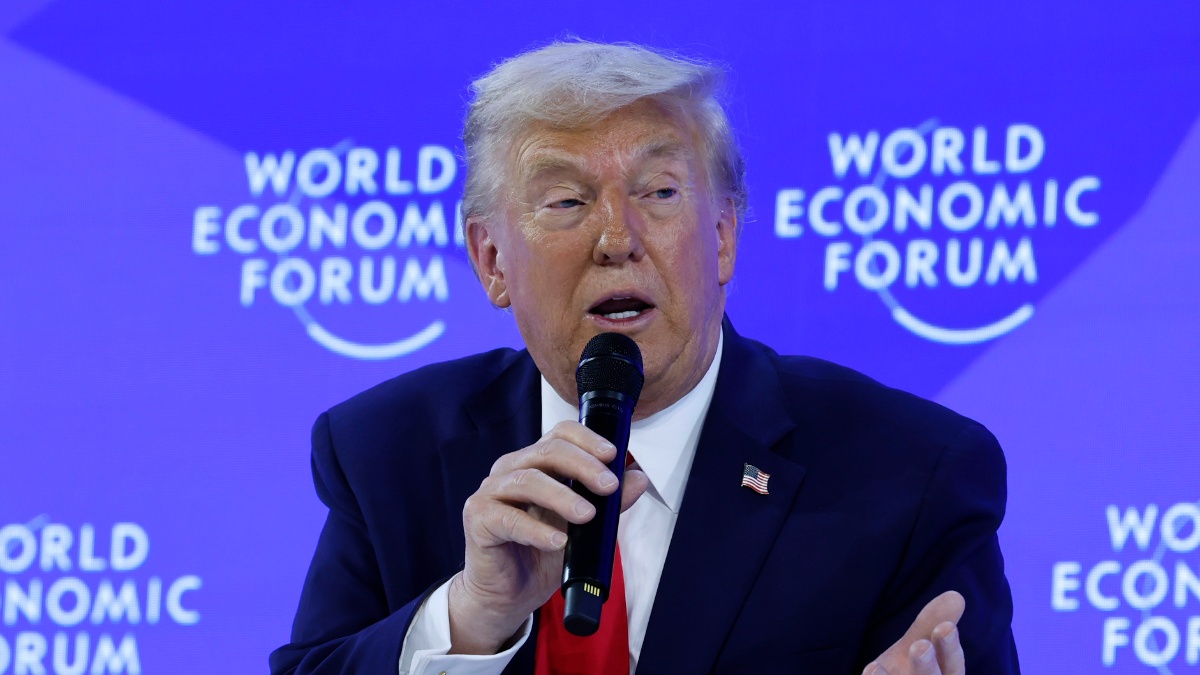

President Trump finally de-escalated his aggressive threats, backing away from the idea of seizing Greenland and promising not to hammer Europe with new economic tariffs, as per The Hill. This sudden reversal came as a huge relief to some lawmakers, but many others fear the damage to the decades-old NATO and transatlantic alliances has already been done.
This whole saga kicked off because the president had long sought to take over Greenland, which is a semiautonomous territory of Denmark. In recent weeks, he even floated the use of military force to make it happen. That’s a huge deal, especially when you consider Denmark is a NATO ally.
During his address to European leaders at the Davos Economic Forum, Trump reversed course, saying the U.S. wouldn’t seize the territory by force and instead called for immediate negotiations. A short time later, after meeting with NATO Secretary General Mark Rutte, the president announced a “framework of a future deal” regarding Greenland. He also mentioned that he wouldn’t impose the previously threatened tariffs after the European allies had demanded the U.S. respect Denmark’s sovereignty.
While the rapid developments drew a sigh of relief from some in the Capitol, others are clearly focused on the long-term cost
Rep. Adam Smith, the senior Democrat on the House Armed Services Committee, put it bluntly, saying, “It’s hard to un-ring the bell.” He pointed out that President Trump was willing to use coercive power to try to take the sovereignty of a NATO ally, which has obviously hurt the partnership. Now, our allies are thinking they need a back-up plan because they can’t depend on us.
Even some Republicans are baffled by the move. Rep. Don Bacon thinks the entire thing is “crazy,” especially since Denmark would likely give the U.S. permission to build a new base if asked politely. Rep. Michael McCaul agreed, stating flatly that “talking about militarily invading a NATO ally obviously is not constructive with our relationships with our European NATO allies.” He noted that he far prefers seeing American energies directed at adversaries rather than “blowing up our NATO alliances.”
The fallout from these aggressive tactics isn’t just theoretical; it’s already surfacing. Canada recently signed a new trade agreement with China. Canadian Prime Minister Mark Carney used the Davos forum to urge European leaders to look for trade alternatives away from the U.S. Carney said directly, “We are in the midst of a rupture, not a transition…A country that can’t feed itself, fuel itself or defend itself, has few options. When the rules no longer protect you, you must protect yourself.”
Rep. Don Beyer, who served as U.S. ambassador to Switzerland and Liechtenstein under the Obama administration, believes our allies are finally realizing that trying to cave to or appease the president is pointless. He thinks we’ll see “a lot more pushback against the bully.” Beyer worries that by focusing on blowing up our NATO alliances, we’ve opened the door wide for China to step in and make deals with Canada, the EU, and sub-Saharan Africa. He said, “It’s hurting America.”









Published: Jan 22, 2026 10:30 am