



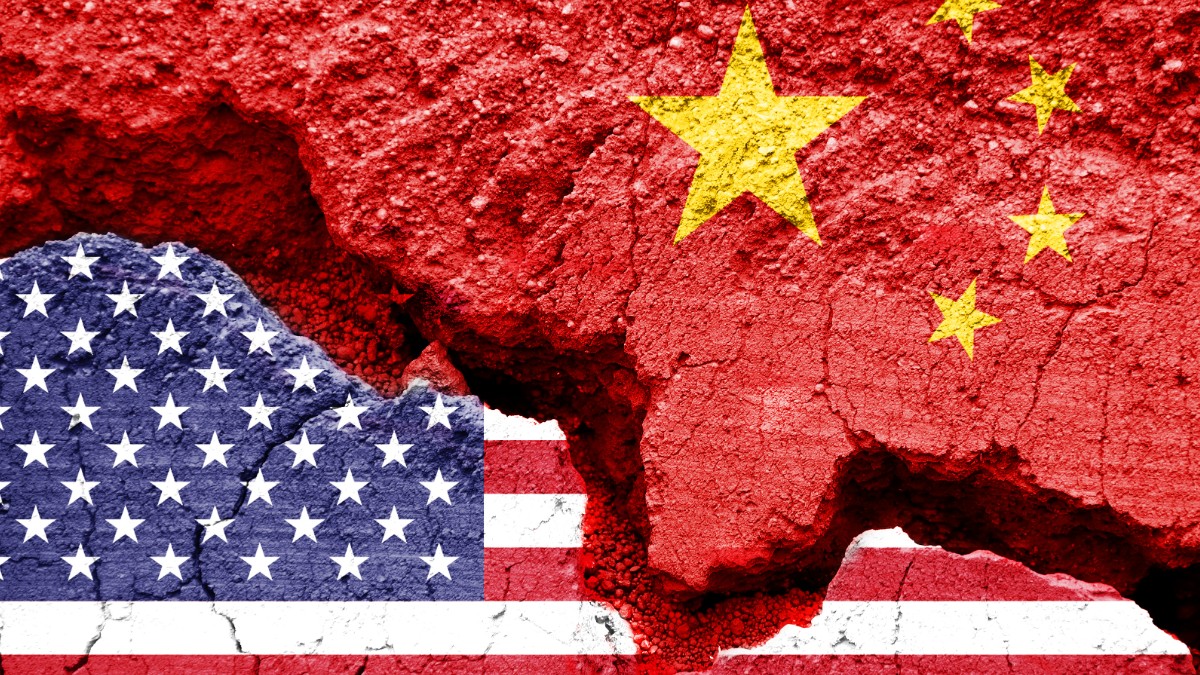

The New Start treaty, the final nuclear arms control agreement between the United States and Russia, expired earlier this month, prompting fresh warnings from Washington about China’s expanding arsenal. As reported by The Guardian, US officials described Beijing’s buildup as “massive,” raising concerns about the potential for a new arms race.
Christopher Yeaw, the US assistant secretary of state for arms control and non-proliferation, told the Conference on Disarmament in Geneva that New Start was flawed because it did not account for China’s “unprecedented, deliberate, rapid and opaque nuclear weapons buildup.” He said China has “massively expanded its nuclear arsenal without transparency or any indication of China’s intent or end point,” despite Beijing’s public assurances.
China rejected the accusations at the same forum. Ambassador Shen Jian said Beijing “firmly opposes the constant distortion and smearing of its nuclear policy by certain countries” and insisted that China would not “engage in any nuclear arms race, with any country.”
Expiration of New Start raises fears of renewed arms competition
The New Start treaty, which ended on February 5, limited the US and Russia to 1,550 deployed nuclear warheads each. For years, it served as the primary mechanism for capping the world’s two largest nuclear arsenals, but its expiration leaves no formal constraints on deployments. The same stretch of diplomatic tension included Greenland leader outbursts dispute.
US officials claim Russia has already exceeded its treaty limits and argue that China is rapidly approaching comparable levels. Yeaw said China is “on track to have the fissile material necessary for more than 1,000 nuclear warheads by 2030,” intensifying concerns in Washington.
Yeaw also reiterated accusations that China conducted a low-yield nuclear test in 2020. He cited data collected in nearby Kazakhstan that indicated a 2.75-magnitude underground explosion on June 22, 2020, estimating the yield at roughly 10 tonnes if fully coupled in hard rock below the water table. He further alleged that China may be preparing additional tests with larger yields.
Beijing has denied those claims. Shen called the accusations “groundless” and suggested the United States was using them as a pretext to resume its own nuclear testing. A recent report from the Center for Strategic and International Studies did not find conclusive evidence of an explosion, noting that satellite imagery showed no unusual activity at Lop Nur, China’s historic nuclear testing site. Separately, hospital boat to Greenland was also in the mix of official statements this week.
Despite the heightened rhetoric, diplomatic contacts continue. A US state department source said a preparatory meeting with a Chinese delegation took place in Washington the day after New Start expired, and a more substantive meeting is scheduled in Geneva. Yeaw said the United States is not “walking away from or ignoring arms control” and is seeking a stronger agreement aimed at reducing nuclear weapons globally.






Published: Feb 23, 2026 08:30 pm