



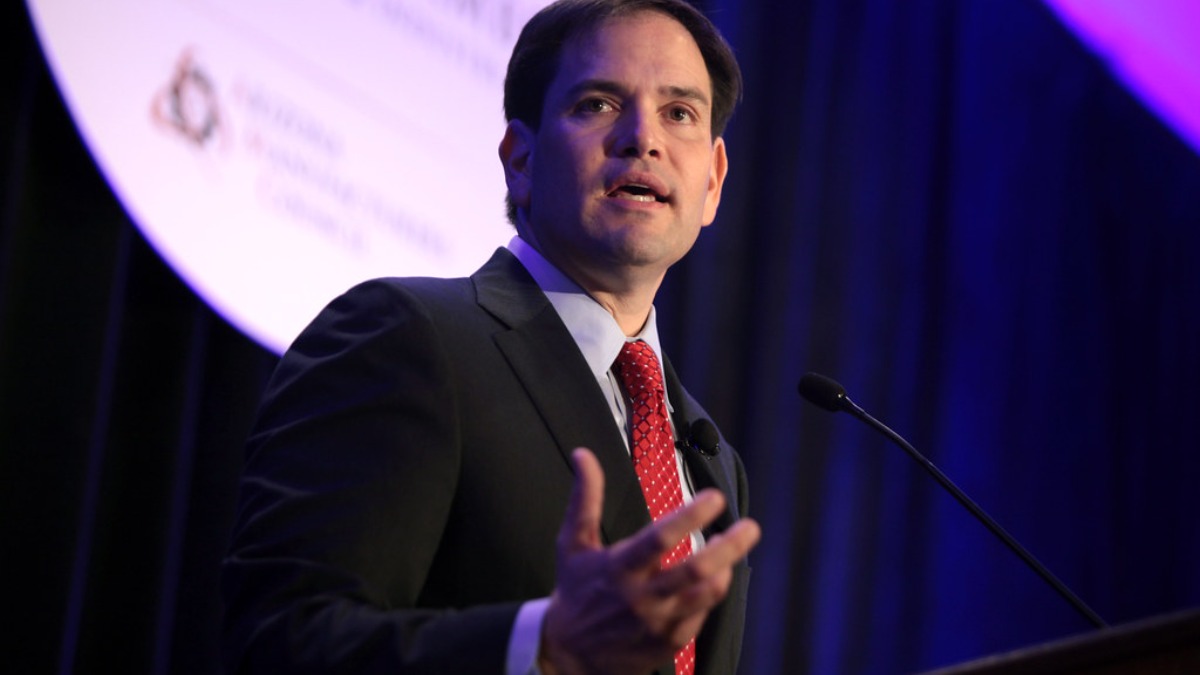

Secretary of State Marco Rubio has issued a cable to all U.S. embassies ordering diplomats to push foreign nations to sign a “trade over aid” declaration by Monday, ahead of its introduction at the United Nations later this month. As detailed by the Washington Post, the move marks a significant shift in U.S. foreign policy, explicitly rejecting America’s long-standing role as a leading provider of humanitarian assistance to developing countries.
Rubio’s directive, an official call to action known as a demarche, instructs American diplomats to secure backing from foreign nations. The cable makes clear that the “trade over aid” initiative is intended to “promote America First values and create business opportunities for U.S. companies” within the U.N. system.
This push is part of a broader effort by the Trump administration to overhaul the global aid system. USAID was officially dismantled on February 4, 2026, and funding has been pulled from various multilateral efforts at the United Nations. The administration has argued these initiatives historically led to waste, fraud, and dependency.
The human cost of the aid pullback is already being counted in lives
Since USAID’s dismantling, HIV clinics in South Africa have closed, critical medical programs in Afghanistan have been terminated, and initiatives tackling malnutrition and preventable diseases have ended. Other major donors, including France, Germany, and Britain, have also scaled back their own efforts, contributing to what some are calling a “great aid recession.”
A peer-reviewed study published in The Lancet, as reported by CNN, projects that if the current funding trend continues, global aid cuts could lead to at least 9.4 million additional deaths by 2030, including an estimated 2.5 million children under the age of five. The study was conducted by the Barcelona Institute for Global Health (ISGlobal) with funding from the Spanish government and the Rockefeller Foundation, drawing on data from 93 low-income and middle-income countries.
Researchers also modeled a scenario where funding cuts deepen through the end of the decade, projecting the number of additional deaths could reach 22.6 million. The study examined data from 2002 to 2021, a period during which global aid helped reduce child mortality by 39%, HIV/AIDS deaths by 70%, malaria deaths by 56%, and deaths from nutritional deficiencies by 56%.
The Lancet study coordinator, Davide Rasella of ISGlobal, said development assistance is “among the most effective global health interventions available” and warned that withdrawing it “would translate directly into millions of preventable adult and child deaths in the coming years.” A senior U.S. State Department official dismissed the journal as a “failed journal,” arguing the old system “created a global culture of dependency, compounded by significant inefficiency and waste.”
One State Department official, speaking on condition of anonymity, put the administration’s position bluntly: “It’s solidifying our stance on dropping aid completely and letting companies enrich themselves on newer markets.” The administration has also faced accusations of conditioning global health funding, particularly for HIV prevention, on foreign governments’ acceptance of commercial side deals related to critical minerals. The State Department has rejected those claims.
Ambassador Mike Waltz, the U.S. representative to the U.N., previewed the initiative before the Senate Foreign Relations Committee, telling lawmakers the administration is “heavily engaging the private sector” and framing the approach as: “Let’s lower barriers to capital, drive foreign investment and create jobs, not dependency.” Amid a broader pattern of assertive U.S. foreign policy moves, including soldiers leaving the military over the Iran war, skeptics warn the trade-over-aid push faces significant headwinds internationally.
Sam Vigersky, an international affairs fellow at the Council on Foreign Relations and a former senior humanitarian adviser to the U.S. mission to the United Nations, said the initiative “comes across as undermining the U.N.” and added, “Having been on the driving end of many demarches over my time, I would not see this being well received.”
Jeremy Konyndyk, president of Refugees International, acknowledged that mathematical models of projected death tolls have limitations but said the impact is already being felt. “What we can say with confidence is these cuts are already killing people,” he said. He also noted that aid cuts have made it harder to collect mortality data, as many health clinics have closed. “We’re flying blind,” he added.
The U.N. has responded by implementing austerity measures and reshuffling donations toward the most life-saving initiatives, though Konyndyk cautioned that mortality data would not capture all adverse outcomes, with aid recipients already pulling funds from education to cover food and vulnerable populations taking on unsustainable debt and pulling children from school. The collapse of U.S.-Iran nuclear talks has added further uncertainty to the administration’s broader foreign policy posture at the U.N.
Lee Crawfurd, a senior research fellow at the Center for Global Development, said the precise figures from death toll projection models should be taken with caution but that “the overall conclusion is likely correct, people will die in large numbers.” He also noted that planned cuts from European countries are still largely set for this year and next, meaning “there is more bad news to come.”







Published: Apr 15, 2026 08:15 pm