



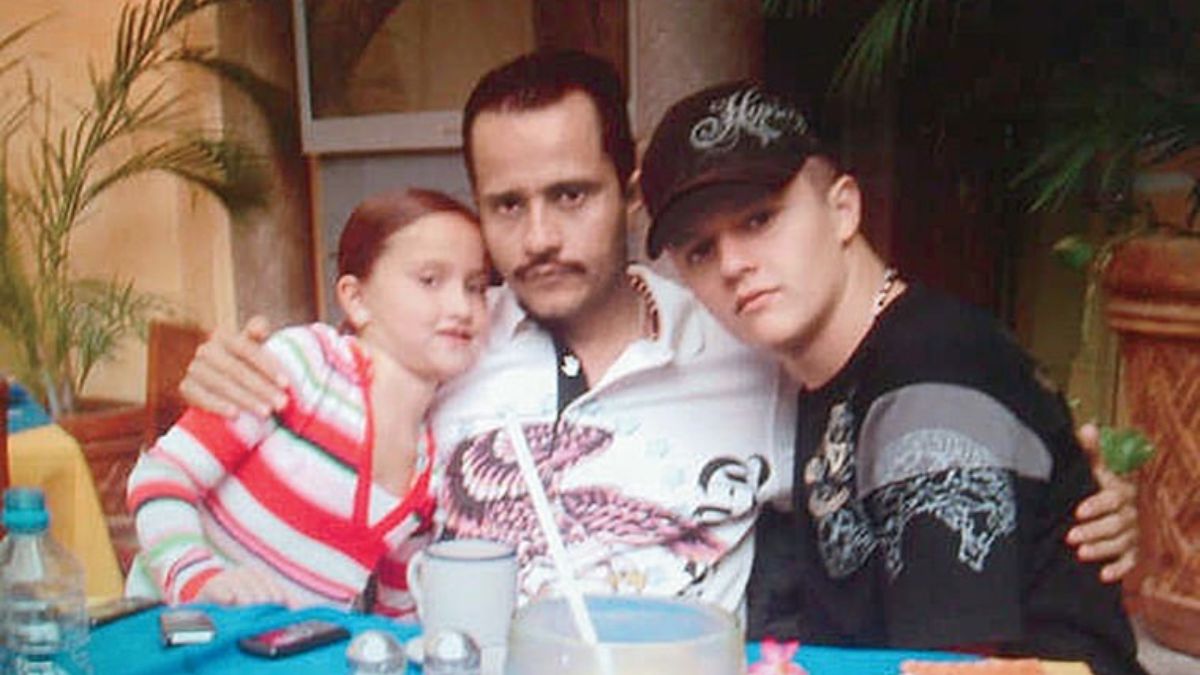

The Mexican military’s killing of drug cartel leader Nemesio Rubén Oseguera Cervantes, known as El Mencho, has revealed where his weapons came from. Officials confirmed that most of the guns recovered from the firefights were smuggled in from the United States. His cache included a rocket-propelled grenade launcher, ten long arms, various handguns, and several grenades.
According to USA Today, Mexico’s Defense Minister, Ricardo Trevilla Trejo, stated that roughly 80% of weapons found at Mexican crime scenes, including El Mencho’s, were bought in the United States and then illegally brought across the border. He said this at a news conference on February 23, the day after El Mencho’s death. Many refer to this flow of firearms as an “iron river.”
Gun ownership in Mexico is very strict, with only one military-run gun store in the entire country. This makes the contrast with the United States, where guns are far easier to buy, very sharp. That gap is what feeds Mexico’s black market with American firearms.
The numbers behind the iron river show just how deep US gun trafficking runs into Mexico
The U.S. Bureau of Alcohol, Tobacco, Firearms and Explosives (ATF) has figures that back up Mexico’s claims. From 2017 to 2021, 74% of guns used in crimes in Mexico and traced by the ATF were linked back to a U.S. buyer. Detailed data on these gun traces is usually kept secret due to a congressional rule called the “Tiahrt Amendment,” passed in 2003, which was designed to shield gun shops from public scrutiny.
However, a large leak of Mexican military intelligence in 2024 revealed specific trace data on U.S.-sold firearms, showing exactly where they were purchased. The leak pointed to big-box stores near the border in Arizona and Texas, including Academy Sports + Outdoors and Cabela’s. Court records show that Academy sold 727 of the guns later recovered in Mexico between 2020 and 2022, while Cabela’s sold 215 during the same period.
The Mexican government has called the smuggling method “tráfico de hormigas,” or “ant traffic,” because smugglers move small quantities of weapons across the border at a time. Mexico’s National Guard randomly searches vehicles at ports of entry, and U.S. Customs and Border Protection occasionally conducts southbound vehicle checks, but stopping the flow has proven very difficult. The security situation has grown so severe that Mexico deployed 10,000 troops after cartel violence at a jail where gunmen freed dozens of dangerous prisoners.
The U.S. Department of Justice charged a father-son duo who tried to drive over 300 rifles and pistols, along with ammunition and magazines, across the border. The guns were plastic-wrapped and hidden behind a false wall in a utility trailer.
Attorney General Pamela Bondi said that stopping this illegal flow is a key part of the “whole-of-government approach” to dismantling cartels. The ATF also announced it had seized 4,359 firearms and 648,975 rounds of ammunition headed for Mexico since January 2025. Senator Dick Durbin also introduced a bill in 2025, saying that U.S. gun laws and industry practices fuel this “iron river.”
Mexico has blamed U.S. firearms for thousands of deaths over many years. In 2021, the Mexican government sued U.S. gunmakers, claiming they were “aiding and abetting” the trafficking of firearms south of the border.
However, the U.S. Supreme Court ruled unanimously against Mexico in 2025, blocking the country from holding U.S. gunmakers legally responsible for cartel violence. Meanwhile, El Mencho’s cartel is already making Mexico pay a devastating price following his death.




Published: Feb 24, 2026 02:15 pm