



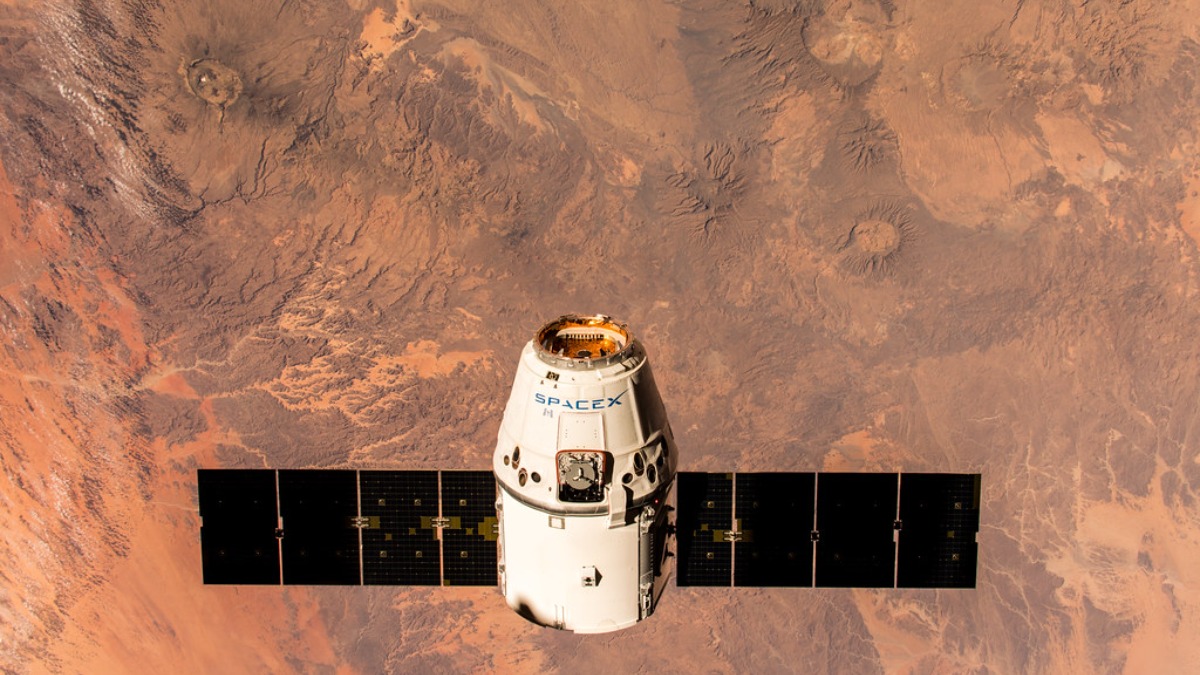

SpaceX has recently proposed launching a staggering one million satellites into Earth’s orbit, a plan that has scientists deeply concerned about the long-term consequences for our atmosphere and the natural night sky, as reported by CBC. This is a giant leap into uncharted territory, and many experts are sounding the alarm.
Right now, we’ve got about 16,000 satellites circling our planet, with a whopping 14,000 of those being active. SpaceX is already responsible for more than 8,000 of them, and that number is constantly changing as they launch more and deorbit others to burn up in our atmosphere. They’ve even stated a desire to get 40,000 Starlink satellites up there to provide global internet.
But a million? That’s just mind-boggling, especially when you consider we’re already dealing with over 140 million pieces of space debris, from tiny bits to larger chunks, all threatening astronauts and the satellites we rely on every day.
Scientists are really worried about what all these launches and re-entries will do to our atmosphere
Rocket launches are already depositing black carbon, or soot, directly into the air. This creates a potential warming effect that could mess with our ozone layer. Eloise Marais, a professor of atmospheric chemistry and air quality, is tracking these emissions and points out that we’re not even properly discussing the impact of the thousands of launches needed to get these car-sized satellites into space. It’s a mix of pollutants hitting the atmosphere directly, which is different from what we typically create on the ground.
When satellites reach the end of their lives and burn up on reentry, recent studies show they’re leaving behind metals like aluminum and lithium. We don’t really know the full consequences of this, and that’s exactly what’s got scientists so concerned. Marais says it’s “daunting” because we’re essentially running an experiment with the atmosphere without knowing what the results will be.
SpaceX, in their filing with the FCC, did say they would “minimize any atmospheric impacts,” but they didn’t really provide any details beyond that. They did mention moving some data centers to a heliocentric orbit, which is a good thing, because if a million satellites were to deorbit, we’d be looking at one re-entry every three minutes.
Beyond the atmosphere, there’s a huge concern about losing access to space and how we actually see it. Most of us probably don’t realize how much we use satellites every day, whether it’s for Instagram, GPS, or even tapping to pay for your coffee. The more satellites up there, the greater the risk of collisions. Aaron Boley, co-director at the Outer Space Institute, put it pretty bluntly, saying, “This just blows right past that. And by almost all metrics that we can think of, this is just a bad idea in terms of our long-term use and access to space.”
These satellites also pose a significant threat to our night sky. Professional observatories are already being affected, both visually and by the electromagnetic radiation these satellites emit, creating noise that interferes with radio frequencies. For casual stargazers, it means seeing lights continually crossing the sky. Even in cities, you’ll spot them, but in dark-sky locations, dozens are visible every night.
It’s not just SpaceX either; other companies and countries are proposing their own “megaconstellations,” bringing the total to an estimated 1.7 million satellites. While many of these might not happen, even half that number would have massive consequences for everyone.








Published: Mar 9, 2026 11:00 am