



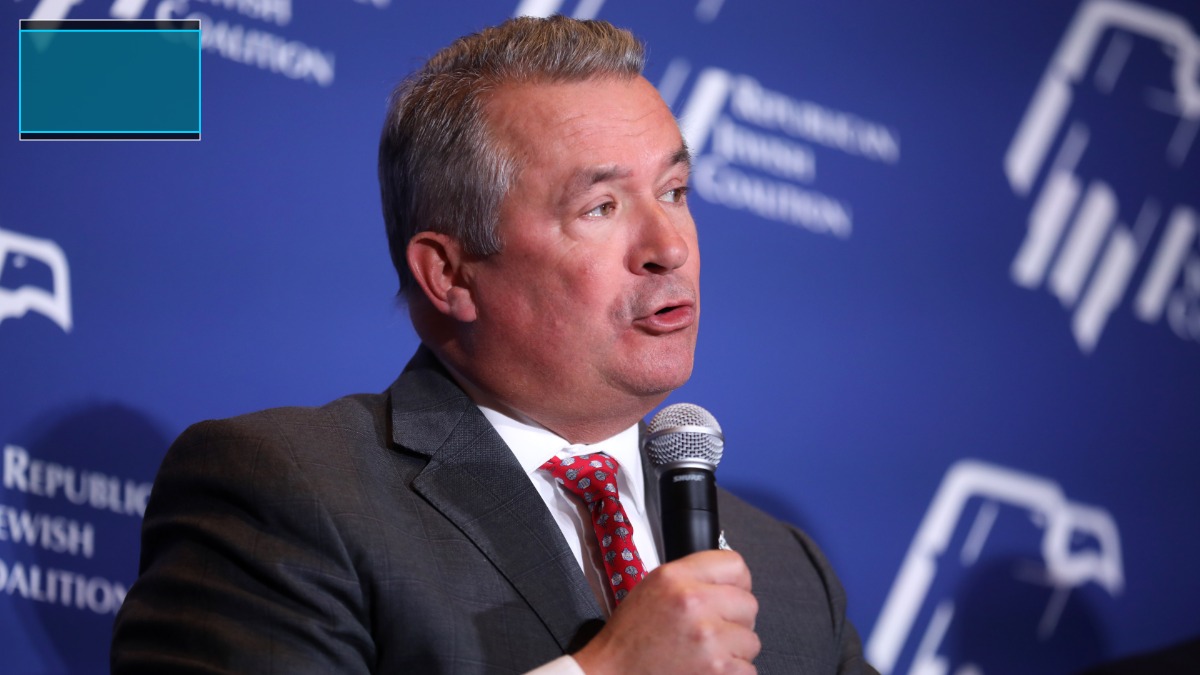

Rep. Don Bacon (R-Nebraska) issued a stark warning to President Trump on Tuesday, stating that if the U.S. were to withdraw from NATO, it would ignite a “civil war” and ultimately “destroy” the Republican Party, as reported by The Hill. This is a pretty serious claim, highlighting just how divided the party could become over such a significant foreign policy move.
Bacon stated that if President Trump unilaterally broke up NATO, it would cause an internal “civil war” within the Republican caucus. Many lawmakers, including Bacon himself, would find such a move “totally unacceptable.” He emphasized that a large group of Republicans firmly believes in maintaining alliances, standing up for freedom, and pushing back against nations like China and Russia.
“We don’t want war with these guys, but you’ve got to be strong,” Bacon explained. He reiterated that if President Trump somehow destroyed or tore up NATO, it would likely “destroy the party for many years.” He was sure that many within the party would “never forgive that” decision, suggesting a deep and lasting schism. Bacon later stressed his belief that the GOP “would implode” if the U.S. were to depart from the military alliance.
This strong warning comes on the heels of President Trump’s recent comments targeting the military alliance
Trump took to Truth Social to rail against U.S. allies, specifically those he feels are reluctant to get involved with American military operations against the “Terrorist Regime of Iran” in the Middle East. He argued that despite almost every country agreeing with the U.S. stance that Iran cannot possess nuclear weapons, they aren’t stepping up.
President Trump went on to claim that because of the U.S.’s “Military Success,” it no longer “needs,” or desires, assistance from NATO countries—or even from Japan, Australia, or South Korea. He boldly stated, “WE NEVER DID!” He declared that as President of the United States, “by far the Most Powerful Country Anywhere in the World,” the U.S. “DO NOT NEED THE HELP OF ANYONE!”
The conflict with Iran and its implications for global trade have been a major point of contention. The Strait of Hormuz, a crucial waterway for exporting oil, gas, fertilizer, and other goods, has been closed since February 28. This closure has predictably caused prices for these commodities to skyrocket, impacting economies worldwide. President Trump has been a vocal advocate for an international coalition of countries to work with the U.S. to escort ships through this vital strait.
Just a few days prior, President Trump issued another warning, suggesting that NATO faces a “very bad” future if member countries do not respond to his calls for this coalition. He had previously mentioned that “many countries” were sending warships to escort tankers through the strait, though he didn’t specify which ones.
President Trump has consistently threatened to pull the U.S. out of NATO since his first term in office. His long-standing argument is that many member states do not contribute their fair share to the military alliance, leaving the U.S. to shoulder too much of the burden. NATO itself was established in 1949 as a collective international effort aimed at containing the Soviet Union.
President Trump, along with some other Republican lawmakers, has often characterized the alliance as a “relic of the Cold War,” suggesting its purpose might be outdated in today’s geopolitical landscape.








Published: Mar 18, 2026 02:45 pm