



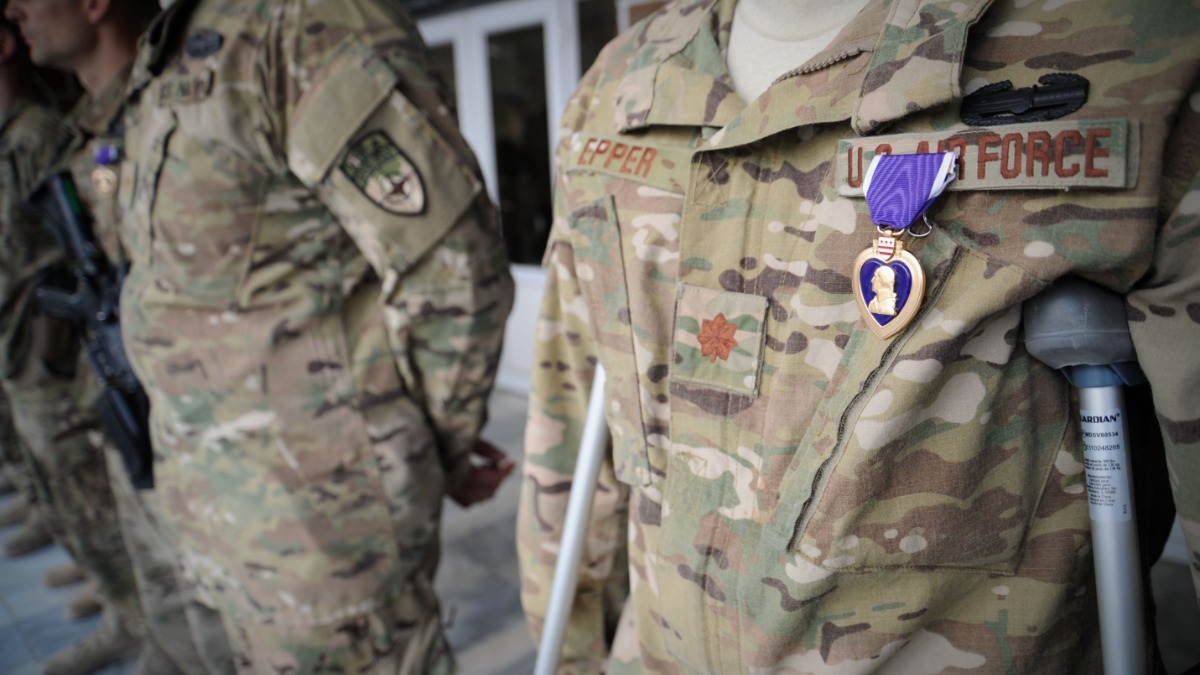

Polymarket has apologized after letting users place bets on the fate of American pilots following a U.S. fighter jet being shot down over Iran. The prediction market platform took down the controversial market after facing public backlash, including sharp criticism from a U.S. Marine Corps veteran congressman.
According to NBC News, the incident happened after a two-seater F-15E Strike Eagle was shot down last Friday, according to a U.S. official. One crew member was rescued, while the other remained missing, sparking an ongoing search and rescue operation in Iran. In the now-deleted market, Polymarket users could bet on when the pilots would be rescued, with most bettors predicting a Saturday recovery. The market was titled, “US confirms pilots rescued by…?”
Representative Seth Moulton, a Democrat from Massachusetts and a Marine Corps veteran who served in Iraq, criticized the market on X. He pointed out that people were placing bets while a search and rescue mission was still active. “They could be your neighbor, a friend, a family member,” Moulton wrote. He added, “And people are betting on whether or not they’ll be saved. This is DISGUSTING.”
Polymarket’s apology was not enough to satisfy the congressman who called them out
In response to Moulton’s post, Polymarket apologized and confirmed the market’s removal. The company stated, “We took this market down immediately as it does not meet our integrity standards. It should not have been posted, and we are investigating how this slipped through our internal safeguards.” Moulton was not satisfied, replying that Polymarket’s “integrity standards are severely lacking” and pointing to other war-related bets still active on the platform.
He urged the company to go further, writing, “Taking down this particular bet after I called it out can only be the first step, @Polymarket. There are still 219 war bets active on your platform. Remove these immediately.”
This is not the first time prediction market platforms have drawn congressional attention. Last month, lawmakers introduced a Senate bill aimed at banning prediction markets from accepting transactions related to sports events and casino-style games.
Senator Chris Murphy, a Democrat from Connecticut, has also pledged to introduce legislation specifically to ban bets tied to government actions, amid rising tensions in the region, including Israel’s strikes on Iranian fuel depots that drew significant White House attention.
Concerns about insider trading have also grown. According to Al Jazeera, a Polymarket user known as “Magamyman” reportedly made over $500,000 in a single day from a bet on US-Israel strikes tied to Iran’s supreme leader, Ayatollah Ali Khamenei, being removed from power.
Representative Mike Levin highlighted that “Magamyman” entered the position when the probability of a strike was only 17 percent, with the trade placed just 71 minutes before the news broke. Other accounts – “Planktonbet,” “Dicedicedice,” and “nothingeverhappens911” – also placed bets within 24 hours of the strike, and all were opened in February and focused exclusively on Iran-related bets, according to analytics firm Bubblemap.
Polymarket operates using cryptocurrency and allows anonymous users, making oversight very difficult. In contrast, Kalshi, the only U.S.-regulated prediction market, requires user identification and falls under the oversight of the Commodity Futures Trading Commission (CFTC).
Although U.S. users are officially prohibited from trading on Polymarket, a 2024 investigation found that Americans frequently bypass geolocation restrictions using VPNs. The broader situation around missile activity traced back to Iran has only added more fuel to the debate over whether these markets enable dangerous speculation.
Kalshi has a “death carveout” policy that prevents settling trades when an event’s outcome involves death. CEO Tarek Mansour said that as a federally regulated platform, they are “required and feel it is important not to enable direct profiting from war, assassination, terrorism, or other violent outcomes.” Polymarket, however, has continued hosting positions on Iran, including “Will the Iran regime fall before 2027?” and “Who will enter Iran by June 30th?”
The push for regulation has come from both sides of the aisle. On the right, former White House budget director Mick Mulvaney launched a coalition called Gambling Is Not Investing, which advocates regulating prediction markets like state-level gambling. Utah Governor Spencer Cox stated that “Rebranding betting as a financial product doesn’t reduce the harm it causes,” calling it “gambling – pure and simple.”
On the left, Senator Murphy called the Polymarket Iran trades “insane” and pledged to introduce legislation “ASAP to ban this,” citing concerns about “corrupt and destabilizing prediction markets, where insiders who know the outcome (especially in government) can rig the game to favor certain bets.”
Both Polymarket and Kalshi have ties to President Donald Trump’s orbit. In July 2025, the U.S. Department of Justice dropped its investigation into Polymarket, and a month later the company received backing from 1789 Capital, a venture firm linked to Donald Trump Jr., who also joined Polymarket’s board.
Donald Trump Jr. joined Kalshi as a strategic adviser in January 2025. In May, the CFTC withdrew an appeal that had sought to block a federal court ruling allowing Kalshi to offer bets on U.S. elections, and several Kalshi staffers have since joined the Trump administration.





Published: Apr 5, 2026 08:45 am