



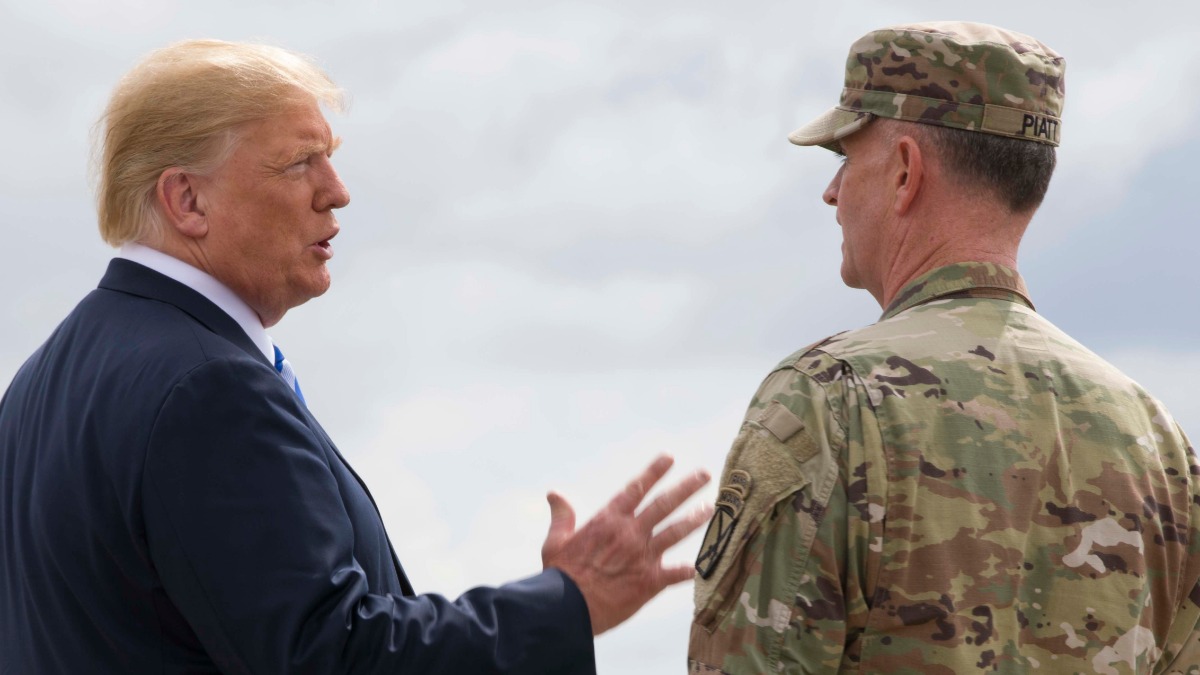

A recent Wall Street Journal report says that aides deliberately kept Donald Trump out of the Situation Room during critical rescue operations for downed American airmen because they believed his impatience would not be helpful. This comes from a recent report detailing the internal dynamics of the ongoing conflict with Iran. The report shows a presidency struggling to maintain a clear strategy while managing a war that has moved in directions the administration did not expect.
When Trump first learned that an American F-15E had been shot down, he reportedly screamed at his aides for hours. He was deeply haunted by the 1979 Iranian hostage crisis, frequently referencing Jimmy Carter’s failure to rescue hostages. He told his team, “If you look at what happened with Jimmy Carter, with the helicopters and the hostages, it cost them the election. What a mess.” He also repeatedly complained that “The Europeans aren’t helping.”
Because of his intense focus and perceived volatility, his inner circle chose to keep him out of the room during the minute-by-minute updates of the rescue mission. Instead, Vice President Vance dialed in from Camp David, and Chief of Staff Susie Wiles coordinated from her home in Florida. They briefed the president by phone only at key moments.
Trump’s decisions during the conflict revealed a leader torn between public toughness and private fear
The stress of the situation was made worse by Trump’s refusal to authorize a mission to seize Kharg Island. Despite being told that capturing the island would give the U.S. control of 90% of Iran’s oil exports, he rejected the plan. He told aides, “They’ll be sitting ducks,” citing his fear that the operation would lead to unacceptably high American casualties. Reports have also raised questions about how the F-15 loss affected peace talks with Iran, with mediators suggesting the negotiations had already collapsed.
His communication strategy during the war also appeared to be almost entirely improvised. On Easter morning, after learning the second airman had been successfully recovered, Trump posted a message on social media that included profanity and the phrase “Praise be to Allah.”
When an adviser later questioned the post, Trump explained that he wanted to seem “as unstable and insulting as possible” because he believed it was “a language, he said, the Iranians would understand.” He even asked his advisers, “How’s it playing?”
His threats to destroy Iranian civilization were also described as improvisational rather than part of a calculated national security plan. Even Secretary of State Marco Rubio reportedly defended the aggressive rhetoric privately, suggesting it was the kind of language that might force the Iranians to the negotiating table. Trump was clearly desperate to end the war, and he eventually announced a two-week ceasefire less than 90 minutes before his own 12-hour ultimatum was set to expire.
The disconnect between public confidence and private reality remained a constant issue. While Trump spoke confidently about the military’s capabilities, he was caught off guard by how easily the Strait of Hormuz was shut down. He eventually remarked to his aides, “A guy with a drone can shut it down,” which was a significant shift from his earlier confidence that the U.S. military could easily handle any Iranian attempts to close the waterway.
Kori Schake, who served on the National Security Council under George W. Bush, summarized the situation by noting that the military successes observed do not equal victory. She pointed to a “lack of attention to detail and lack of planning” as the primary reasons for the administration’s struggles.
With no final date set for the next meeting between U.S. and Iranian negotiators, the future of the conflict remains uncertain. Trump maintains that the U.S. cannot be blackmailed, but the internal records suggest a leader struggling to navigate a war he is eager to conclude.
According to Axios, Trump has convened an emergency meeting in the Situation Room after Iran closed down the Strait of Hormuz in response to the recent U.S. blockade of the Iranian ports. He wants to wrap up the war in a few days, but if a deal with Iran can’t be agreed upon, the U.S. might resume strikes on the Middle East nation.






Published: Apr 19, 2026 08:30 am