



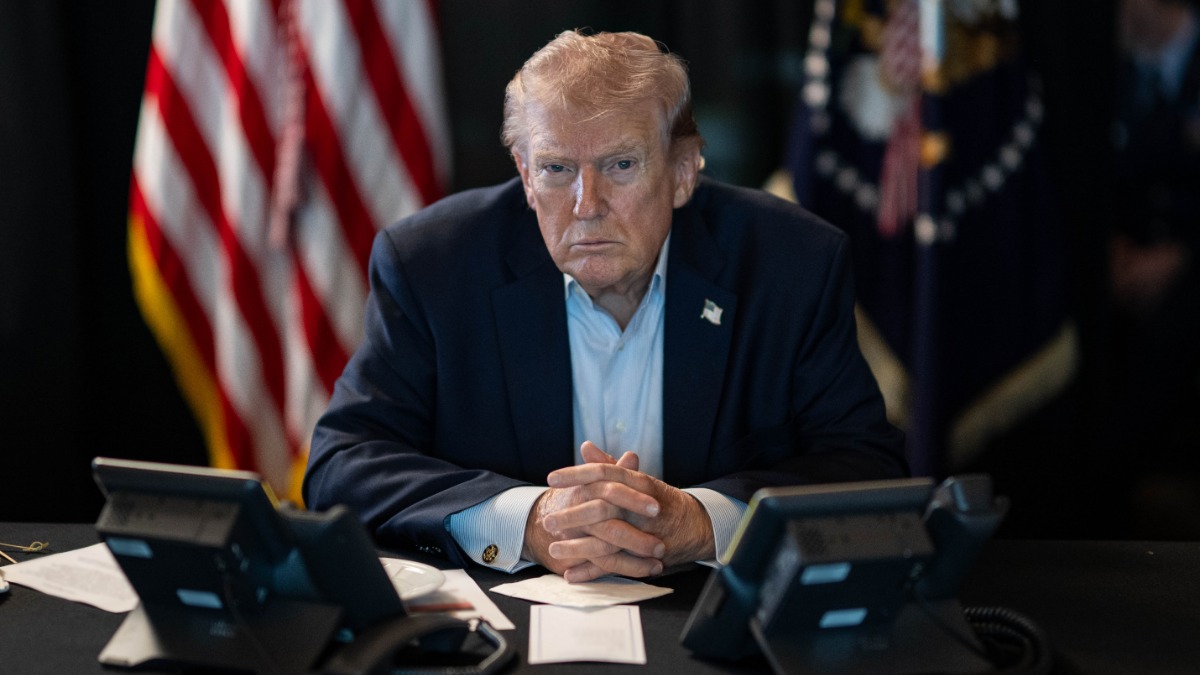

The war in Iran has entered its eighth week with no clear end in sight, despite repeated assurances from President Donald Trump that a resolution is close. CNN’s Inside Politics aired a montage of Trump’s statements about the war ending soon, highlighting a pattern in how the White House has been talking about the conflict.
Host Dana Bash introduced the segment by pointing out that Trump has consistently used a two-week timeline throughout the war. “One of President Trump’s tics has historically been two weeks, whether it is a plan or something is gonna end or gonna begin,” she said. “That has been the case since the beginning of this war with Iran.” According to Mediaite, the montage showed several instances of Trump predicting a quick end to the war.
On March 9 in Doral, Florida, he told a crowd, “It’s gonna be finished pretty quickly.” Three weeks later on Air Force One, he said, “I do see a deal in Iran, yeah. Could be soon.” On April 1, he stated, “We are going to finish the job, and we’re gonna finish it very fast. We’re getting very close.” As recently as last Wednesday on Fox News with Maria Bartiromo, he said, “I mean, I view it as close to over.”
Trump’s optimistic statements clash with a conflict that continues to escalate on multiple fronts
These statements stand in contrast to the reality on the ground. The war began with Operation Epic Fury on February 28, and recent polling cited during the broadcast shows that 67% of Americans disapprove of Trump’s handling of the conflict.
A major point of tension is the US blockade of Iranian ports. Trump has said the blockade will not be lifted until a deal is reached with Tehran. He wrote on Truth Social that the blockade is “absolutely destroying Iran” and that the US was “winning the conflict by a lot.”
Since the blockade began, US Central Command has directed 27 vessels to turn around or return to an Iranian port. On Sunday, US forces intercepted and seized an Iranian-flagged cargo ship that tried to pass through the blockade, with troops boarding the vessel after issuing a warning.
Iran has called these actions an act of piracy and a violation of the ceasefire that was supposed to be in place. Iran has also kept its own blockade on the Strait of Hormuz, which has caused global energy prices to rise.
The route was briefly reopened on Saturday but was closed again after vessels, including a tanker, were reportedly targeted by Tehran. Trump’s approach to managing ceasefire terms has also drawn attention in other regional conflicts, as seen in how Trump handled Israel’s actions in Lebanon.
According to the BBC, Trump argued that Iran had “decided to fire bullets” and called it a “total violation to the ceasefire agreement.” Iran responded by saying it would keep the Strait of Hormuz shut until the US ends its blockade of Iranian ports.
A potential second round of peace talks is being planned in Pakistan. Roads near the Serena Hotel in Islamabad have been closed, and guests have been asked to leave ahead of the expected meetings. However, US Vice President JD Vance, who is set to lead the American delegation, has not yet left Washington. An Iranian foreign ministry spokesperson said on Monday that Tehran had “no plans” to attend the talks so far.
The first round of talks earlier this month did not go well. Vance noted that the US “could not get to a situation where the Iranians were willing to accept our terms.” Iran’s foreign ministry urged Washington to “refrain from excessive demands and unlawful requests.”
Despite this, there is some hope that both sides may still come to the table, partly to avoid being blamed for a diplomatic breakdown. Trump’s relationship with key allies during this period has also raised eyebrows, particularly Trump’s late-night praise of Netanyahu amid regional tensions. Vance is expected to be joined by special envoy Steve Witkoff and Jared Kushner, who serves as an adviser to the President.






Published: Apr 21, 2026 02:15 pm