



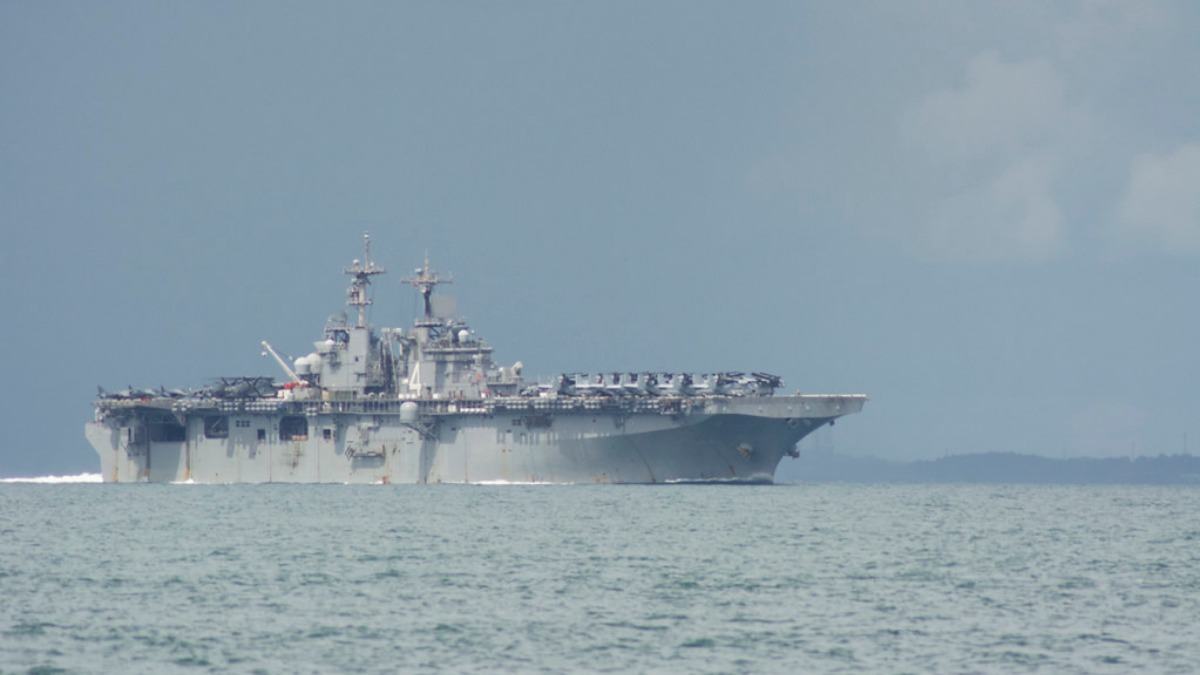

Iran claimed it had forced a U.S. warship to turn back from entering the Strait of Hormuz on Monday, but U.S. Central Command (CENTCOM) quickly denied that any missile strike had taken place. The Strait of Hormuz is a key oil route and has been a major point of tension between the U.S. and Iran, with Iran blocking nearly all shipping in and out of the Gulf.
According to Reuters, Iranian officials said the warship was fired at with a warning shot, though it was unclear whether the ship was damaged. CENTCOM stated that no U.S. warship had been struck by missiles. The conflicting reports caused oil prices to jump by 5%.
The United Arab Emirates accused Iran of attacking an empty crude oil tanker belonging to Abu Dhabi state oil firm ADNOC with drones as it tried to pass through the strait. In a separate development, Pakistan said the U.S. had handed over 22 crew members from an Iranian container vessel that American forces had seized last month, which Pakistan described as a “confidence-building measure.”
The Strait of Hormuz crisis is pushing global trade to the edge, with no clear solution in sight
The U.S. has been trying to find a way to safely escort commercial ships through the strait. President Donald Trump announced his “Project Freedom” plan to guide stranded vessels out. However, Iran’s unified command warned commercial ships and oil tankers to avoid any movement not coordinated with Iran’s military, with Iran’s navy issuing a “swift and decisive warning” to keep “American-Zionist” warships out of the strait area.
Hundreds of commercial vessels and as many as 20,000 seafarers have been unable to transit the strait. Container shipping group Hapag-Lloyd stated that its risk assessment was unchanged and that transit through the strait was still not possible.
The Trump administration has been seeking help from other countries to secure shipping in the strait. CENTCOM said the latest effort announced by Trump would combine “diplomatic action with military coordination.”
It was not immediately clear which countries the U.S. operation would involve or how it would work. Trump said any interference with the operation would have to be “dealt with forcefully,” and he has also left the door open for further military action against Iran while reviewing the country’s 14-point peace proposal.
The U.S. and Israel suspended their bombing campaign against Iran four weeks ago, and U.S. and Iranian officials held one round of face-to-face talks. However, attempts to set up further meetings have failed. Iranian state media reported on Sunday that Washington had sent its response to a 14-point Iranian proposal through Pakistan, and that Tehran was reviewing it. Neither side gave details.
Washington wants Tehran to give up its stockpile of highly enriched uranium, which the United States says could power a bomb. Reports suggest that Iran accumulated nearly 11 tons of enriched uranium after Trump exited the nuclear deal in 2018, and the current location of most of it remains unknown. Iran says its nuclear program is peaceful, though it has said it is willing to discuss some limits on it in return for the lifting of sanctions.







Published: May 4, 2026 08:00 am