



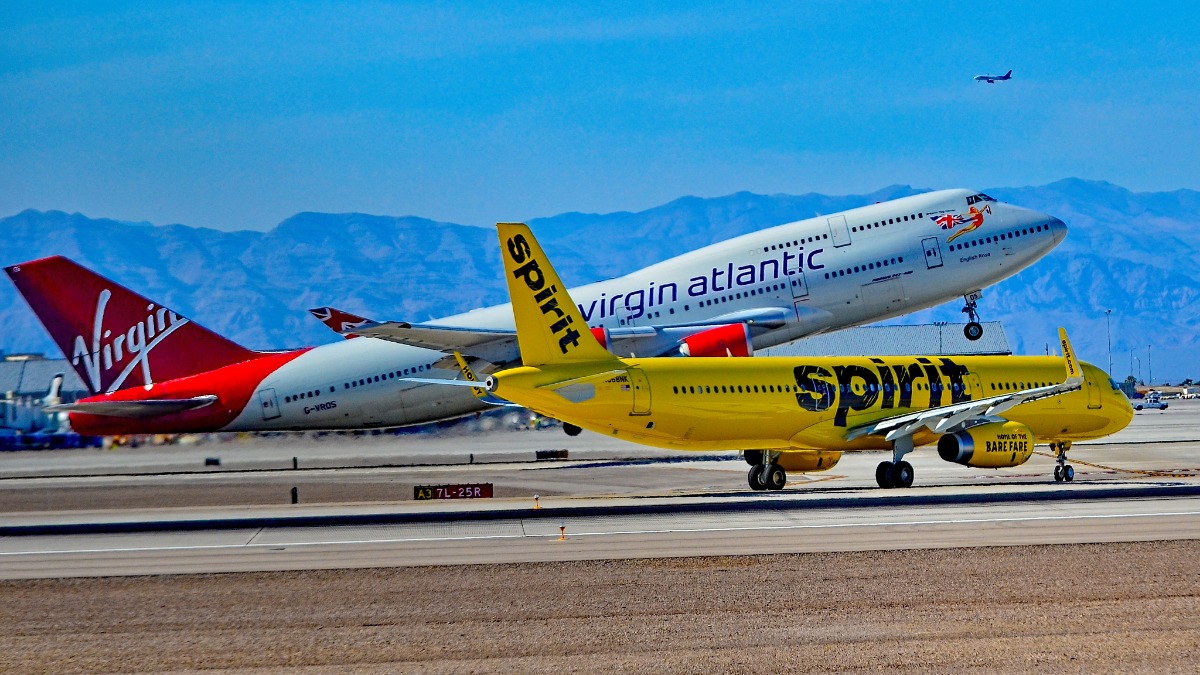

Spirit Airlines has officially shut down all operations, leaving thousands of travelers stranded and nearly 17,000 employees out of work. The shutdown comes after the company failed to secure a government bailout, despite early interest from the White House. While Spirit’s leadership blamed the recent war with Iran as a major reason for its financial collapse, Transportation Secretary Sean Duffy has pushed back on that claim.
At a press conference in Newark, New Jersey, Secretary Duffy explicitly denied that rising fuel costs from the war were the reason behind Spirit’s failure. He argued that the airline had been in serious financial trouble long before the conflict started. Duffy pointed out that Spirit had filed for bankruptcy twice in the past year, suggesting the problems were long-term, not a sudden result of geopolitical events.
After speaking with Commerce Secretary Howard Lutnick on Thursday about a possible bailout, Spirit’s CEO, Dave Davis, warned that other airlines could soon face similar struggles. Davis said, “Everybody burning cash, we just had a smaller pile to start with,” and added, “They’re not that far behind us in the race.” He maintained that keeping the airline running required hundreds of millions of dollars in funding that the company could not get, reports Mediaite.
Spirit’s collapse exposes real cracks in the budget airline model that go far beyond the Iran war
The impact of the closure was felt immediately. On Saturday morning, Spirit check-in desks at airports across the country were empty, with travelers finding only notices about the shutdown. Passengers like Angela Moreno, who was traveling to a wedding, had to scramble for last-minute flights that cost far more than her original tickets.
Others, like 72-year-old Ricardo Tejedo, showed up for essential medical travel only to find their flights canceled. While Spirit said it would automatically refund tickets bought directly, passengers are on their own for other costs like emergency hotel stays.
Secretary Duffy addressed the calls for a government bailout by saying such a move was not needed. He explained that Congress does not have a pool of billions of dollars for the Executive Branch to hand out to airlines. He also warned that talk of a bailout often leads other airlines to seek funding for themselves, rather than out of genuine need.
The broader war with Iran has already created serious financial strain across multiple sectors, and the government’s struggle to manage unpaid wartime bills has added pressure to any discussion of further spending. Duffy said that if airlines need cash, they should go to private markets instead.
The story of Spirit’s decline is not simple. The airline grew quickly in the mid-2010s with its low-cost, bare-fare model but struggled to stay profitable after the pandemic. A key turning point came in 2024 when a federal judge blocked a proposed merger with JetBlue, a decision Duffy called “a massive mistake.”
He said he wants a healthy aviation industry that includes both premium and budget carriers, and that losing Spirit could allow larger airlines to take more control of the market. In response to the closure, the government has taken steps to limit the impact on travelers.
According to NBC News, secretary Duffy announced that an agreement has been reached with United, Delta, JetBlue, and Southwest to cap ticket prices for former Spirit customers who need to rebook. Analysts watching the situation note that Trump’s limited options for claiming a war victory could prolong the economic uncertainty that is already weighing on the airline industry.
Major carriers are also working to bring stranded Spirit crew members home and are advertising job openings to the thousands of employees now looking for work. Unions representing Spirit’s workforce have called on both the government and company leadership to make sure all employees receive the pay and benefits they are owed.
Davis also told the media that the airline did not intentionally sell tickets while knowing it could not operate, saying they had hoped to receive the funding needed to keep flying. As the aviation industry adjusts to this new reality, attention remains on the thousands of passengers still sorting out their travel plans and the large number of workers now facing an uncertain future.








Published: May 3, 2026 10:30 am