



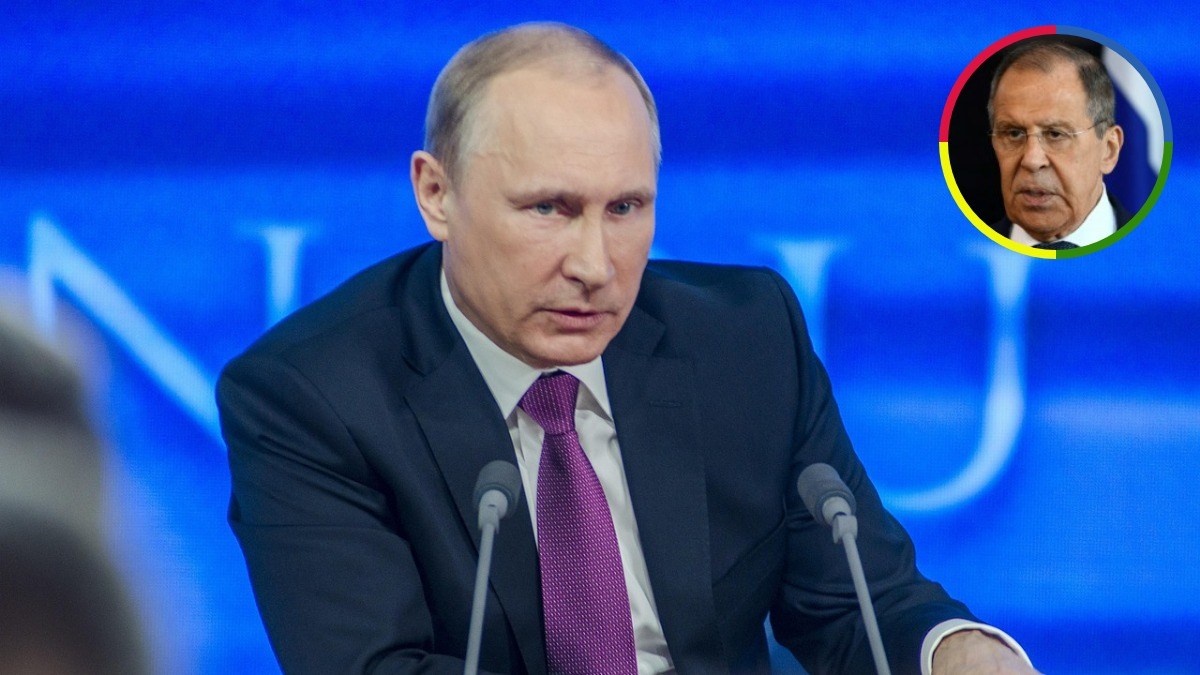

Russia is officially moving to close German cultural centers across the country, a major development that Foreign Minister Sergey Lavrov announced. This decision marks a significant escalation in the ongoing diplomatic conflict between Moscow and Berlin.
As reported by the NY Post, the move is reportedly a direct response to Germany’s recent decision to shutter the Russian Consulate in Bonn and the Russian House cultural center in the German capital. Lavrov framed the decision as a necessary measure, stating that any other response would show a lack of self-respect on the part of Russia.
During the Eastern Economic Forum in Vladivostok, the foreign minister reportedly noted that Germany could not have failed to understand that the closure of Russian House would signify the end of their cultural presence in Russia. The Goethe-Institut locations in Moscow, St. Petersburg, and Yekaterinburg are the specific facilities facing closure under this new directive.
Putin says the evidence is fake
This diplomatic friction is rooted in a serious security incident at Leipzig/Halle Airport. Authorities reportedly discovered a drone laden with explosives near a Ukrainian plane at the freight hub, which is frequently used to provide support to Ukraine. The device was eventually defused, but the incident triggered an immediate investigation and subsequent retaliation from Berlin.
While Germany has insisted that it is not at war, officials have described the country as a daily target of a hybrid campaign orchestrated by the Kremlin. President Vladimir Putin has dismissed these allegations entirely. He claimed that Berlin is simply attempting to distract from its own internal failings and voter dissatisfaction. Regarding the evidence presented by German authorities, Putin said any proof being offered has been planted.
The situation is part of a much broader pattern of tension that has been building for months. Western officials have repeatedly accused Moscow of conducting a campaign of sabotage and disruption across Europe, aimed at destabilizing nations and undermining support for Ukraine.
Russian officials deny these claims, yet the European Union increasingly views the current environment as a hybrid war. This conflict involves a wide array of tools, ranging from cyberwarfare and disinformation to conventional military threats. At the end of last year, the head of Britain’s MI6 spy agency reportedly noted that Vladimir Putin is actively testing the West with tactics that fall just below the threshold of war and is determined to harass NATO members.
The fallout from these tensions is manifesting in various ways across Europe. The British government reportedly recently summoned the top Russian diplomat in London to protest what it labeled as an egregious and reckless attack on the German airport. The UK government described this as the latest in a clear pattern of attempts by Russia to undermine European security.
In Italy, Defense Minister Guido Crosetto reportedly characterized the incident at Leipzig/Halle Airport as a very serious act that could have very grave consequences. Despite the rising threat levels, Crosetto confirmed that Italy remains committed to providing further aid to Kyiv as it considers sending additional air defense batteries.







Published: Sep 3, 2026 07:15 pm