



Warning: This article contains descriptions of violence.
The International Court of Justice has issued a historic ruling, judging that Myanmar committed genocide against the Rohingya minority community. CNN reported that this decision marks the first time in its 80-year history that the UN’s top court has held a state accountable for genocide. The ruling, which was decided by a vote of nine to six, follows a seven-year legal battle that began when The Gambia brought the case in 2019.
For many survivors, the judgment is a “turning point.” Murshid Alam was 12 when he was forced to flee his home in the Rakhine state and was shot in the ear during the escape. “It is the difference between being told our history was a tragedy, and being told our history was a crime that must be answered for,” Alam told CNN. Now 22 and the founder of the Rohingya Youth Union, Alam also noted that the decision “tells us that the world sees our suffering and refuses to let it be erased.”
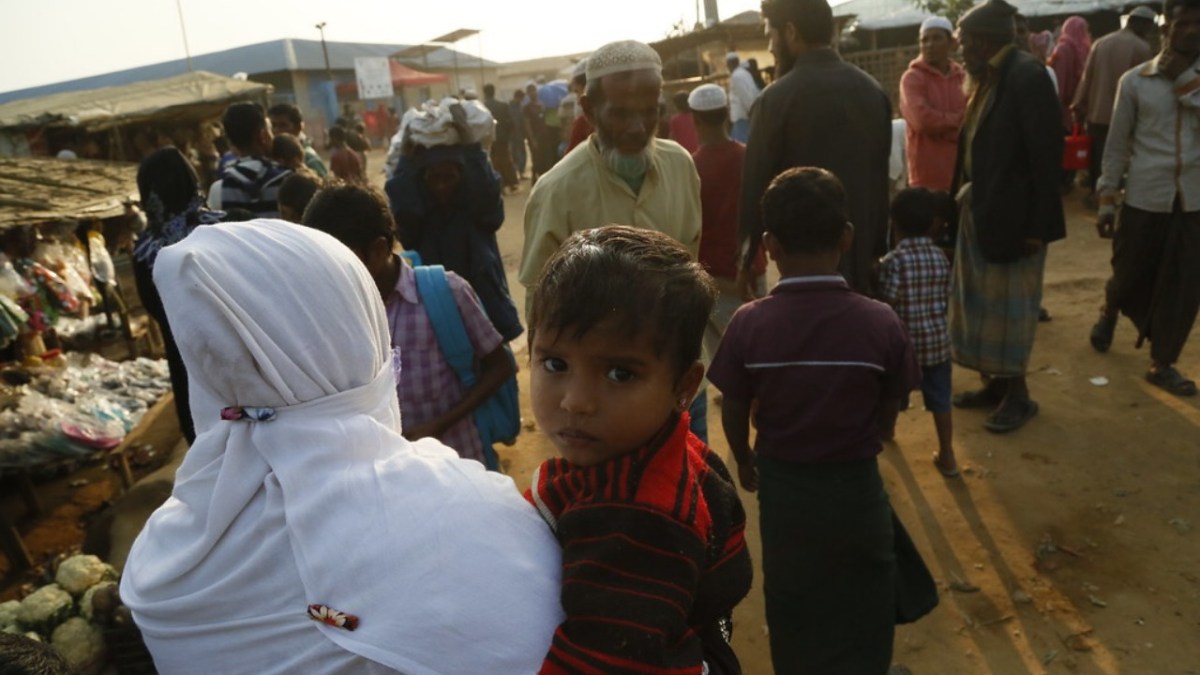
He was one of more than 740,000 Rohingya people who fled to Bangladesh. The refugee camps where he grew up now host more than 1.2 million people. During a nearly three-hour reading of the decision, CNN noted that presiding judge Iwasawa Yuji explained that the scale and nature of the atrocities described in witness testimonies and through evidence were “characteristic of an intent to destroy a substantial part of the group.”
The court highlighted state actions as the reason for the ruling
According to CNN, the court found in its judgment that the military “engaged in indiscriminate killings” and gave particular weight to the “widespread acts of sexual violence, and extreme acts of violence against children.” The judgment also pointed to security forces’ attacks on the Rohingya as they fled to Bangladesh. Iwasawa told the court, “The court is of the view that the only reasonable inference that can explain Myanmar’s actions is an intention to destroy.”
Legal experts also see this ruling as a key test for how sexual violence is weighed in genocide cases. Investigators have said that gang-rapes and the mutilation of women were carried out systematically to stop reproduction. The Guardian reported that the court appeared to back that assessment, finding that the military used sexual violence to “physically and mentally impair the willingness and ability of the [Rohingya] population to procreate.”
The ICJ’s judges rejected Myanmar’s defense that the military was conducting legitimate counterterrorism operations against an insurgent group. Per CNN, the court said the military failed to distinguish between militants and civilians. Myanmar’s military-backed government has dismissed the ruling, with a spokesperson calling it “unfair” and “not a decision made unanimously.” The Guardian also noted that the ruling formally classified the Rohingya as a distinct ethnic group under international law, a status Myanmar has denied them for years.
CNN reported that the ICJ’s rulings are final and binding, but the court lacks the power to enforce them. The orders are sent to the UN Security Council, which could choose to implement the ruling through a resolution. According to The Guardian, Britain’s foreign minister, Ed Miliband, has already called urgently for a session at the Security Council following the announcement.
Governments around the world have been watching this process closely, The Guardian reported, as the ruling sets a precedent for other genocide claims, including a high-profile case against Israel brought by South Africa. Israel denies the genocide charge. CNN noted the case has led to concern that the ICJ could come into conflict with the Trump administration, whose officials have been publicly condemning the International Criminal Court as part of a campaign to “dismantle” it.
CNN reported that last month, US ambassador to the UN Mike Waltz accused the ICJ of trying to lower the threshold for a genocide verdict in the Myanmar case, claiming it could be “weaponized” against American soldiers. A spokesperson for the US State Department told CNN that they “are studying the decision to fully assess its implications,” emphasizing the importance of “preventing politicization of the ICJ.”
The ICJ has ordered Myanmar to provide reparations and facilitate the safe, voluntary, and dignified return of the Rohingya to their homes. However, CNN noted that it is unlikely the current military-backed government will comply. Min Aung Hlaing, who led the military during the massacres and now serves as the country’s leader, has previously dismissed the Rohingya identity as “imaginary.”
CNN also noted that the Arakan Army, an ethnic armed group, controls the vast majority of Rakhine state, which is caught up in an active civil war. Alam still hopes to go home, telling CNN, “The Rohingya do not want to live in refugee camps forever. We want to return to our homeland in Rakhine state with our rights, our citizenship, and our dignity fully restored.”









Published: Nov 20, 2026 10:45 am