


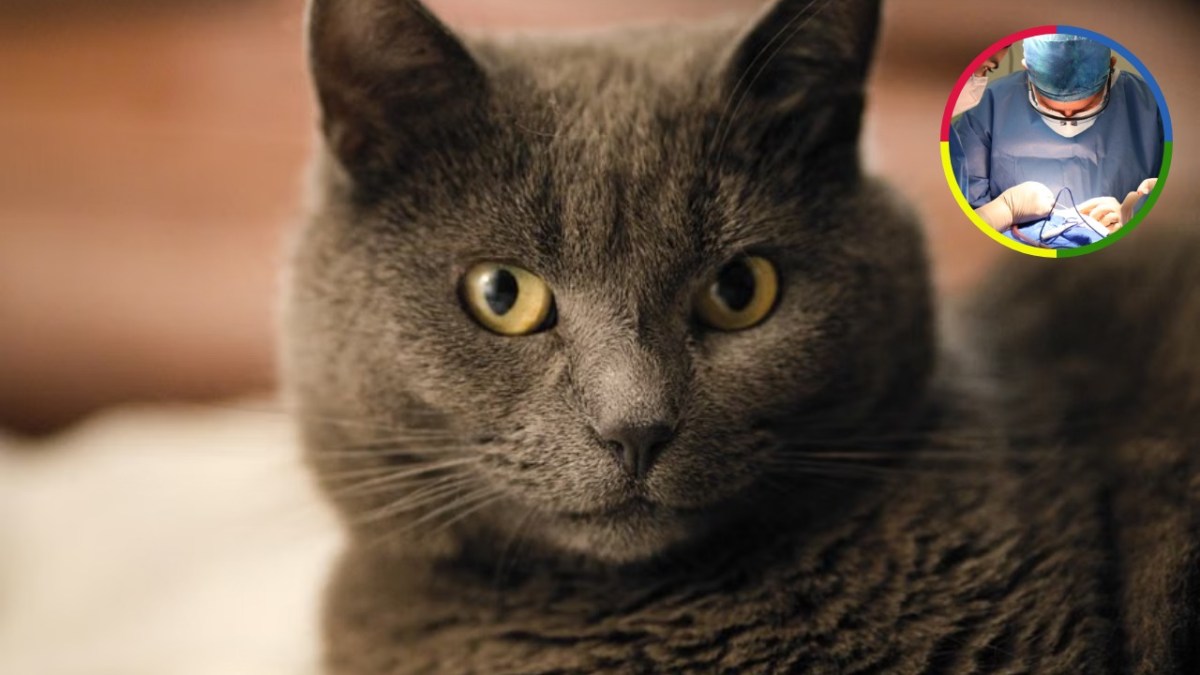

A 28-year-old man named Karl is currently experiencing a strange medical phenomenon where he sees his pet cat, Luna, in the faces of the people he meets. This condition began two years ago following a surgery to remove a tangle of blood vessels in his brain, which was performed to prevent the risk of a brain bleed.
As reported by the NY Post, the specific symptoms involve a condition called prosopometamorphopsia, which is also known as demon face syndrome. This falls under the umbrella of a neurological visual symptom called palinopsia, where something seen earlier persists or reappears later.
In Karl’s case, he might look at his cat in the morning, and those feline features like stripes or enlarged pupils then appear on the faces of people he encounters throughout his day. Sometimes the process reverses, and he sees human facial features on his cat or other people if a human face was the first thing he looked at that morning.
Part of his brain’s lobe was removed during surgery
Researchers from Dartmouth College and Brigham and Women’s Hospital recently published a report on this case in the journal Cortex. They noted that these episodes often persist for several hours and occasionally last all day. The transferred features appear entirely coherent to Karl. They are integrated into the face he is looking at rather than appearing superimposed, and they change naturally as the viewpoint or distance shifts. This happens often.
The right temporal lobe of the brain plays a critical role in how we process faces and recognize them. Because Karl reportedly had part of this lobe removed during his surgery, it provides a clear link to why he is experiencing these distortions. Brad Duchaine, a psychologist and brain scientist at Dartmouth College, is leading the study of this case. He believes that the situation shows how individual features can be pulled from memory and influence our ongoing perception.
To better understand what Karl is experiencing, the team turned to AI. Duchaine used ChatGPT to create sketches that are photorealistic and representative of the cat-to-human and human-to-cat facial feature transfers. According to Duchaine, the latest AI tools are a major step forward in this field. Images can be produced in seconds from just a few words and then refined until they match what is showing up in the patient’s mind.
Duchaine said, “If you know what the person is experiencing, you can much better research what they’re dealing with and try to figure out ways to control it.” He also noted that AI helps patients convey what they are seeing to their friends, family, and health care professionals. It allows the patient to take an active part in the process of creating visualizations.

Published: Nov 20, 2026 09:00 am