




CIA Director John Ratcliffe completed an unannounced visit to Moscow this week, a move that has sparked significant chatter regarding the current state of international relations, The Hill reported. The trip, which took place on Tuesday, saw the intelligence chief engaging in discussions with his Russian counterparts. While the visit itself was shrouded in secrecy until reports surfaced, the administration is now working to frame the high-stakes encounter as a regular part of the job.
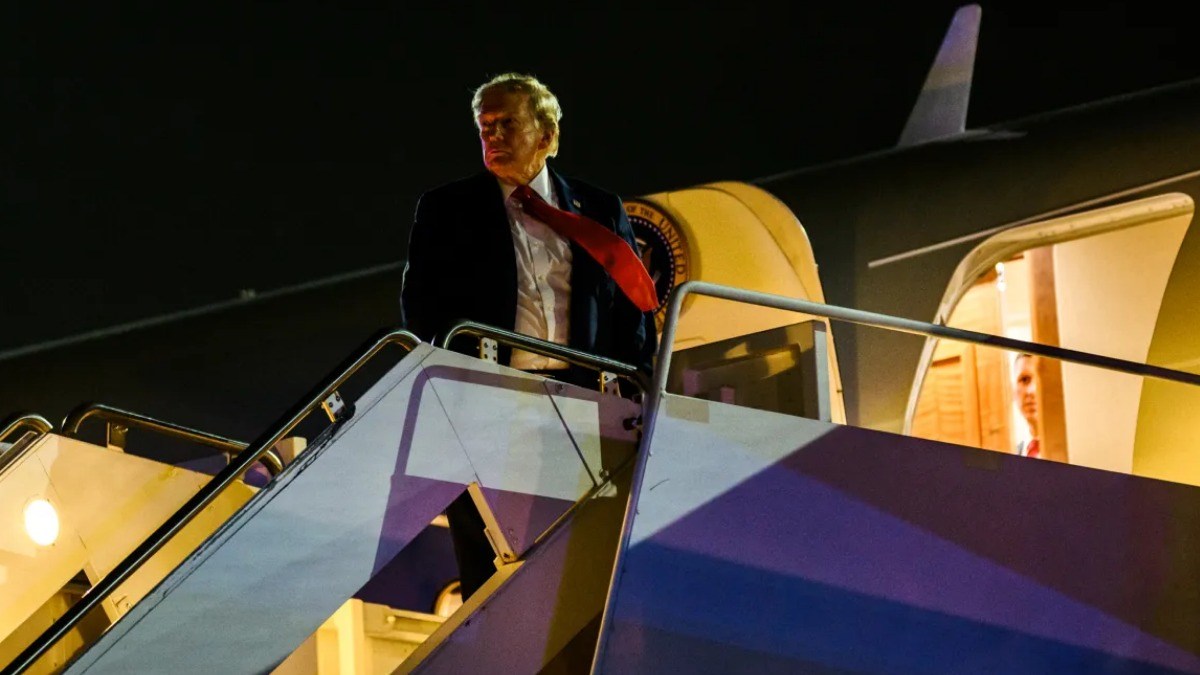
President Trump addressed the situation on Wednesday during an appearance on a conservative talk show hosted by Glenn Beck. During the conversation, the President pushed back against the swirling theories that the trip served as a barometer to test the resolve of NATO. President Trump told Glenn Beck on Wednesday, “I hate to disappoint people.” He went on to defend his appointment, noting that “John Ratcliffe is a fantastic guy. He’s the head of the CIA, and he is not in there for any of the things you said.”
Even though the President acknowledged that “something may come out, you know, out of it,” he was quick to emphasize that the primary motivation behind the engagement centers on the ongoing conflict in eastern Europe. Regarding the war between Russia and Ukraine, President Trump stated, “Frankly, they both want to see it ended at this point.”
The trip was spotted by those monitoring aviation patterns
Flight trackers identified a U.S. Air Force Boeing C-17A Globemaster III transport plane making the journey from Riga, Latvia, to Moscow on Tuesday. The aircraft was later spotted departing the Russian capital around noon. This journey marks the first time Ratcliffe has traveled to Russia in an official capacity since he was confirmed as the director of the CIA in early 2025.
Kremlin spokesperson Dmitry Peskov confirmed the nature of the meetings on Wednesday. He noted that while Ratcliffe did hold talks with Russian intelligence officials, he did not have a sit-down with President Vladimir Putin. However, the influence of the Russian leader remains ever-present in these proceedings.
“Of course, President Putin is immediately informed of everything,” Peskov said. The level of transparency between the Russian intelligence apparatus and their leadership indicates that every word spoken during these sessions was effectively relayed to the highest levels of the Russian government.
Reports indicate that the US administration reached out to Ukrainian officials last week with a specific request. They asked that Ukraine refrain from using its long-range drones and missiles to strike Moscow, St. Petersburg, and northern regions of Russia during the window of Monday, Tuesday, and Wednesday. The reasoning provided for this request was that the U.S. was dispatching a senior official to Moscow, and the administration likely wanted to avoid any escalatory incidents that could complicate the mission or endanger the delegation.
Recent intelligence reports have suggested that President Putin might be considering a limited assault on a NATO member nation within the next few years. This kind of potential provocation has kept security analysts on high alert. Furthermore, the U.S.-mediated peace talks meant to bring an end to the war in eastern Europe have largely appeared to be stalled, making any direct line of communication between Washington and Moscow feel like a significant, if not desperate, attempt to break the deadlock.
It is not entirely unprecedented for a CIA director to make such a trip. Back in November 2021, then-CIA Director William Burns traveled to Moscow to meet with officials and deliver a direct warning to President Putin regarding the potential invasion of Ukraine. While the goals of that trip were clearly focused on deterrence, the current mission involving Ratcliffe seems aimed at broader diplomatic maneuvering.
As of now, the CIA and the White House have not provided further comment on the specifics of the trip.








Published: Aug 26, 2026 03:30 pm